Free Motion Quilting on the 8900 QCP

Snow day on Friday = free time to learn how to FMQ on my new machine.

Five different darning feet, 3 broken needles and a few choice words later, I finally figured it out.

Learn from my experience.

READ THE MANUAL FIRST BEFORE YOU FMQ on this machine!

  1. Stitch DS4 is when you use the foot with the interchangeable heads.
  2. Stitch DS1 is when you use a traditional style darning foot.
  3. Use your straight stitch plate.

My favorite foot is the open toe attachment on the adjustable darning foot (the one with the 3 heads).

To make a long story short, I got the best results with a 90/14 topstitch needle, using my blue bobbin case and leaving the feed dogs up. I also stitched at a medium speed. For 50 wt thread, I left it on auto tension and foot pressure = 5.

Yes, you read correctly, I did not drop my feed dogs. I merely covered them with my Supreme Slider. If you do this, the machine will switch back to a DS1 stitch (which is fine), but make sure to set your stitch length to zero.

Leah Day quilts with the feed dogs up. For me, it had the effect of being like a built in stitch regulator. Can’t explain why, but the stitches were more even with the feed dogs up rather than dropped.

Can’t hurt to give it a try!

P.S. Have a traditional hopping darning foot that you want to make work for you? Check out Leah Day’s post on how to modify your darning foot.

 

Switching gears

Summer’s now officially over for me.  I am slowly getting back into work mode by being proactive – handling some things remotely (web site updates and staff network user lists) to hopefully take some of the pressure off preplanning week.  Fact is we have a LOT of new faces who will need media/tech support this year.  We lost two weeks of summer break with the adjusted school calendar.  Let’s hope being proactive was the right choice to make by making my life a little easier come July 28th.

There are still a few items to cross off my summer to-do list.  The dining room table has been my storage area for everything I brought home for the summer. My new bookcase from Arhaus furniture arrives today. Will spend the late a.m. shelving my book collection. I am positive that hubs will be thrilled when I have FINALLY gotten all my books put away.

Our back porch project starts 7/22. They estimate almost 3 weeks from start to finish, depending on the weather and inspections. I have a feeling that my Big Green Egg is going to be a guest in my breakfast room during construction. It is way too heavy to move up and down stairs.

So, I have 2-1/2 weeks left of summer break and intend to make the most of it – finishing up two t-shirt quilts  and cutting several baby quilt kits so I can have something ready to stitch once school starts.  That’s a huge stress reliever for me!  I also tend to sell them as soon as I make them.  Switching gears also applies to the business – I am now making smaller, practical items – including 18″ doll clothes and accessories – to use up stash and sell in my Etsy shop.  We’ll see how that goes.

We survived Quilt Camp!

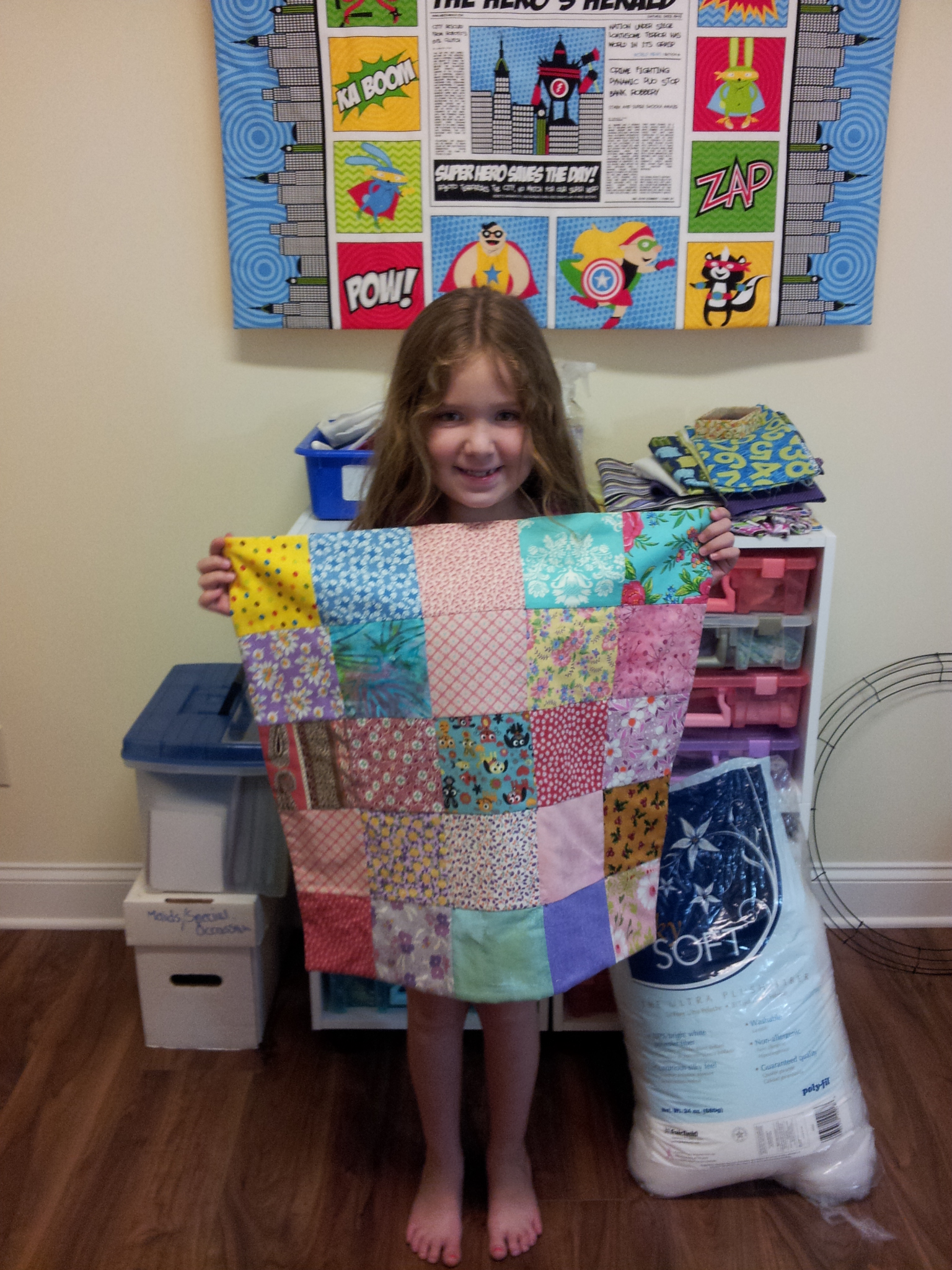
My 7-year-old niece and I now have the first of two planned summer sewing camps behind us.  For two days, we stitched, cut, ripped out, stitched again, played, laughed, ate out and made a big old mess of Aunt ‘Resa’s sewing room.  Our adventure also included a sleepover – her first at our new house.  Here are some pictures from our sewing spectacular:

pressingfabric
Carefully pressing her fabric.
dollquilt
Mission accomplished! Quilt for her AG doll.


We probably spent about six hours total in my sewing room actually sewing in the 24 hours she was here.  Her top was pieced as “homework” between January and Easter.  Our goals were to (1) complete her quilt using the envelope method and tie it by hand with yarn and (2) make a pillow case from Hello Kitty fabric she’d received for Christmas. I nixed the yarn tie method when I realized her chosen yarn had metallic thread shot through it.  It wouldn’t stay tied.  She’s also not into hand stitching at this point, so she learned how to tie via the clasp (a big star) stitch on my Janome 6600.  It worked great!

She chose the complementary color fabrics for her Hello Kitty pillowcase from my stash.  I cut out the fabrics, but she helped pin and did all of the sewing by herself.  She was so proud when she mastered pivoting the corner!  Marking pivot dots with a sharpie marker helped her to see where to plant the needle before lifting the presser foot to pivot.  I wouldn’t necessarily recommend this marking method for your competition quilts, but it serves as a great visual reminder for new stitchers.

On my Janome machines, I’ve discovered that the edge of the metal presser foot (A or general purpose foot) is the best seam allowance minder for my younger stitchers when making projects that require a 1/4″ seam allowance.  It’s close enough.  For wider seam allowances, the metal screw on guide is a real help!