The power of connection

What is it about making random, but real, connections with people makes me feel better?

Like meeting the local author of a children’s book while out walking Sadie and smiling with the fellow shopper at Publix who also talks to herself (complete with hand gestures) as she mentally runs through her shopping list. Or chatting with a fellow sewist at the fabric store who completely gets the reasons I’m shopping for a new sewing machine.

I’ve been a little glum this week. Teachers report to school on Monday. Hubby will also be at MD Anderson for his scans and check-in with the doctor. One of my favorite people at work has been hospitalized with uncontrollable seizures. The one year anniversary of a dear friend’s departure from this earth is also coming up soon.

Those simple interactions greatly improved my mood. It also confirmed my belief that most folks, regardless of race, religion or economic status (insert any other criterion) really do want the same things in life – not the incessant stream of crap coming from the media.

So shut off the TV and social media. Get out there and enjoy the sunshine, fresh air and a friendly dog. Discuss a good book you recently read. Admire artwork at a local museum simply because it’s pretty. Share backyard garden veggies with a neighbor. Teach someone how to sew or cross-stitch. Join the neighborhood kids in drawing with sidewalk chalk.

Go connect with the people around you. That’s what we really need to get through this together.

boundaries

Photo by Pixabay on Pexels.com

Boundaries are an essential part of self-care.

It is important that you stick to expectations you communicated. Too often, we “give-in” to assist the other person who requested our help. If it’s a genuine emergency, then absolutely help that person stat! Otherwise, you unwittingly set a pattern that you do not value your own time.

Case in point: I voluntarily spent 3-4 days at school in recent weeks helping a colleague and doing things that would benefit me if I took care of them prior to teacher pre-planning. Of course, once people realized I was in the building, people started sending all kinds of requests. I completed the last request on Wednesday evening and informed key individuals that I would be out-of-pocket until Monday at 8 a.m. (when the new contract year begins and we are finally getting paid again).

I wish people would read their email.

I received an email from a colleague with a request for help with a project that needs to be ready to roll Monday morning. It is an interesting idea. I responded with a couple of suggestions, but advised that I would not be available this weekend. Perhaps someone else on the email list will step up to assist.

Working with 3 Yard fabric Bundles

I attended the Kansas City Regional Quilt Festival a month ago. The shopportunity in the vendor hall was nothing short of amazing after 15 months of COVID lockdowns. Most every booth I visited seemed to have the turquoise Perfect Scissors by Karen K. Buckley, precut kits and the 3 yard quilt series books from Fabric Cafe, with assorted fabric bundles available for purchase.

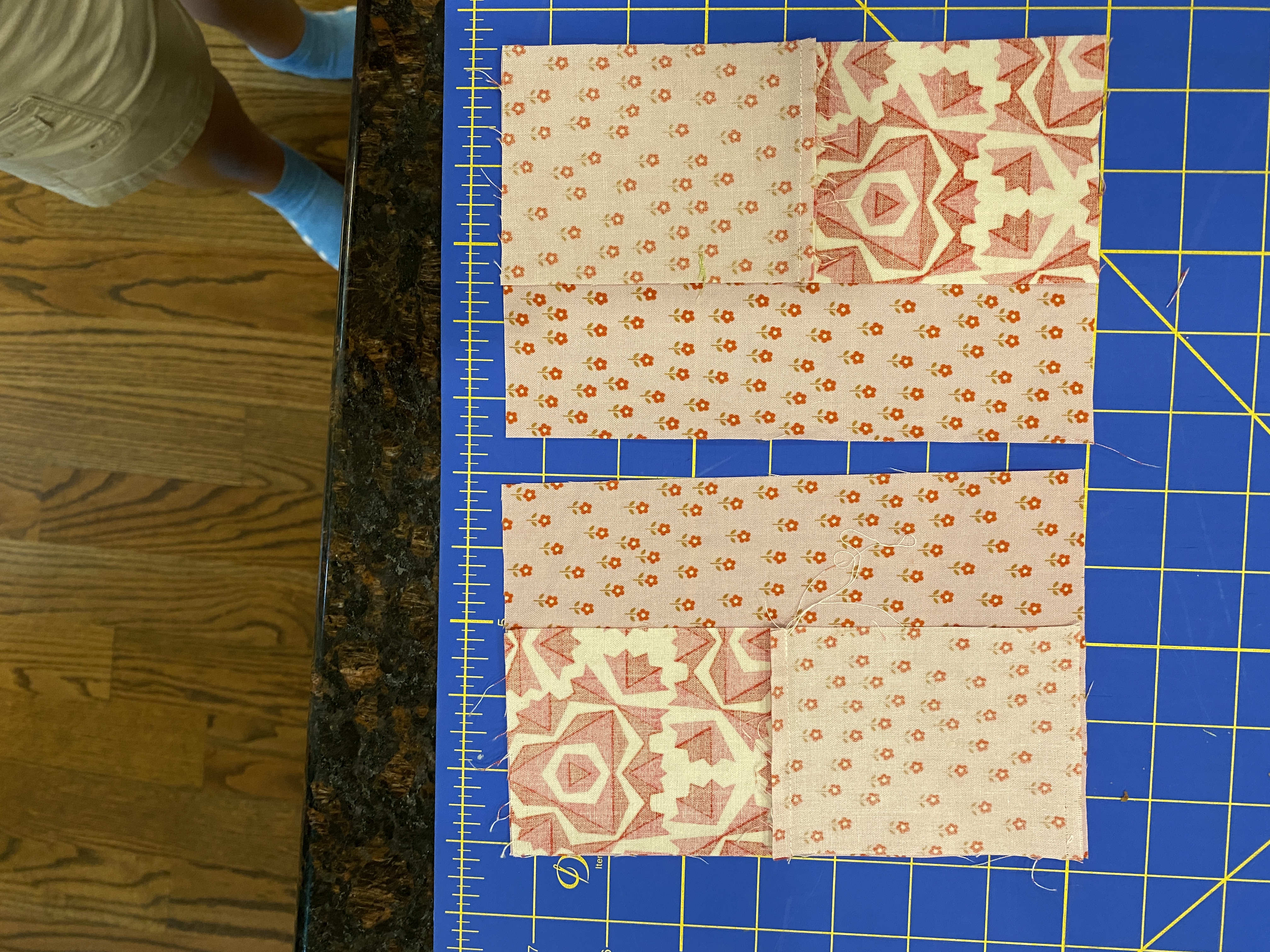
The Fabric Cafe books are extremely versatile. I use them for teaching classes and making personal projects. In fact, I’m working on a baby quilt right now – Dominique from Modern Views from 3 Yard Quilts. I’d like to share 5 tips for working with this pattern:

  1. Buy 1-1/4 yards of each fabric, especially if you prewash.
  2. All over prints are your best bet. I used a directional print for Fabric #1. You can make it work, but it does require extra planning and revising some of the sewing instructions.
  3. Read the instructions at least TWICE before you cut into any fabric.
  4. Cut the larger sections first, then go back and subcut. LABEL the pieces.
  5. For the flowers, take note of the placement of the Fabric #1 and Fabric #2 within the pieced units. If you use directional fabric like I did for Fabric #1, know that half of the units will need to be “redone” so that Fabric #1 is pointing in the correct direction.

Bonus tip: Use the same sewing machine to construct the inner portions of the quilt. It will be easier to match up the 1/4″ seams.