One year after the Joann’s closure…

Former Joann store in Alpharetta, GA is still vacant nearly a year after closing.

I stopped by Sewingmachine.com on the way home from a recent pet therapy visit. A former Joann store sits next door it – still vacant. The bankruptcy case is ongoing.

While I occasionally miss Joann – sorry Michael’s, no amount of Knit & Sew Shop is going to fill the void for me – I’ve found Hobby Lobby and the sale section at 2-3 local shops can generally fill in what my stash lacks. Fabric swaps with friends and the guild’s free table round out any needed items for community service projects. I’m pretty sure my overall spending on fabric & notions has gone down since Joann closed.

Quilt shops and sewing machine dealers in my area simply aren’t marking things down to sell through as in the past. At the Original Sewing & Quilt Expo in mid-March, a local dealer was offering classroom use Janome 9480s with the ASR for $5,799. This special price was so secret that the classroom machine price wasn’t even listed on the tag. You had to ask. It was only $300 less than the show price of $6,099 on a brand new model. Two weeks after the show, the dealer is advertising the same classroom machines in its email blasts – without a price. Why all the secrecy?

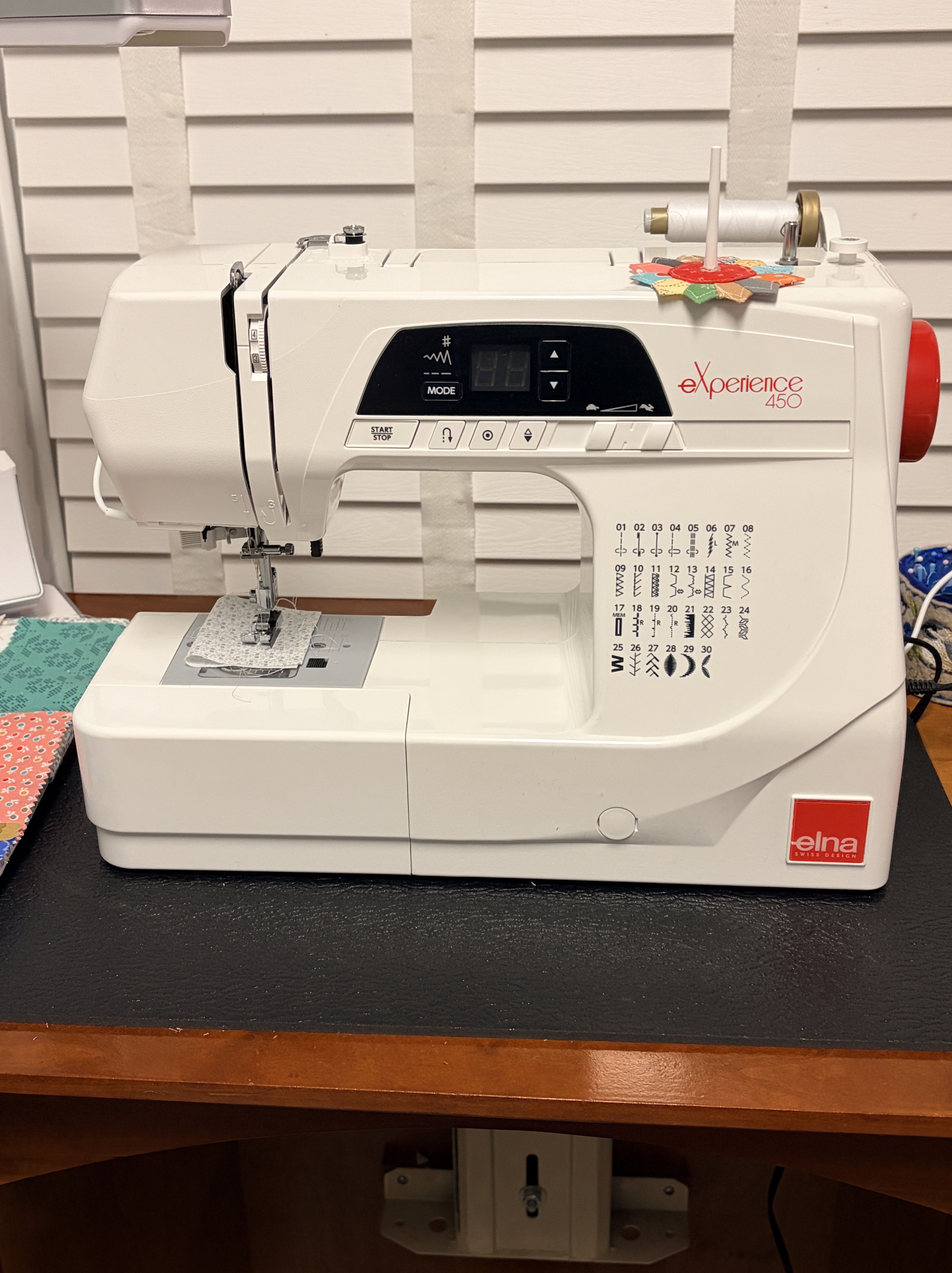
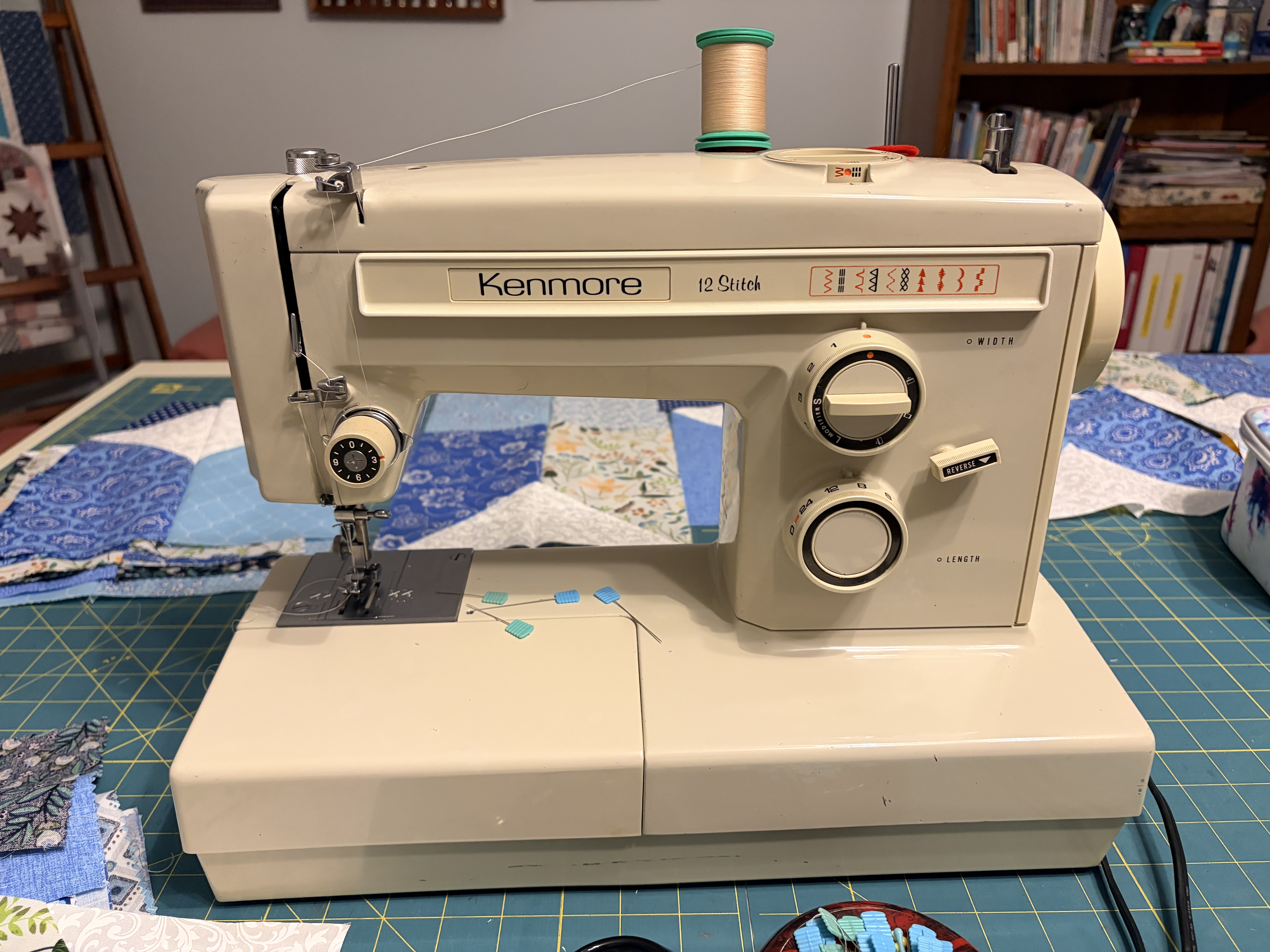
Joann helped keep sewing machine prices in-check. If I needed to replace a kid-use sewing machine, I knew I could get a decent machine for about $250 the very same day. Can’t do that now! Even sellers on FB Marketplace aren’t discounting things very much. I’m not willing to pay $650 for a used sewing machine for CraftLAB. We’ll continue touse the ones we have.

English Paper Piecing Workshop

Fussy cut EPP block using diamond paper shapes to create a kaleidoscope effect

Last week, I took an English Paper Piecing workshop with Amanda Bauer. This all-day class was sponsored by my quilt guild (meaning an affordable $55.00 class fee + a $15 kit fee). Prior to this class, I’d never taken a formal class on EPP and my experience has been limited to hexagon shapes only. Yep, I can definitely make a hexie flower with no problem!

I’ve definitely upped my EPP game by taking this class. I fine-tuned my glue-basting process, learned how to “marry” the needle and thread, plus got a little bit better at whipstitching my pieces together. I normally use a flatback stitch for EPP, but her method for the whipstitch is faster and results in less hand fatigue.

Like any instructor, she has her favorite products to use for EPP and shared her reasons as to why. Honestly, they weren’t that much different from the other instructor product offerings I found online. Students were provided kits and access to recommended tools to try during the class. I may very well switch to using her style of whipstitch in the future. However, I’ll keep using my 80 wt Wonderfil polyester thread in a coordinating color to lessen stitch visibility. That’s my personal preference.

Basic tool recommendations for EPP:

Needles: Milliners/Straw sizes 9, 10 or 11. (Bohin, John James, Sue Daley) OR Sharp sizes 7 – 9
Thread: Polyester 50 wt, 60 wt or 80 wt in matching color, if possible.
Paper shapes: Purchased shapes offer consistency. Paper Pieces is a good source of EPP paper templates.
Glue pen: Sew Line glue pen and refills
Scissors: Serrated edge (Karen K. Buckley or Kai Scissors)
Rotary cutter: Olfa 28mm
Automatic needle threader: Bohin or Clover
Recommended: Small rotating cutting mat, Magic Seam ruler for fussy cutting, Sew Tites and Wonder Clips.
Optional: Needle keeper, thimble and thread conditioner

Videos I think you might find helpful:
Fat Quarter Shop Tula Pink EPP series
Wonder Window technique for fussy cutting

EPP is very portable. Word to the wise: When traveling by plane, Amanda recommends that you cut (and glue baste if possible) all shapes ahead of time, take a small pair of snips you don’t mind losing and a small usb light. Definitely leave the rotary cutter and mat at home or pack it in your checked luggage.

Community and connections

About five weeks ago, I helped clean out the sewing studio house of someone who needed to move into assisted living. (Her entire 2 bedroom cottage was her sewing space. I kid you not.) Two SUVs crammed full of stuff came to my house for sorting. You can read about that escapade here.

Over the past month, I have shared the largesse with my Friday sewing group, library teen sewing programs, a quilts for veterans group, my bee group, and the community service arm of my own guild. Anything left went on the guild free tables this morning. It didn’t last long. I have finally reclaimed the basement. My husband will be so happy.

This quilter’s generosity has touched so many different folks – from the teens learning to sew at the library, to patients at the local children’s hospitals sleeping on a special pillowcases, to quilts for foster children, adults in recovery and women healing from domestic violence.

Community is what made this happen. The donor’s son put out a request for help in his neighborhood FB group. A member of my book club happens to live in his neighborhood and saw the post. She shared his contact info with me. It went from there. We helped keep useful items out of the landfill and the projects sewn from the re-homed fabric will go back into the local community. There was no need to hire a junk removal company, either.

Over the weekend, I’ll be quilting a 60″ x 80″ top made by my bee group. Backing fabric and batting came from the donated supplies, too. FYI, five yards of quilt-shop fabric and a twin size package of Warm & Natural batting normally run about $100.

Community and connections are an often overlooked type of wealth discussed in this post. In fact, safety and security wealth (e.g. money and health) only account for 20% of all wealth categories described in the graphic. A sense of purpose, autonomy, personal relationships/connections and moments of joy account for the other 80%. Hmmmm. I honestly say that I experienced all 5 types of wealth during this project. I’ll save money by not having to buy backing fabric and batting for a few quilts. I had a purpose in sorting, organizing and delivering the items. I also got a workout lifting, sorting and carrying the bins! I had time to devote to the project and set my own schedule for completion. I interacted with community groups and other sewists & quilters to distribute the donated items. Moments of joy came with seeing the excitement on guild members’ faces at the donated fabrics on the free table and returning home after said guild meeting to a cleared out basement.

I realize we’re in challenging times. You’re grinding it at the day job with minimal raises and healthcare costs that keep going up. The cost of everyday essentials is ever increasing. Our country is politically polarized. Carefully curated social media makes you think you’re behind.

STOP. Put down your phone. Turn off the TV. BREATHE.

Go outside. Take a walk. Listen to the birds. Look up at the night sky.

Find your library card. Go check out a book or DVD to read/watch later.

Talk with a neighbor. Strike up a conversation with a complete stranger you meet on your walk.

Spend 10 minutes doing something with your hands – crossword puzzle, word search, solitaire (with real playing cards), knit, crochet, EPP or other needlework, etc.

Do you feel better? You’ve just experienced the five types of wealth (walking – health, free activities – money, conversations/library visit – community/connections, choice of activity and time for activity – significance & freedom, plus small pleasures like listening to the birds sing or getting lost in a good book – joy).

Remember, you always have options. Life is a series of choices. Work is not inherently bad. It provides income, benefits (hopefully) and at least one partner-in-crime for a social connection. Bonus if your job provides a sense of purpose and a bit of autonomy. Taking time to develop interests and activities outside of work can shore up the types of wealth missing from the day job, too.