Practice makes you better

Not perfect, but better.

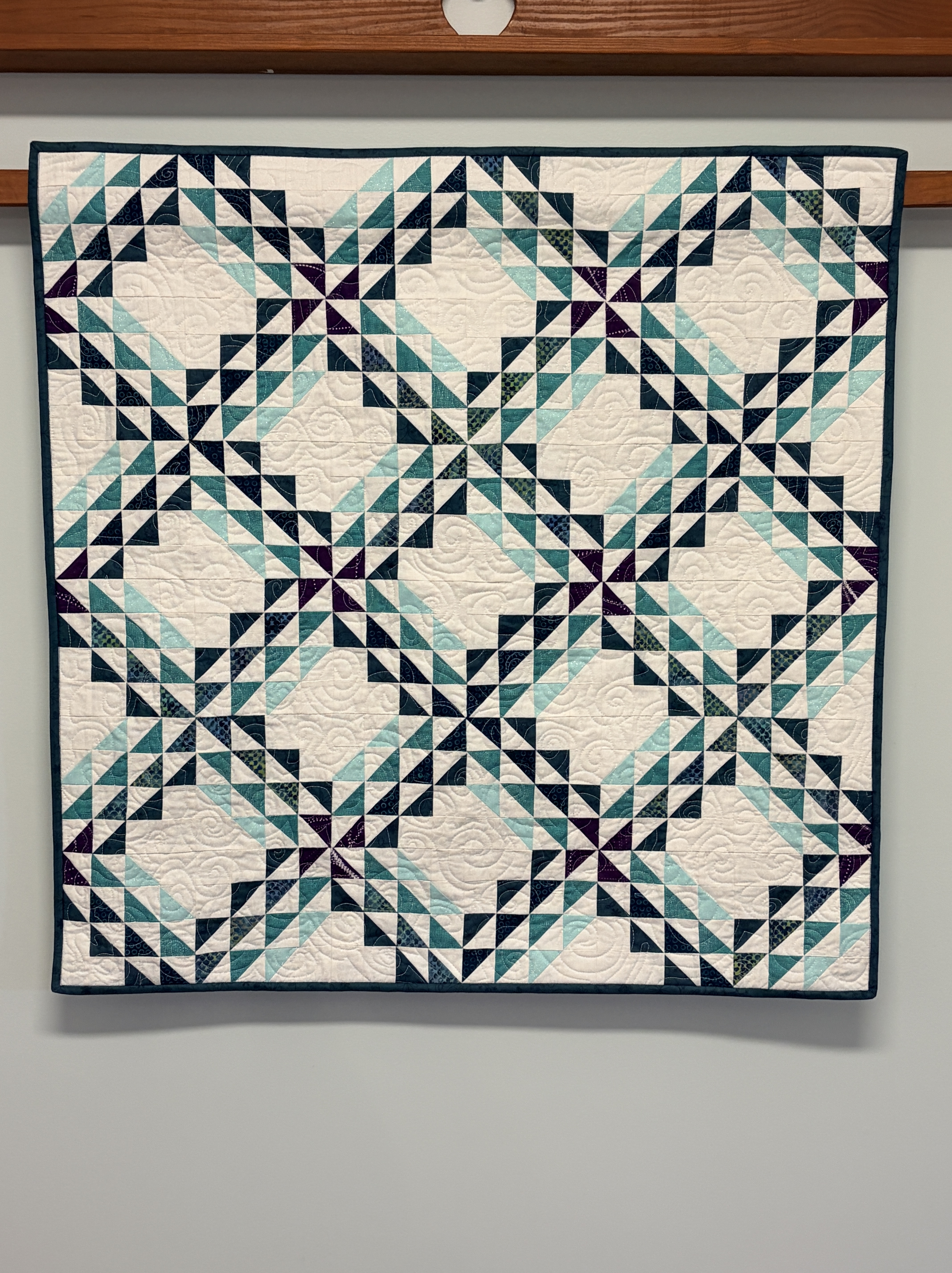
After several practice quilt sandwiches, it was time to do FMQ swirls on a *real* project. I unearthed a Moda placemat panel that had been part of the swag bag at last year’s JK Quilts spring retreat. I prepped the quilt sandwiches at sew day on Wednesday. Quilted them on Friday. Four placemats are now ready to bind.

Learning to FMQ with on my Elna 782 with the ASR requires a different set of skills – not good, not bad – just different. The payoff has been a more consistent stitch length when doing FMQ. I still get occasional long stitches (usually from moving my hands too fast when changing directions), but that’s okay. It’s part of the learning process. I actually prefer to FMQ using the start/stop button rather than the foot pedal. Still haven’t decided which particular foot I prefer to use for everyday FMQ. My next FMQ will be on a project made using the fusible grid interfacing. I’m going to try the “bowl” or clear view attachment to see if this works any better with all of the seamlines.

Back to Front Binding Tips:

Start with 2-1/2″ wide strips, adding 20% extra to the total length needed (just in case).
Do a mock binding layout to preview where any binding seams may fall – preferably no seams at the corners. Adjust as needed.
Sew using a 3/16″ seam allowance, joining ends using your favorite method.
Press sewn binding away from the back side.
Roll binding to the front side and glue baste in place, leaving corners for last.
Set corners and clip in place.
Let sit for 1/2 hour or overnight so glue can dry.
Stitch using a straight stitch with tie-off option and Janome Bi-level Left presser foot. (Note: the foot is advertised for 5-7mm machines, but I think it offers more flexibility with the 7mm widith machines. That said, my Elna 450 is a 5mm width machine. I set SW = 0 and SL= 3.0. Sew slowly with the needle down function engaged. )

Which extra presser feet should I buy?

My Elna 450 is a budget-friendly, computerized model. It came with four presser feet: (1) all purpose presser foot; (2) satin stitch foot; (3) zipper foot and (4) buttonhole foot. The dealer also included a 1/4″ foot at no extra charge.

If you flip through the Janome/Elna accessory catalog, you’ll find dozens of additional presser feet that will work with your machine. Buy the extra presser feet that will support the type of sewing that you do and fit your budget. I quilt, so this machine will be used for piecing blocks, machine applique and quilting smaller projects. The kids will use it in CraftLAB to make a variety of projects, including tote bags, aprons and pj pants. I’ll also use it to hem pants, replace buttons and fix popped sleeve hems on t-shirts.

Here are the additional feet I purchased for this machine:

  • Open toe walking foot with guides (set of 2 guides can be purchased separately)
  • Button sewing foot (w/ blue toes)
  • Replacement A foot with leveling button (for going over thick seams)
  • Open toe F2 foot
  • Over edge C foot (use with stitch #11 to finish raw edges)
  • Adjustable blind hem G foot
  • Open toe darning foot

The adjustable blind hem foot can be used for more than sewing a blind hem. I use it as a topstitching guide when I need to sew 1/8″ from the edge (bag straps, pocket edges). I use the dial to move the finger so that it lines up on the right side where the foot clips on. I use stitch #1 and set the stitch width = 1.0 mm with stitch length = 3.0 mm.

Other key considerations when buying presser feet:

  • Max stitch width for your machine: 5mm, 7mm or 9 mm?
  • Bobbin case position: top loading, side loading or front/vertical loading?
  • Machine manufacturer: is it a top loading machine made by Janome?

Over the years, Janome has manufactured machines for Sears/Kenmore, Baby Lock, Juki, Necchi and Elna. This is important because presser feet designed for top loading Janome made machines require a slightly left offset connection bar on the snap on foot to align properly with the feed dogs. (See left photo of blind hem foot above.) Center needle snap on feet may work occasionally, but the needle position will be off and the toes of the presser foot may not align with your feed dogs.

Summer Sewing Project Ideas for Kids

School will be out for the summer here in about two weeks. CraftLAB projects have already been decided: oven mitt for Mother’s Day, BBQ apron for Father’s Day and a patriotic wall hanging/pillow for July. We’ll have quilt camp right before the girls return for the 2026-2027 school year.

Looking for budget-friendly ideas of what do with your own kiddos? Check out your local public library for sewing and craft books for kids. Look through the Libby app to what kid’s craft magazines or general sewing magazines are available digitally. If you have a stash of old paper patterns, start there.

Otherwise, create a Pinterest board and start searching using the projects listed below. It’s not a complete list – just somewhere to start. You should have no problems finding free patterns online. Be sure to pin the projects you and your kids like so you can find them later. Most of the time, there’s a Youtube video to accompany the project pattern.

Kitchen inspired: potholder, oven mitt, chef hat, apron, fabric jar opener

Travel inspired: quilted sunglass case, pocket tissue holder, tote bag, key fob wristlet, zipper pouch

Back-to-school accessories: bookmark, composition book cover, diagonal zipper pouch to hold tablet, lanyard, reusable snack bags, cord keeper

Sewing machine inspired: sewing machine mat, sewing machine cover, pincushion, fabric bins/storage pods, drawstring bag to hold foot pedal and cord keeper to corral power cords if machine is taken to classes or put away after each sewing session.

Here area a few websites that offer free project patterns and sewing tutorials:
All Free Sewing
All People Quilt
Apple Green Cottage
Fabric Editions
Missouri Star Quilt Company
Sew Can She
Sew 4 Home

Sourcing fabric and other supplies without going broke.
Hopefully, you already have a sewing machine, basic sewing supplies and a scrap bin your kiddos can pull from. Consider using outgrown clothing, and old linens (sheets, tablecloths, etc.) to create an upcycled project.

If you need fabric and supplies, ask your friends and family before going out to purchase anything. Your aunt who’s an avid quilter and lives two states away will be thrilled to send you a box of supplies. Check with your local library to see if they offer a craft swap or have a community craft supply closet available. Or check with a local buy nothing group.

Check your local independent thrift stores, yard sales and estate sales for supplies.

If you live near a larger city, look to see if there’s a fabric, fiber and textile association, quilt museum, chapter of the American Sewing Guild or a creative reuse facility. In Atlanta, we have SEFAA, SQTM and the ASG Atlanta Chapter. All three organizations host “yard sale” fundraisers and destash events throughout the year. We also have a creative use facility known as Scraplanta. They sell donated textiles, craft supplies, office supplies and stuff of all kinds at very reasonable prices.

For the best everyday prices on fabric and supplies for kid’s projects, look to Wal-Mart and Dollar Tree (and sometimes Amazon). Hobby Lobby is another option (and better for fabric IMHO) – if what you need is on sale. Michael’s tends to exclude cut-to-order fabric from coupons, so I don’t shop there very often.

Local fabric stores, quilt shops, yarn shops and art supply stores are another – but usually more expensive – option. A fun field trip idea: plan an excursion to a local fabric store. Give each kid $10.00 and allow them to purchase a couple of fat quarters for a future project. Bring along a picnic lunch and eat at a local park afterward.

Time spent sewing and crafting is good for kids. It teaches them life skills and lessens the amount of screen time.