New TOL sewing machines – who’s buying?

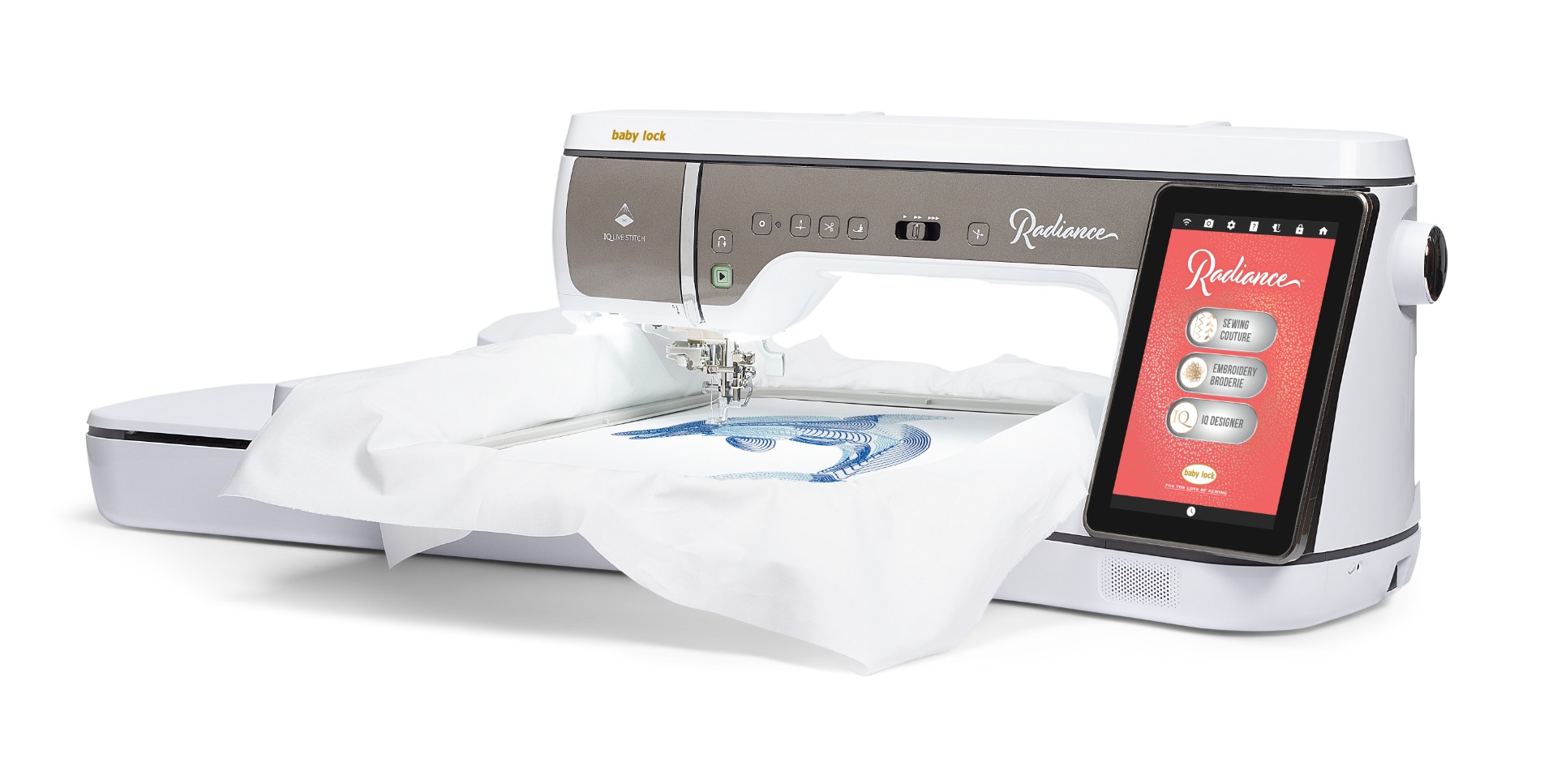
Bernina, Brother and Baby Lock have recent launched new top-of-the-line sewing machines with price tags in the $20,000+ range.

When the new Bernina 990 came out, a local dealer required a $1000 deposit just to attend a launch party to decide whether or not you want to buy the machine. Retailers make a big deal all over social media on congratulating the “lucky” customers who purchase one of these machines. I’m curious – who are these customers? Cottage business owners? Retirees treating themselves? Sewists with a severe form of FOMO?

I personally know of only two people who’ve spent big $$ like this on a machine in the past two years. One friend with arthritis issues purchased a Janome M17 with the lift table to make sewing more comfortable for her. Another friend purchased a computerized HandiQuilter after her husband passed away, so she’d have a way to earn income from home. She now quilts for hire (and does a good job at reasonable prices).

Sadie’s (my Labradoodle) preferred local dealer is sitting on a good-sized inventory of sewing machines. During a recent visit, I toured the back room of the shop. We discussed the new Brother Aveneer and how well the new high end Janome machines were selling. The owner shared his thoughts that potential buyers already have a machine they bought during COVID lock downs. Inflation has definitely impacted customers who typically upgrade to a newer machine every 3 years. They are bringing in existing machines for service & repair versus buying new. (And yes, he has several rows of machines waiting for repair and/or pick-up.) This is what’s keeping his business afloat – not customers who can afford to drop $15-$20k on a sewing machine. Machines that sell are usually priced under $1000.00. In his opinion, sewing machine manufacturers are out of touch with the average customer. He suggested they concentrate on Incorporating more high end features in the mid-level machines rather than adding more bells and whistles to the upper end machines that few people can afford.

Said dealer and other Janome dealers in my area have lowered prices in-store to move inventory. The 9480 now includes a stitch regulator and is VERY attractively priced. The M8 is now only a little more than the 9480, but would require the purchase of a new cabinet because my existing cabinet is too small. I imagine prices will drop even more between now and next spring. So, I’ll continue to play the waiting game. My 8900 is working fine. Besides, other things like working a/c and property taxes have priority right now.

New Bernina 990 sewing machine
New Baby Lock Radiance sewing machine

Technology can be helpful when quilting…

1) This morning, I spied a quilt on a YouTube stream that I liked. I used it as inspiration for my own quilt, which I designed in EQ8:

Image of quilt designed using EQ8 software.
Aflutter quilt designed in EQ8

It finishes at 50″x60″ – which is my preferred size for a throw quilt. I’ll make one to use during our R.E.A.D. sessions with Sadie, plus one from scraps to donate to my guild’s community service. If you don’t have EQ8, then you can always draw by hand or research any number of quilt design apps (free & paid) available online.

2) You can also use the Google Lens feature with the Chrome browser. Simply download the app/extension and add it to Chrome. It helps when trying to identify the pattern you saw in a FB post. Non-quilting related – it helped me identify the silverplate patterns on some serving utensils my mother sent home with me recently. They were my great-grandmother’s dating back to around 1910. Mom said they hadn’t been polished in at least 50 years. I believe her. It took almost an hour to get them back to the original silver.

3) Special interest groups on FB are full of helpful information. Machine specific groups help one another troublehsoot sewing machine issues, designer enthusiast groups often sponsor QALs using previous books/patterns and still others offer a way to destash items directly to a target audience. I rarely post on FB anymore. Instead, I use it to follow therapy dog, quilting and vintage sewing machine groups. I learned this morning of an upcoming Lori Holt QAL sponsored by an enthusiast group I follow. I know I have the book and I think I have the templates. If not, I know someone who does!

4) Apps like Libby allow you read quilting books and magazines for FREE on your device with only a public library card. Quilting apps like the QuiltingCalc app from Robert Kauffman Fabrics helps you figure out how much fabric you need for a project. Chances are, your favorite online quilt shops also have an app available for download. If not, you can bet they are over on Instagram. Pinterest is also a great app for keeping track of projects and tutorials that inspire you.

Lately, I’ve been limiting my use of social media on purpose. It’s just easier this way. I’m still in the loop as to what’s going on in the world, yet I am more productive and sleep better.

Why you need a quilting plan for finishing your quilts

Basically, a “quilting plan” helps you convert more flimsies into finished quilts. It can be as general or detailed as you wish.

Your quilting plan might be to send the top to a longarm quilter. If so, there’s some prep work you’ll still need to do before delivering the top and backing fabric to the longarm quilter. Consult your longarmer for any special instructions.

If you decide to quilt the top yourself, will you do straight-line/walking foot quilting or free motion quilting? Either method requires different planning and prep.

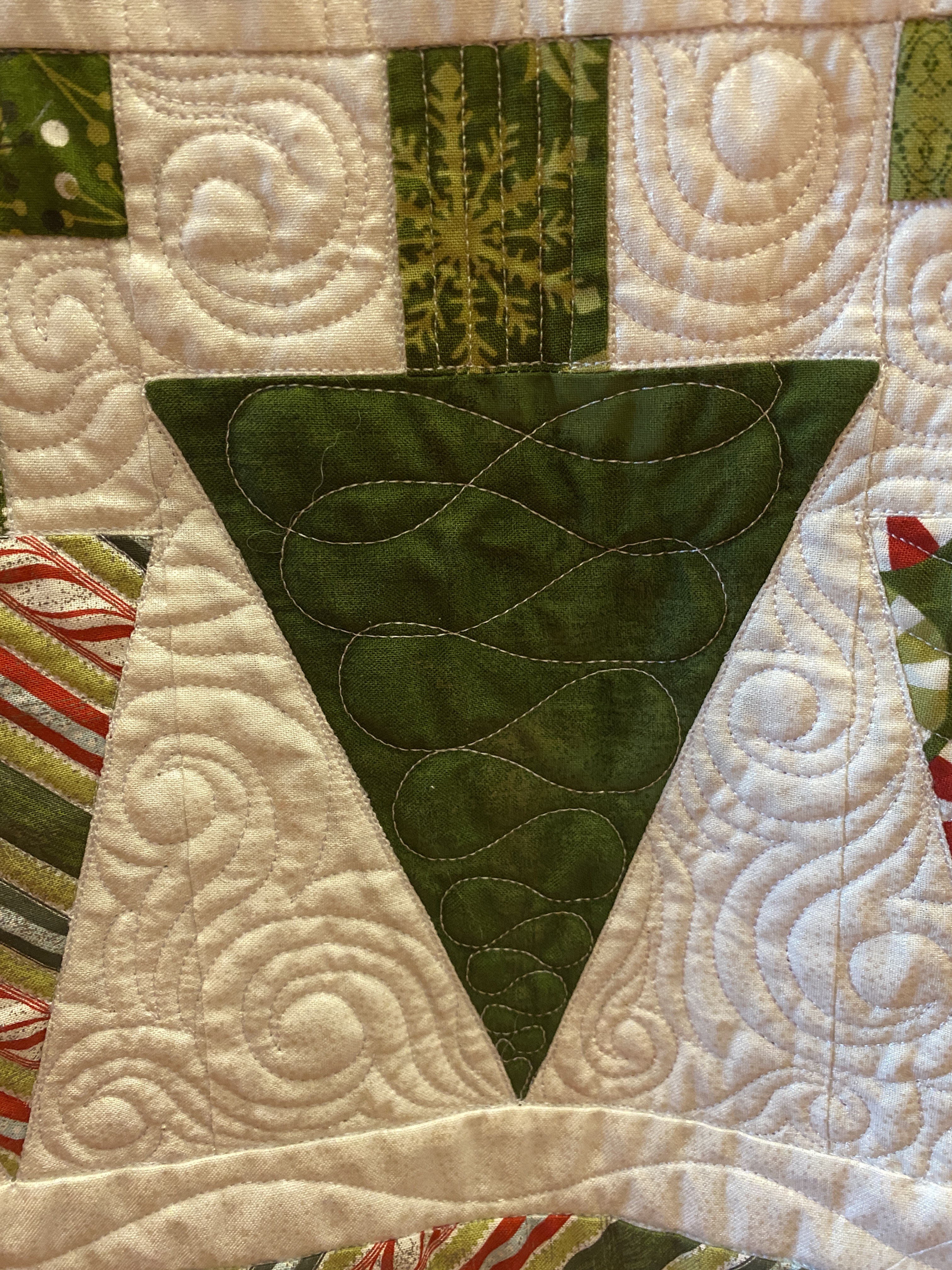
Personally, my quilting plans for FMQ are more detailed than straight line designs using my walking foot. I write my quilting plans down in a 5″x8″ journal. I’ll sketch the top, add in any inspiration photos or quilting details, make notes on the quilting design, spacing, thread, needle, bobbin, etc., along with my plan to divide and conquer maneuvering the quilt sandwich through my machine (I have 11″ to the right of the needle). Right now, my FMQ is to use the same design all over my quilt. As my skills grow, I’ll add semi-custom details in the sashing and borders. Those will be indicated on my quilting plan. It’ll definitely be a while before I reach the stage where each individual block is custom quilted, with each unit having a separate quilting design – like the photo below I took of a quilt at the Omaha Quilt Show .

Photo of a quilt showing quilting detail.

Close-up of quilt showing detailed custom quilting.

Next up on my quilting agenda is my husband’s retirement quilt. Yes, it’s two years after the fact, but I couldn’t decide on the quilting design. I really wanted to do this one all by myself rather than sending it out. I finally saw a quilting design I liked in a collection of straight line quilting designs, but couldn’t figure out how to stitch it. My gut told me this was the design, so I waited. Recently, some YouTube video I streamed had a segment of someone demonstrating how to quilt that exact design. Well, duh! Things finally clicked. Sadie & I will be basting that quilt this afternoon.