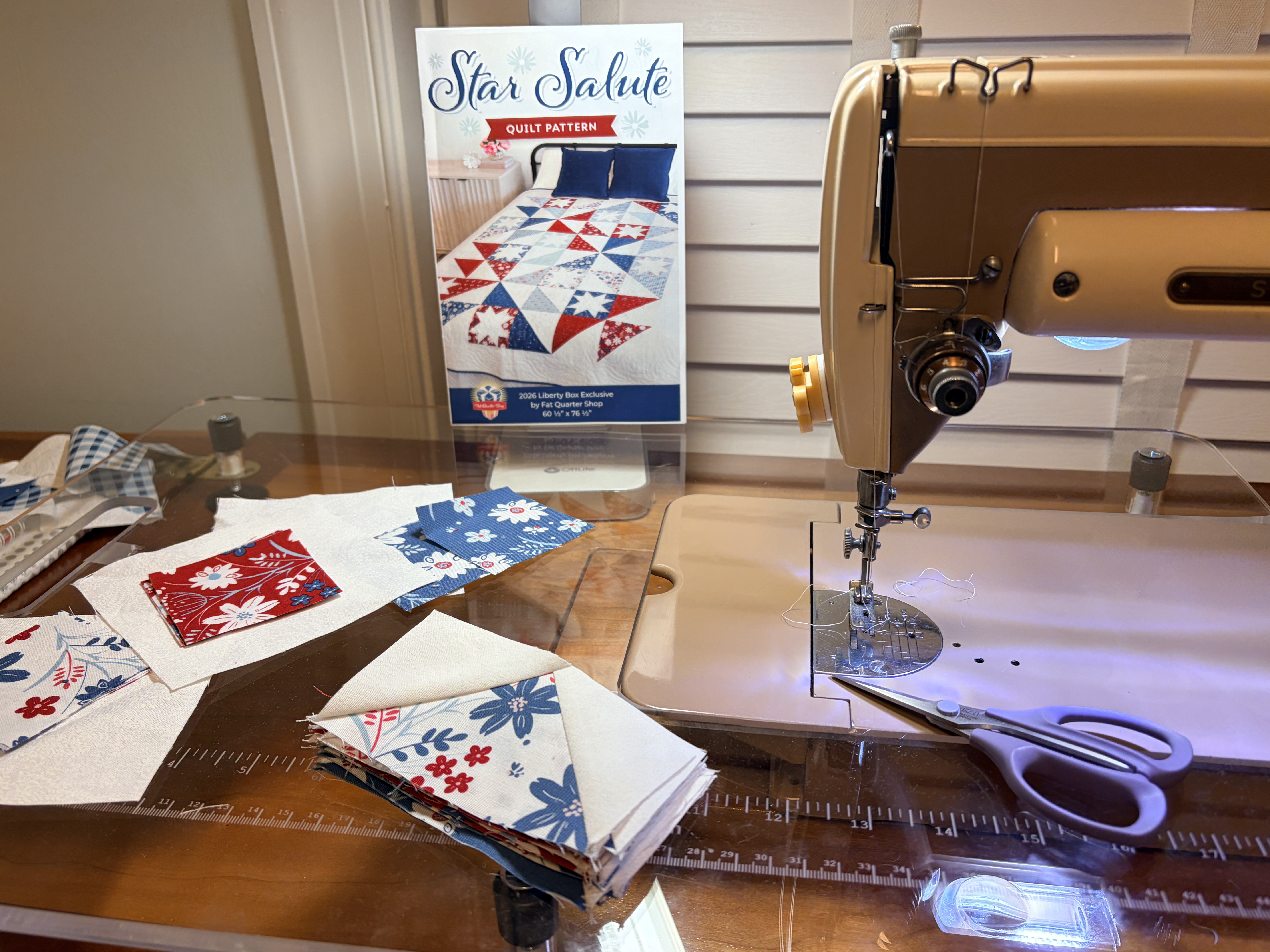
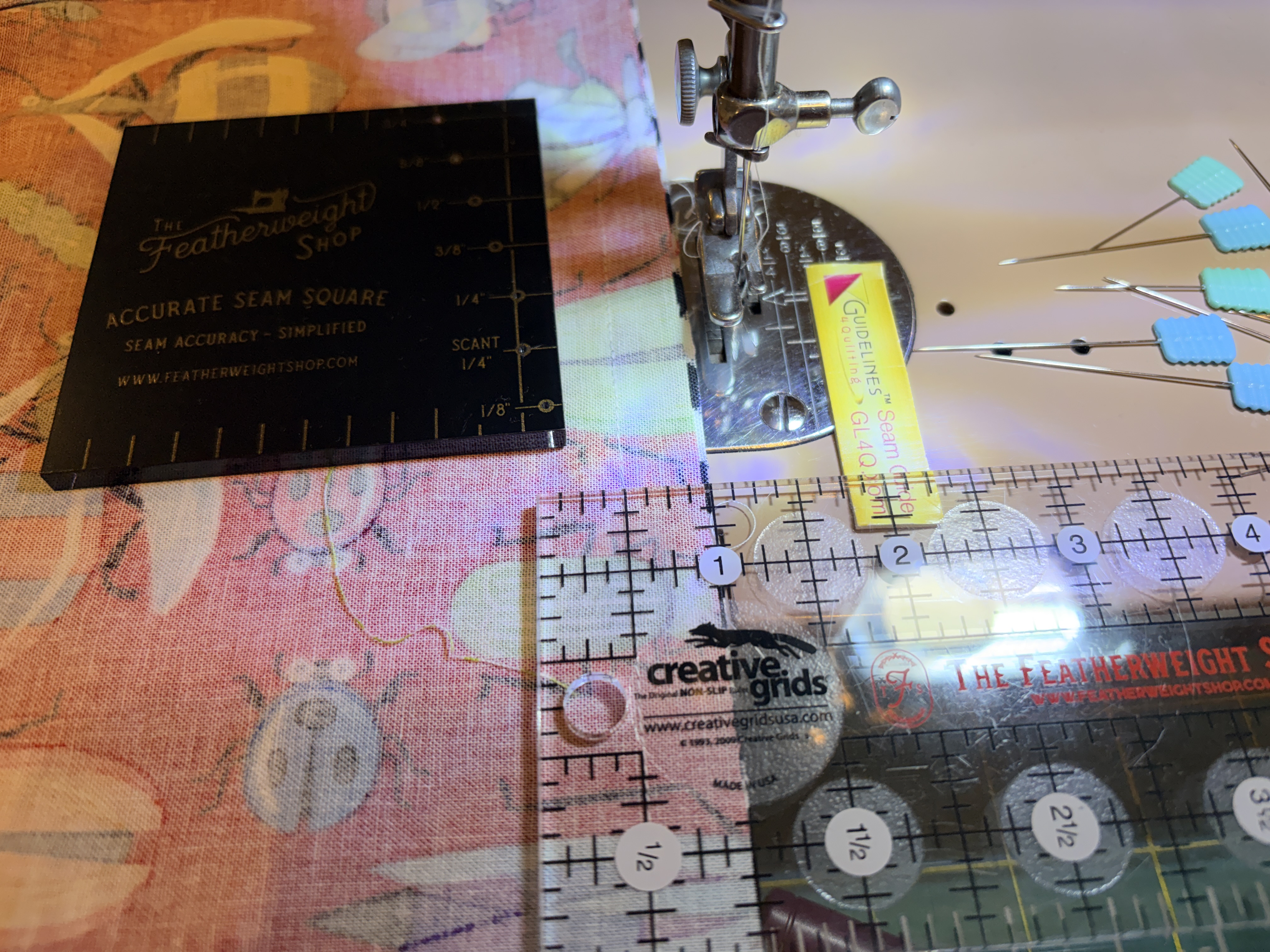
In my happy place
A week ago, I taught my Sewing Machine Maintenance Class at the Southeastern Quilt & Textile Museum in Carrollton. Most students brought newer model Brother machines, but one brought a vintage Singer which uses Centaur bobbins (new to me). Each class always has a machine I’ve never seen before and this one was no exception. I’m glad the student reached out prior to class about needing help finding a machine manual. I found a free version of a similar machine. She actually printed it out and put it in a notebook to bring with her to class. We spent extra time after class deciphering how to load the bobbin correctly. I finally got the machine to sew. The student went home relieved and happy.
There was a check for my instructor fee and a vintage non-working Kenmore sewing machine waiting on me when I left. A year ago, someone had reached out to the museum about wanting to dispose of two old non-working Kenmore sewing machines. I agreed to take them to someone mentoring aspiring sewing machine technicians. Nothing ever came of it.
Imagine my surprise at receiving a message that one of those old Kenmore machines would be dropped off before Saturday’s class. I brought it home, not quite sure of what to do with it, since the person I’d promised the machines to (a year ago) had recently given me a fully serviced Kenmore machine to pass along to a deserving student.
Curious, I opened the case to examine the machine inside. It was a Janome made 10 stitch machine that looked very similar to my sister-in-law’s 12 stitch Kenmore from the late 1970s. No manual. No accessories other than what was on the machine and the foot pedal/power supply. I plugged it in. It powered on. It was dirty.
Everything seemed to move okay. I was able to find a free copy of the instruction manual, so I decided to play service technician. I cleaned her out, gave her a long drink of oil and put everything back together, only to discover the machine only sewed in reverse. I’m positive this is why the machine was given away.
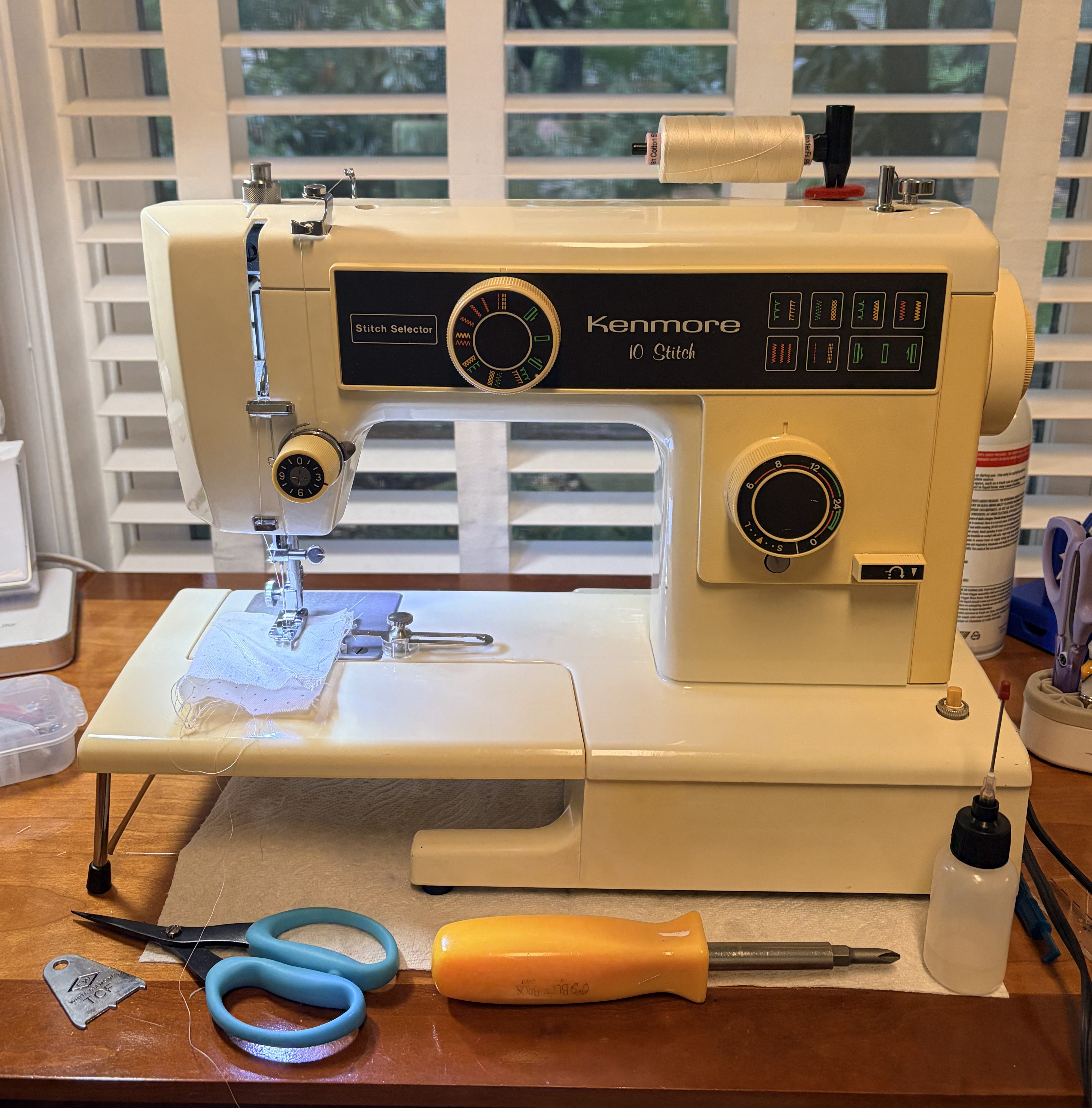
Tri-Flow, time, elbow grease and the internet helped bring this lovely lady back to life. She has a new LED light, sews both forward and reverse, winds a bobbin smoothly and no longer has a lopsided bobbin access door. There’s still a bit of stiffness in her joints as she goes from stretch stitches back to regular sewing. This should continue to improve as the Tri-Flow gets worked into all those hard-to-reach pivot points.
She now sports a new needle plate, an original manual (found on Etsy), bobbins and has a set of presser feet/accessories – including the hard-to-find darning plate on the way.
Interesting tidbit: This Kenmore model 385.1249380 was manufactured by Janome for Sears in April, 1983.
The Thread Post from The Featherweight Shop works well on vintage Kenmores, too. I tried it from both spool pins. but transferred the Thread Post back to the far right spool pin for better thread delivery. The left spool pin was removed and stored in the accessory box. I ordered a green/white flower spool pin doily to replace the red felt.
The Kenmore and vintage sewing machine groups to which I belong tell me this one’s a keeper. We’ll see.