Fall vibes

Cool, crisp fall days are upon us. It’s my absolute favorite time of year! This afternoon, I spent time piecing blocks on Fiona, my white Singer Featherweight. I had the windows open and smooth jazz on the playlist. It was glorious!

Fiona is a special machine. Like many FW enthusiasts, I wanted a machine that was manufactured the year I was born. I was fortunate to find a celery/white FW in extremely good cosmetic condition. Mechanically, she had more than a few quirks. Learning to address those issues taught me a lot! Now, she sews as beautifully as she looks.

On Friday, I was tasked with servicing a 1938 Featherweight that one of my Friday Sew Squad had purchased from a casual visitor to the library’s quilting group. It was untested, but the seller assured my friend that it had worked prior to being packed away for at least 10 years. Yep, she was right about it being packed away for at least a decade. The machine had been sitting in the case so long that the lug belt disintegrated. The tiny, rubbery bits literally superglued themselves to the motor pulley. I had to soak the hardened mass in sewing machine oil and remove it bit by bit. The rest of the machine was in decent shape – oil, lube and a good wipe down were the main things she needed.

I suspect tension issues are what caused the machine to be packed away. This old girl may have a 1938 chassis, but she also sported a number of parts from newer machines – chiefly, the motor, bobbin winder and tension assembly. Someone had installed the parts to the upper tension assembly in the wrong order. I fixed that. Still had issues with the tension. Tried a different bobbin case. Problem solved.

My next task will be to disassemble and clean the original bobbin case. I’ve never done this before, but something seemed off on the bobbin case latch. I ordered a new tension screw and bobbin case spring just in case. Fun bit of trivia: a business card in the FW accessory box was from a quilt shop in south Georgia that has long since closed. Put it this way – the web address listed on the business card was a page hosted on Compuserve. It’s been a while.

Tinkering on Featherweights and teaching machine maintenance classes make me happy. My “shade tree” sewing machine mechanic activities now account for about 20% of my business revenue. I think that’s kind of cool.
does quilting factor into your choice of laundry equipment?

Sure did for me with my recent purchase.

“It’ll be $677.00 to repair the washer, ma’am and that’s if I can get parts,” stated the appliance repairman. “I’d just buy a new one.” With that, my top load GE impeller washing machine had been pronounced dead after only 8 years. He also advised that, based on his experience, Whirlpool and Speed Queen brands seemed to have the fewest repair calls.

The hunt for a new washing machine was on with some very specific and important quilter’s criteria:

(1) genuine soak cycle

(2) stainless steel completely smooth basket (and preferably large enough to hold a king size quilt).

The quilter’s criteria were non-negotiable. I spray baste my quilts and prefer to soak them for 20 minutes to remove any glue before washing. The basket also needs to be smooth so it won’t harm your fabric. Some stainless steel baskets resemble cheese graters on the inside. Run your hand back and forth over it to make sure the surface is smooth.

I found TWO Whirlpool/Maytag models at Home Depot/Lowes that would work. ($750-$1000 for washer)

I found ONE Speed Queen model at a local appliance store that would work. ($1000 for washer)

It all came down to quietness v. load capacity with availability (thanks COVID!) being the deciding factor.

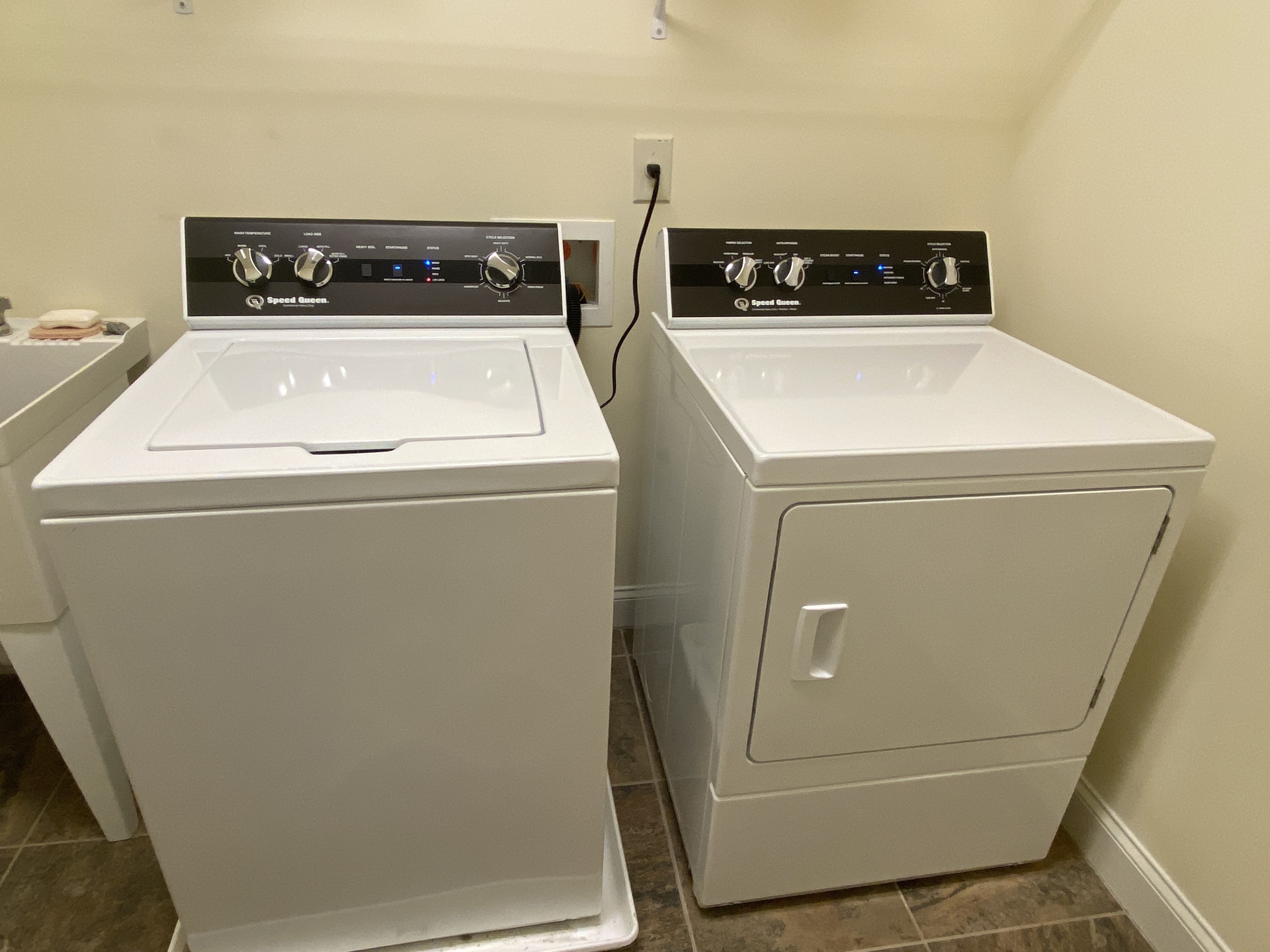
After a two week wait, my Speed Queen TR5 washer & dryer arrived yesterday.

And yes, the washing machine is as quiet as advertised. My parents have had their Speed Queen laundry pair for nearly 15 years now. Hope mine lasts as long!

Speed Queen TR5 washer & dryer in my laundry room

Running a Kid’s Sewing Club (or are you crazy?)

*Yes, I am crazy!  That’s a prerequisite for working with kids!*

One of the highlights of my day job is my weekly maker club.  Some schools refer to it as Genius Hour or Learning Clubs.  Our clubs meet most Fridays and last about an hour.  I host 3 different groups of kids during the school year.

Stitchy Stallion stats:

Leaders:  2 adults, sometimes 3

Grades:  Limited to 4th & 5th only

Members:  Max of 12 students per club cycle – 1 adult : 4 students works well.

Machines:  Six total – a mix of newer mechanical Janome, Singer and Brother machines. As with technology, a 1:1 ratio would be ideal, but we make it work by buddying up with 2 students per machine. 

Funding:  School/PTA is unable to provide funding for clubs (No surprise here as I work in a really high poverty area  – 98% free & reduced lunch). My club started with a sewing machine and supplies provided by a Donorschoose.org campaign.  Everything else has been donated by local businesses, friends, coworkers, or paid for by me.

Projects:  Plan for two projects during each 6-8 week club cycle.  A small project (potholder or felt stuffie) + 1 larger project (pillowcase, applique pillow) worked well. I always keep fabric scraps out for them to practice machine stitching.  If one of the group leaders must be out, we have a craft activity as backup (Clover pom pom makers and pom pom critters were a HUGE hit).   Hand embroidery is an activity that will be added to next year’s activity line-up.  For alternate activities that are free:  have students measure/sort fabric & inventory club supplies, watch a video clip (how thread/fabric is made by Cotton + Steel are GREAT videos), design fabric (by hand or using school software), search Pinterest or other preselected sites for projects that interest them.  Of course, if your school will allow you to charge a small supply fee, you can do even more projects.

Club Schedule:  Sign in, snack (every other time), quick overview and get to work. Stop 10 minutes early to clean up.

Supply Storage:  My club meets in the library.  I have a locked cabinet and a set of shelves in the storage room for my club supplies.  Sad to say, but stuff has a habit of disappearing at my school.  Scissors, pom pom makers and machines are all locked up in the cabinet or my office.  If I did not have a space to store sewing machines, we would be limited to mostly hand sewing projects.  When the day comes that I run this as an after school club, I will invest in a folding flat cart to transport machines and supplies.  (I plan to have 4 of the same kind of sewing machine – computerized with a speed controller). I will also have more time for set-up and take-down (which I do not have now).  

What makes it work for us:  Pre-cut all projects ahead of time.  Designate two helpers who can come 10 minutes early to help set out sewing machines and tools prior to club. I’ve also found snack-time to be a good way to give me an extra 10 minutes if I need it. Select projects based on student input and the supplies you already have on hand.  My sewing friends have been exceedingly generous with de-stashing their unwanted fabric and sewing supplies in my direction.

What’s in it for me?  Right now, I am able to use my maker club as an idea incubator/testing ground for potential projects to offer in Saturday Kid’s Club at the quilt shop or summer sewing camps.  I also get to view sewing through a newbie’s eyes on a regular basis.  Those of us who’ve been sewing for a long time tend to forget what it’s like to be in their shoes.

How can I use this experience to grow my crafty biz?  While visiting my niece in Boston, I wandered into a crafty maker space called Gather Here. I LOVED the concept. This gave me the idea to offer a mobile craft/stitch lab that catered to after-school and homeschool groups. The existing day job makes it a bit of a challenge at the moment, but one day I can see myself offering after-school clubs at local elementary schools or in RV parks as we toodle around the USA.

Helpful resource for those considering starting a club:

Running a Sewing Club from the Utah State University Extension Service (4-H)

Also check out my Pinterest pages for kid’s sewing projects (here and here) and be sure to review the wealth of information on my Virtual Sewing Classroom website.