Clippings Quilt Pattern by Thimbles & Needles in 40″ x 48″ size
Ever buy a pattern and push everything else aside so you can make the top? Well, here you go! I saw the quilt on a quilt retreat site. I loved the scrappiness of it and wasn’t planning to attend the retreat, so I bought the pattern.
After several months of working on various charity quilts with my guild’s bee group, I had oodles of random charm squares and yardage of the white and gray prints fabrics leftover. I’ve definitely learned how to make combination units (or 3 color HSTs). I haven’t decided if I’m keeping or donating this one.
Hints if you make this pattern:
The layout is 10 x 12 for a baby quilt.
Starch QST fabrics well before cutting out.
When sewing blocks to form rows, press seams open.
When sewing rows together, press seams open.
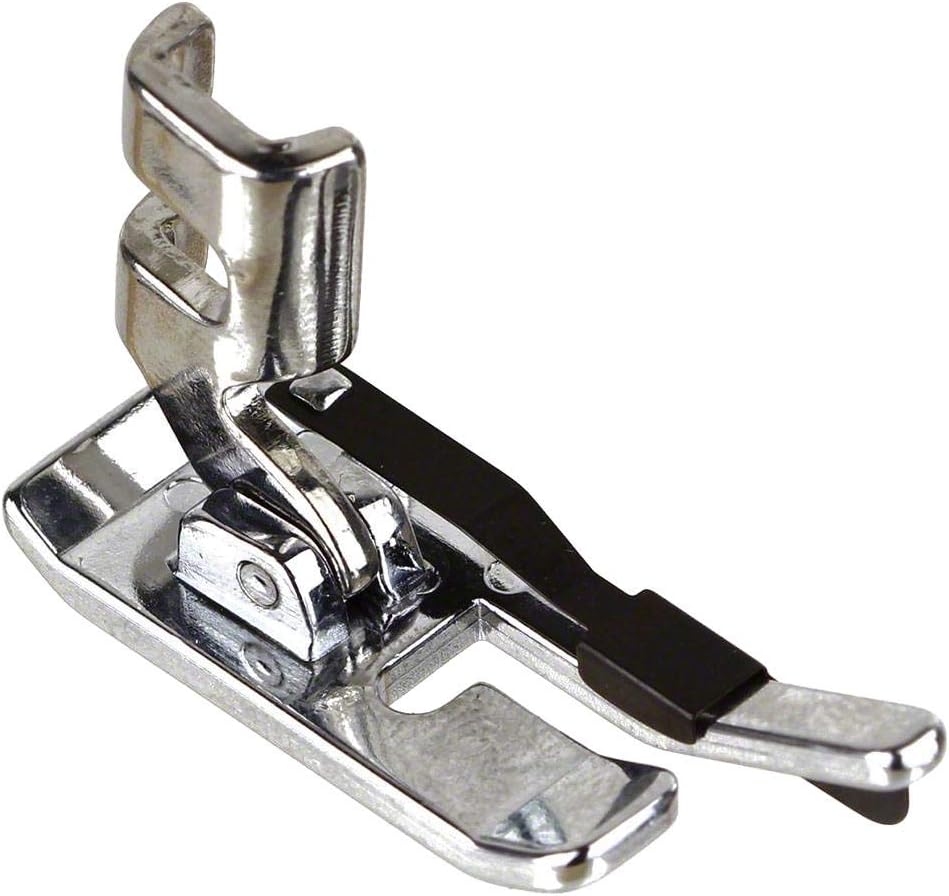
Hinged-style presser foot (ANF221)
I sewed this quilt top using my Singer Featherweight 221. I prefer a 1/4″ foot with a guide. I went through my entire collection of 1/4″ feet with the guides. Final verdict? The original presser foot or the hinged-style 1/4″ foot (part number ANF221) makes sewing over bulky seams and maneuvering around pins much, much easier. This foot fits most center needle low-shank machines and might be a better alternative than the standard 1/4″ foot with the diagonal cut out on the left hand side that seems to get caught on every HST or FG seam. Prices vary widely, so search by part number to compare prices.
At some point, I’ll be cutting down some leftover layer cakes to make one in a throw-size for me!
Seem a little early to start thinking about quilty travel and projects for 2026?
Destination Retreats, Major Quilt Shows and Guided Tours It’s not too early to plan for retreats – especially if you want to attend a retreat in spring/summer 2026. Retreat organizers have begun advertising and some events have already filled. I’ve booked a retreat for January and am considering adding another one for late July – after our big quilt show in June. Both retreats are reasonably priced (to me anyway), within a 6 hour drive of ATL and offer private room accommodation options.
Keep in mind that travel expenses can increase the cost of a retreat exponentially – especially if you have to fly, rent a car and cover additional nights of hotel to accommodate your flight schedule. In my experience, regional events tend to be much more budget friendly, particularly when traveling by car. My only advice is to make sure the event/destination is worth any extra travel costs and time required to attend the retreat.
QuiltCon returns to Raleigh, NC in February (not attending this time). AQS – Daytona Beach, FL is about the same time in February. Major shows such as Road2VA and A Mountain QuiltFest (TN) should post instructor, class and quilt show information in March. All are great events to attend. In 2026, other commitments will keep me from attending these shows.
Projects Many fabric manufacturers release their new lines from November – January. A companion sew along event is usually scheduled along with the fabric launch. Check the Moda Fabrics and Riley Blake Designs websites for collection storyboards and accompanying sew along announcements. Fat Quarter Shop, Pat Sloan Quilts and Missouri Star Quilt Company also have information about upcoming QAL events. Perhaps your local guild, sewing group or quilt shop is hosting an event in conjunction with the scheduled QAL. For a modest fee ($5-/$10), you can hang out, sew that week’s block and drink wine with your stitchy friends on Thursday nights. Bad weather or not able to get out? Join stitchy friends virtually. Check out Jelly Roll Club and Patchwork Posse for virtual sew-with-friends events.
Here’s what’s on my project calendar for Winter/Spring 2026:
New Years Day with Stitchin’ Heaven 11:00 a.m. – 4 p.m. EST. on YouTube. I usually make one of each block during the simulcast and turn them into placemats to donate to Meals on Wheels.
2026 RBD Block Challenge with Riley Blake Designs. Blog post, video and block pattern released most Tuesdays, beginning January 6th. A new one for me in 2026 – challenging blocks from some designers I know and several I’m not familiar with.
Lori Holt Farm Fresh QAL (featuring newly released Farmer’s Daughter fabric collection) starts January 26th. Weekly blog post, introductory video and lots of social media. This will be a QALproject in real time with 3-4 membersof my Friday sewing group. I’m sew excited!
The event with Stitchin’ Heaven continues what has become an annual tradition for me. The RBD Block Challenge will provide a weekly challenge through late May and what I anticipate to be a gorgeous finished quilt. The Farm Fresh QAL will will provide a weekly outing, plus opportunities to deepen friendships with fellow quilters outside of my guild. All three projects will enable my de-stashing endeavors. Since I already have the required Lori Holt books and am sourcing materials from existing stash for all 3 projects, this makes the cost to participate minimal. Money saved here means more money for quilty travel!
My 3/4 size Elna STAR edition – perfect for classes and retreats!
If October had a word of the month for me, it would be recalibrate. My SUV needed to have safety software recalibrated as part of a recall. We met with our financial planner to recalibrate our overall financial plan and update goals now that we’re three years into retirement. Hubs is currently at MD Anderson for his scheduled check-up. This time tomorrow, we’ll be recalibrating future plans as needed based his scans, bloodwork and biopsy results.
Personally, volunteer activities have also had to be recalibrated to accommodate program/facility changes, personal preferences and major upcoming home projects. Soon, Sadie & I will be starting a R.E.A.D. program at a school in a Fulton County. This makes me happy because I was truly bummed when Park Street indicated they couldn’t continue the R.E.A.D. program this year. Yes, Sadie & I will still make occasional visits there, but in a different capacity.
As far as sewing and quilting go, I’ve stepped back from any new charity sewing initiatives and a few guild events to focus on my own projects and those of my private students. Recalibrating our financial goal wish list led to some breathing room in the monthly budget. This helps us deal with the rising costs of everyday living, plus be able to tackle some minor sewing studio updates I’ve had on my list.