Gratitude

As the new school year fast approaches, several of my coworkers have been checking in and the conversation always starts, “So how’s your summer been?”.

Hmmm…equal parts relaxing, productive and frustrating.

Grateful for the 8 weeks off to catch up on my sleep, play with the dog, have lunch with friends and putter around my sewing room.

Productive in that I have almost knocked out the entire summer to-do list, in spite of the constant companionship of the “pet me monster” (my dog, Boomer).

Frustrating in that my children’s sewing classes didn’t pan out the way I’d planned.  Felt like I spent three weeks of precious summer vacation chasing my tail.   Trying to locate space in which to teach privately or hold small group lessons (other than my home or subdivision clubhouse) turned up many dead ends.   The obvious suggestion by interested parents was for me to teach classes after-school at my existing worksite – which is unfortunately out of the question.  School board policy prohibits “private tutoring for pay” on school property by district employees.  Even running an after-school arts and crafts club through my LLC is not okay.

My goal was to find a fabric or craft shop  centrally located where I could rent space by the hour or as a percentage of my teaching fees.  I did find one, but I am limited to the hours the shop is open and when adult classes aren’t being held in the classroom.  Oh – and no Saturdays either if an event is going on (which is most Saturdays at this particular shop).    If I were a resident of a certain local city, I could rent space at the recreation center quite reasonably by the hour for sewing classes.  Non-resident fees are simply too much.

Oh well, I’ll keep looking and again, I keep going back to the local church with the established arts program.  It would be worth contacting to see if there’s any interest.  Someone also suggested I look at offering my arts&crafts club  in the neighboring school district.  There are 2 or 3 elementary schools fairly close that I could probably get to in a reasonable amount of time after I complete my duties at my own school.  Will have to consider that.

The big BUT in this whole endeavor is I have to see the upcoming local school calendar before I can plan anything.  That has yet to be made public and probably won’t be until preplanning.  Yes, the district calendar is available, but the local school calendar contains information regarding staff meeting days, PTA nights and other special evening and Saturday events we will be required to attend.

As frustrating as finding space for sewing classes has been, business did come in unexpected ways – namely commissioned quilts by friends and repairing antique quilts.  This has been a very pleasant surprise.  I will be vending at a craft fair in late August to test the waters again.  My previous foray into craft fairs several years ago at a school Christmas craft extravaganza was not a good one.  I am grateful for the other doors opening when it seems like the window for teaching classes keeps getting slammed shut.


Inspiration from the Past

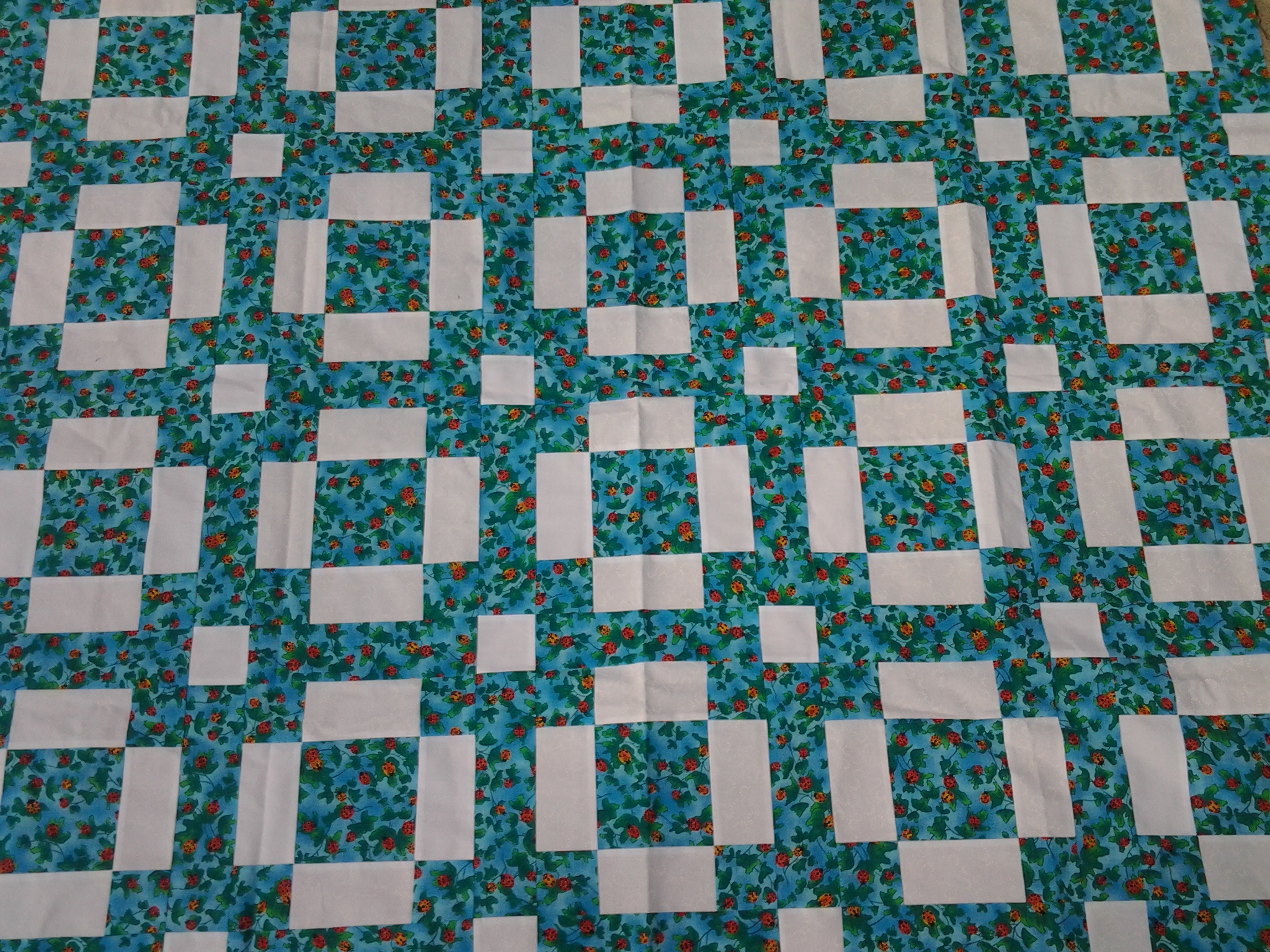
All I wanted to do was make a child’s quilt to donate to my quilt guild’s local charity – the Paulding County Sheriff’s Department. Fabric had to come from the stash.  Wanted something different.

My quilt top using the Children’s Delight block made from ladybug fabric (courtesy of my stash).

So I let my fingers do some web-surfing.  I visited the Project Linus website…
     and found the inspiration I was seeking.

It’s based on the Children’s Delight block, which appeared in the 1890’s catalog of the Ladies Art Company out of St. Louis, Missouri.  Needlework and domestic pursuits from previous eras is an interest of mine, so of course I had to do some further research.  The fine folks over at the Antique Needlework Library, a volunteer organization dedicated to preserving needlework books and materials from the past, had actually scanned and uploaded a pdf copy of the the Ladies Art Company catalog.  You can view it here.  Of course, I printed out a copy – will put in protective sleeves and in a 3 ring binder to keep in my studio (along with a magnifying glass!).

In case you’re interested, The Quilter’s Cache also has instructions on how to make a single block of the traditional Children’s Delight block pattern.  QC is also a great electronic resource for basic quilt blocks if you don’t have Electric Quilt or one of the other quilt design software programs.   I’ve participated in two album block swaps that used blocks from QC.  I found the directons to be accurate and easy enough to follow.

Meet Ruthie

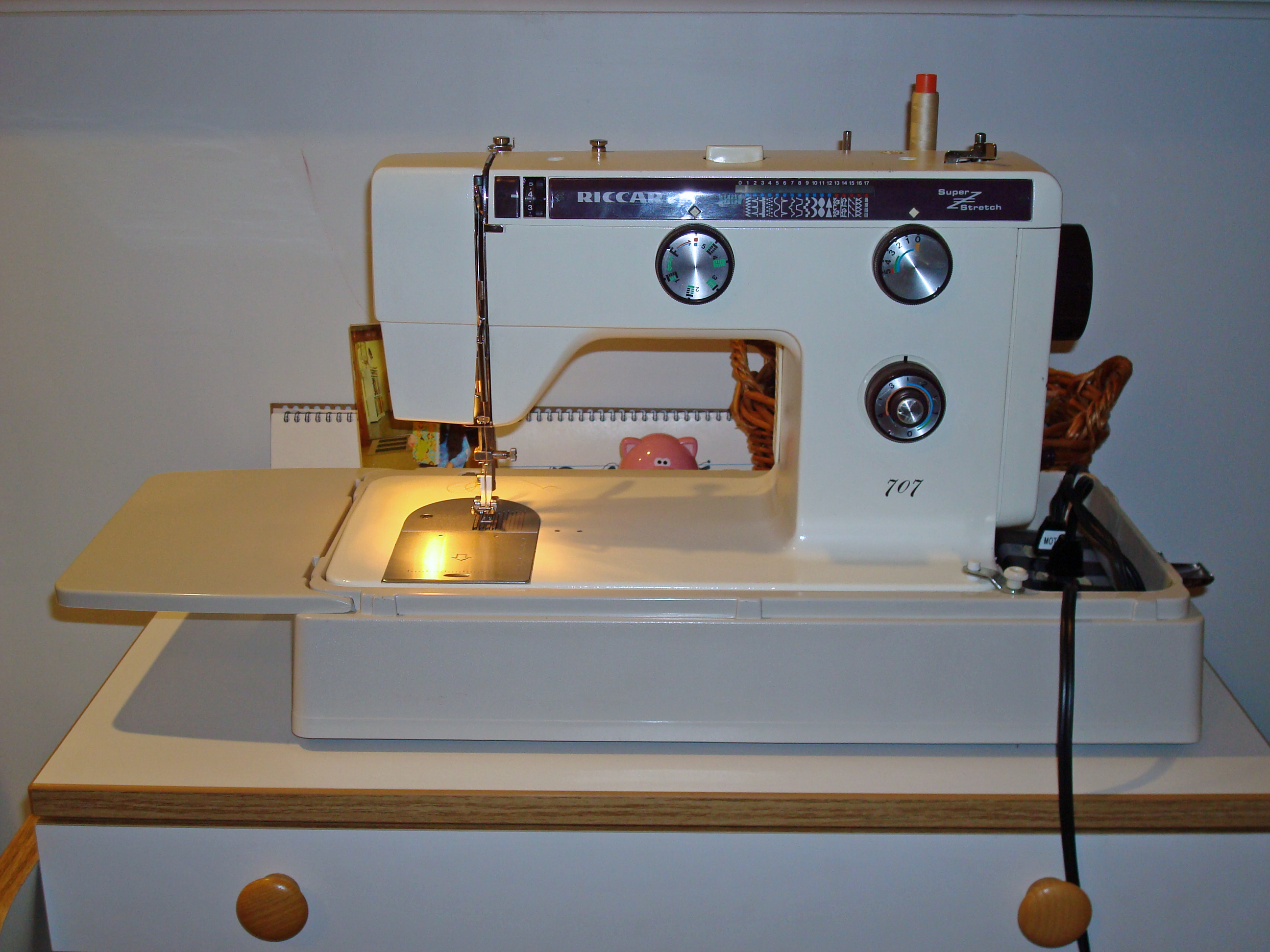
Ruthie is my newest classroom machine.  She’s certainly a sturdy girl  –   a Riccar Model 707, which I was told by the company dates her to the late 1970’s.  Like her namesake (my mother), she has a few quirks –  she won’t make any stitch past number 9 on the stitch selector wheel and the service tech couldn’t figure out why.  Not to worry, because what  stitches she does do are absolutely beautiful and the machine is a breeze to operate.

Fortunately, Ruthie had recently been serviced when my friend gifted her to me.  She was originally housed in a cabinet, so she needed a carrying case, power cord and machine feet.  The case you see here is the super deluxe flatbed model with the extension arm advertised on some websites.  Fortunately, I found one locally.  It is a well-made case and worth every penny – especially if you have an old Singer flatbed or Class 15 clone that you want to make portable.

Ruthie sounded like a Mack truck when I first tested her out on the kitchen table.  The carry case, along with a foam pad and thick toweling in the case underneath the machine helped muffle the noise.  Accessories did not come with the machine.  Fortunately, I have many class 15 bobbins in my stash and old sewing machine feet that will work quite nicely on Lil Ruthie.

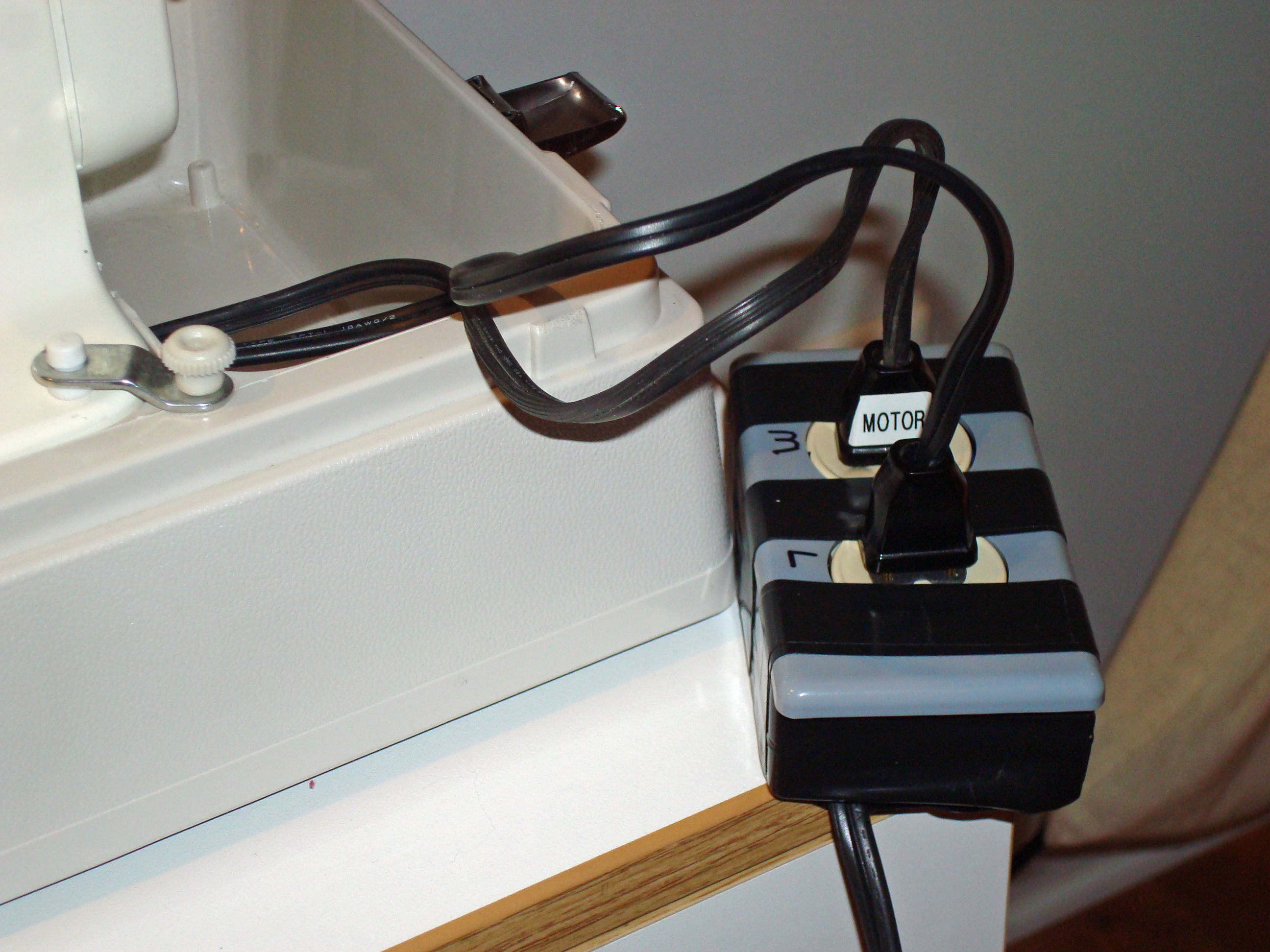
I discussed the foot/power cord situation in an earlier post.  Honestly, I’d never seen such a thing before.  Instead of a single port that encompasses the power and foot pedal, Ruthie has two cords that must be plugged into a “block”, which is in turn plugged into a standard electric outlet.  Hubby lengthened the foot pedal cord for me and proceeded to install a more substantial “block” for the light and motor cords to plug into. That’s what you see here. The two cords from the machine plug into the gray box pictured. Attached to the gray box are the power cord and the foot pedal.  The wiring is actually 16-2 lamp wire.  The light will stay on all the time (if you push the button on the machine) and the machine only sews when you press the pedal.  Should you reverse the cords, the machine will run continuously (if the light switch is on) and the light will only come on when you press the foot pedal.   That’s why I marked them M and L and you see labels on the plugs.  The box will get blinged and it nestles out of the way in the side compartment.  Thanks to hubby, I have a sturdy electrical connection with no worries about wires coming loose from student use.

Update 1/10/16: Ruthie was recently “rehomed” to someone in need of a machine. Nice machine, but way too heavy to tote to sewing classes, especially when no one wanted to use it.