Another entry level machine – Singer Simple
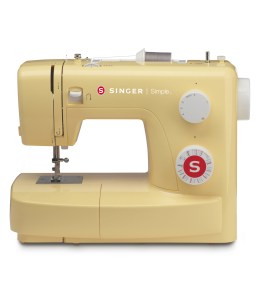 I was at Joann’s this week (putting a gift card to use) and stumbled upon this yellow machine. Tw0 students in previous classes used a top loading version of the Singer Simple with relatively good results (meaning I didn’t have to stop and rethread the machine every 5 minutes). I thought the yellow color was better than pink or turquoise for the boys in my club, so the yellow one went home with me. It went back to the store the very next day – and not for the reasons you might think.
1) The machine went back because the white top thread was consistently gray. No matter how much I wiped down the bobbin case, bobbin housing or upper threading mechanism, I had gray thread. The bottom thread remained snow white. I used my good Aurifil thread, too! The metal in the bobbin compartment looked like it had oxidized.
(2) The yellow color made it difficult to see things at night. The machine was the same color as the light put out by the sewing machine light. An LED bulb would probably make a difference.
It’s actually a decent sewing machine if you don’t mind a lot of plastic. Stitch quality was good, selector knobs turned easily without hurting my hand and the machine remained stable when I pressed on the gas. This particular machine’s motor had a higher pitched hum than what I’m used to – not necessarily nuisance level, but it took me a few minutes to learn to tune it out. It was also easy enough for me to thread the needle without my glasses and a needle threader.
It certainly gets the job done. If you need a basic machine for less than $100 that is on the colorful side, then give this one some consideration. You might hold out for a machine with a 1 step buttonhole and built in needle threader if you plan to get really serious about sewing.
 Come Stitch With Me