Inspiration from the Past

All I wanted to do was make a child’s quilt to donate to my quilt guild’s local charity – the Paulding County Sheriff’s Department. Fabric had to come from the stash.  Wanted something different.
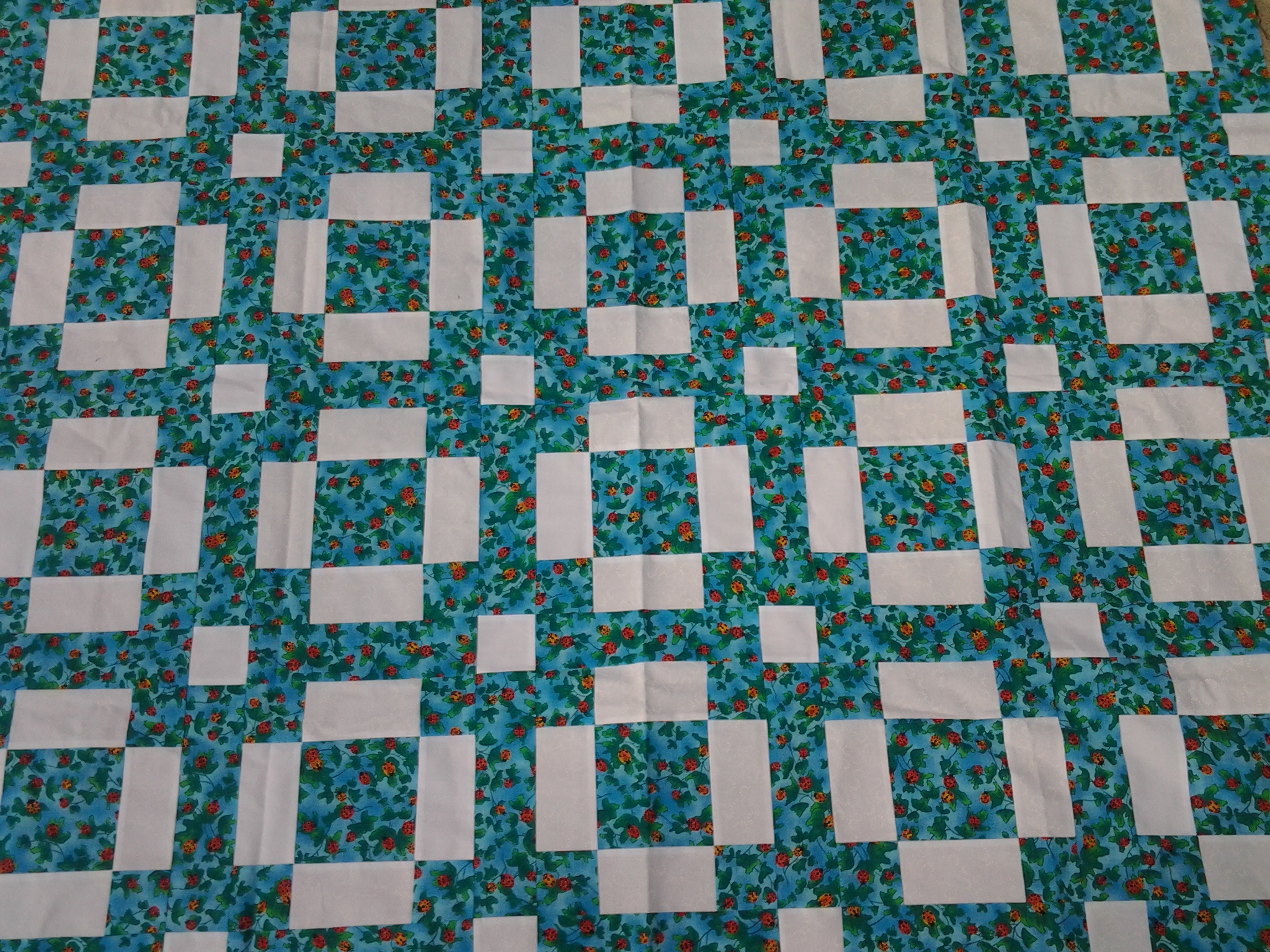
My quilt top using the Children’s Delight block made from ladybug fabric (courtesy of my stash).

So I let my fingers do some web-surfing.  I visited the Project Linus website…
     and found the inspiration I was seeking.

It’s based on the Children’s Delight block, which appeared in the 1890’s catalog of the Ladies Art Company out of St. Louis, Missouri.  Needlework and domestic pursuits from previous eras is an interest of mine, so of course I had to do some further research.  The fine folks over at the Antique Needlework Library, a volunteer organization dedicated to preserving needlework books and materials from the past, had actually scanned and uploaded a pdf copy of the the Ladies Art Company catalog.  You can view it here.  Of course, I printed out a copy – will put in protective sleeves and in a 3 ring binder to keep in my studio (along with a magnifying glass!).

In case you’re interested, The Quilter’s Cache also has instructions on how to make a single block of the traditional Children’s Delight block pattern.  QC is also a great electronic resource for basic quilt blocks if you don’t have Electric Quilt or one of the other quilt design software programs.   I’ve participated in two album block swaps that used blocks from QC.  I found the directons to be accurate and easy enough to follow.
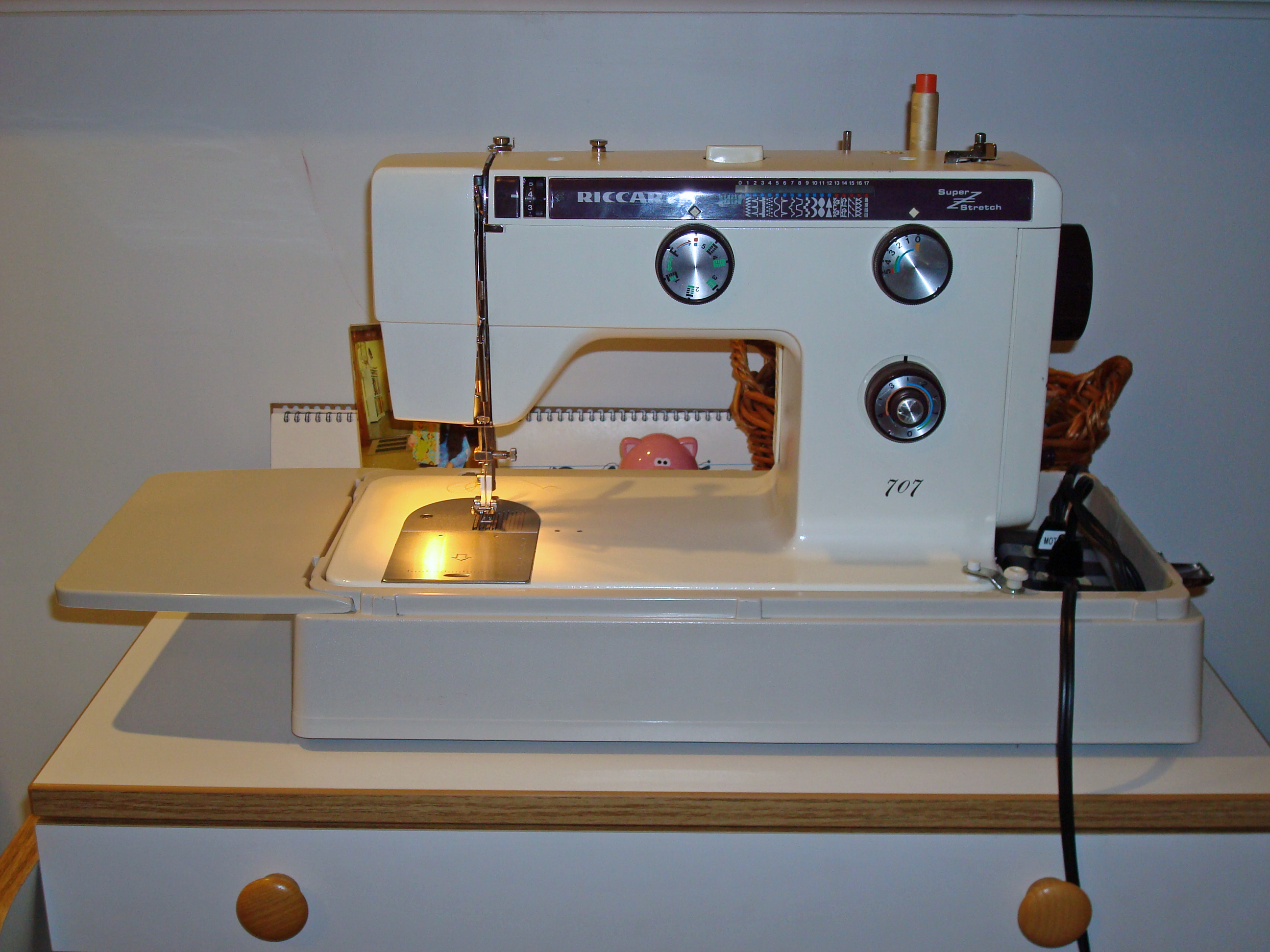
Meet Ruthie

Ruthie is my newest classroom machine.  She’s certainly a sturdy girl  –   a Riccar Model 707, which I was told by the company dates her to the late 1970’s.  Like her namesake (my mother), she has a few quirks –  she won’t make any stitch past number 9 on the stitch selector wheel and the service tech couldn’t figure out why.  Not to worry, because what  stitches she does do are absolutely beautiful and the machine is a breeze to operate.

Fortunately, Ruthie had recently been serviced when my friend gifted her to me.  She was originally housed in a cabinet, so she needed a carrying case, power cord and machine feet.  The case you see here is the super deluxe flatbed model with the extension arm advertised on some websites.  Fortunately, I found one locally.  It is a well-made case and worth every penny – especially if you have an old Singer flatbed or Class 15 clone that you want to make portable.

Ruthie sounded like a Mack truck when I first tested her out on the kitchen table.  The carry case, along with a foam pad and thick toweling in the case underneath the machine helped muffle the noise.  Accessories did not come with the machine.  Fortunately, I have many class 15 bobbins in my stash and old sewing machine feet that will work quite nicely on Lil Ruthie.

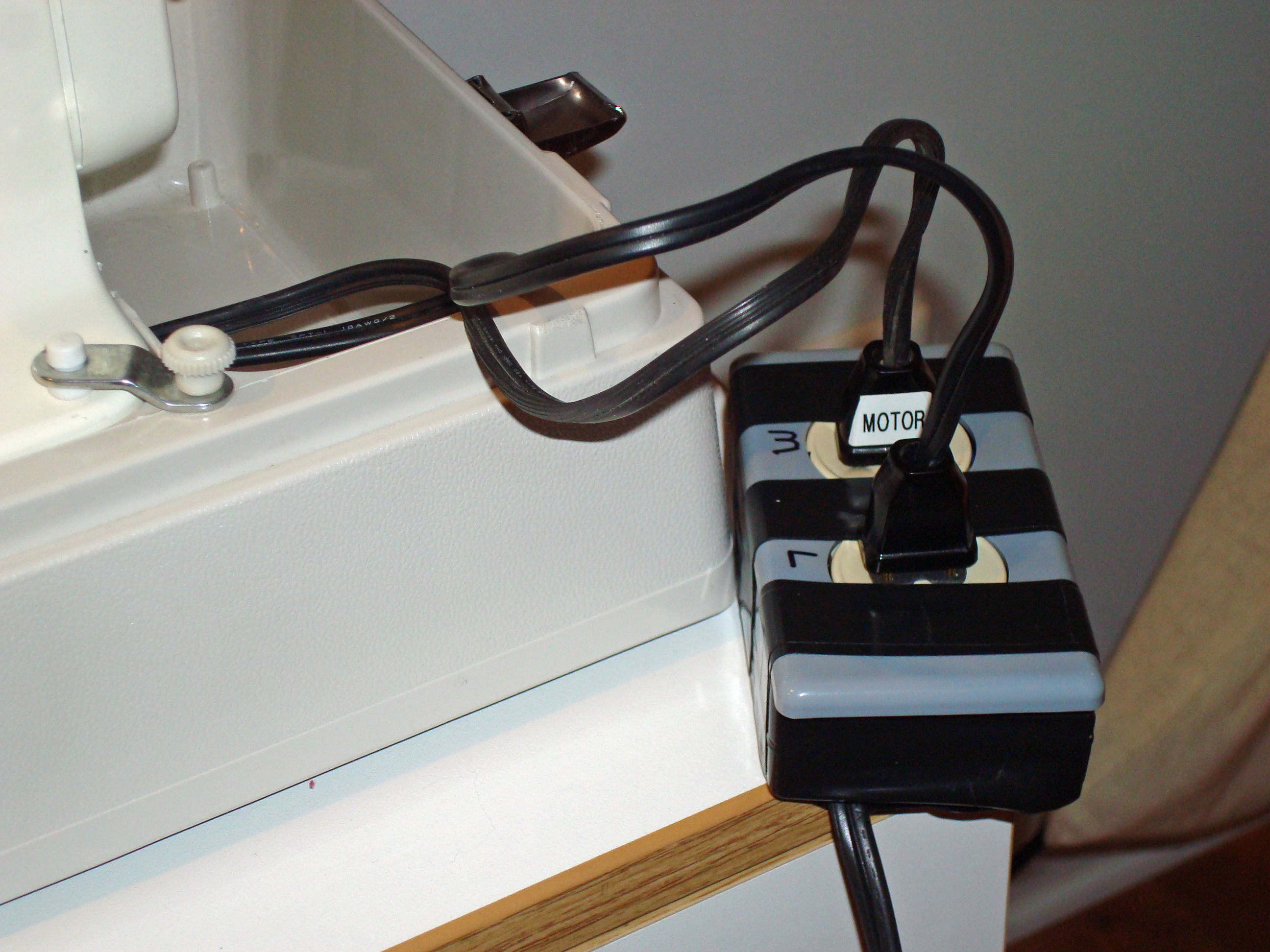
I discussed the foot/power cord situation in an earlier post.  Honestly, I’d never seen such a thing before.  Instead of a single port that encompasses the power and foot pedal, Ruthie has two cords that must be plugged into a “block”, which is in turn plugged into a standard electric outlet.  Hubby lengthened the foot pedal cord for me and proceeded to install a more substantial “block” for the light and motor cords to plug into. That’s what you see here. The two cords from the machine plug into the gray box pictured. Attached to the gray box are the power cord and the foot pedal.  The wiring is actually 16-2 lamp wire.  The light will stay on all the time (if you push the button on the machine) and the machine only sews when you press the pedal.  Should you reverse the cords, the machine will run continuously (if the light switch is on) and the light will only come on when you press the foot pedal.   That’s why I marked them M and L and you see labels on the plugs.  The box will get blinged and it nestles out of the way in the side compartment.  Thanks to hubby, I have a sturdy electrical connection with no worries about wires coming loose from student use.

Update 1/10/16: Ruthie was recently “rehomed” to someone in need of a machine. Nice machine, but way too heavy to tote to sewing classes, especially when no one wanted to use it.


Pardon me Mr. President, but I’m the one who took the risk and started this small business –

I saved the money from my full-time job as a school librarian so I would have start up capital for my sewing business.  My business is run on a cash basis and will be self-financed.

I am the one who filed the forms and wrote the checks to set up my business entity, obtained the business license and secured liability insurance before I ever advertised my services.

I am the one who developed projects and met with local shop owners to convince them to let me teach kids’ sewing classes at the shops.

I am the one who found and fixed up old sewing machines that my students could use in class, because not everyone has the money to buy a machine when they are first learning how to sew.

I am the one who taught those sewing lessons.

I am the one who figured out how to restore a grandmother’s flower garden quilt and proceeded to do so, much to my customer’s delight.

I am the one who took a pile of old t-shirts and turned them into a much loved quilt (and this was for a repeat customer, I might add!).

I am the one who took a friend’s sketch and figured out how to turn it into a mermaid quilt for her daughter’s bedroom.  I also sourced the “just right” fabric, which was by no means an easy feat.

I am the one designing and making the projects to vend at an upcoming craft fair to benefit a pet rescue group.  Any profits, if any, will be split equally between Etowah Valley Humane Society and READing Paws.

I am the one who risked $1.00 in listing fees to try an Etsy storefront.  It didn’t work for me, but that doesn’t mean I won’t try again in the future.

Please answer me this question:  If I wasn’t the one to set up and run my business, then who did?

By the way, Mr. President – you need to find another speechwriter.