Tying up loose ends from the former day job

I forgot how much paperwork is involved with the benefits side of the transaction once you leave an employer. I’ve received at least one piece of benefits-related mail every day for the past two weeks – most of it continuation notices required by law.

The long awaited COBRA packet for our health insurance coverage arrived today – a month sooner than expected. Did my reaching out to plan reps in June and July speed up the process? I have no idea. Anyhow, I wasted no time in making my elections and paying the first premium payment. Hopefully, everything posts properly on Monday and we show coverage effective 9/1. My current coverage expires at the end of August.

Under COBRA, you have 60 days to decide whether or not you want to keep the health insurance coverage that you had with your former employer. Once your coverage as an active employee ends, you move to an inactive status with the insurance company. What this basically means is you have no insurance coverage until you fill out the election form and pay the required premiums. Your insurance is then reinstated retroactively. It can be a real hassle if you need care during the COBRA election period because you are essentially a self-pay patient until the insurance is turned back on. You can get reimbursed after the fact, but I sought to avoid this hassle, if at all possible. COBRA continuation coverage was our only option because hubby requires specialty care and MD Anderson does not accept ACA insurance plans. Assuming all systems are go on Monday, I’ll be scheduling the remaining medical appointments on my list.

What a difference a year makes! Exactly one year ago, I began the master to-do list so hubby could begin his escape from corporate life. Little did we know I would also be joining him! COBRA continuation coverage is one key piece of the puzzle that made this whole thing possible. I am so grateful for it.
Quilting for a good cause

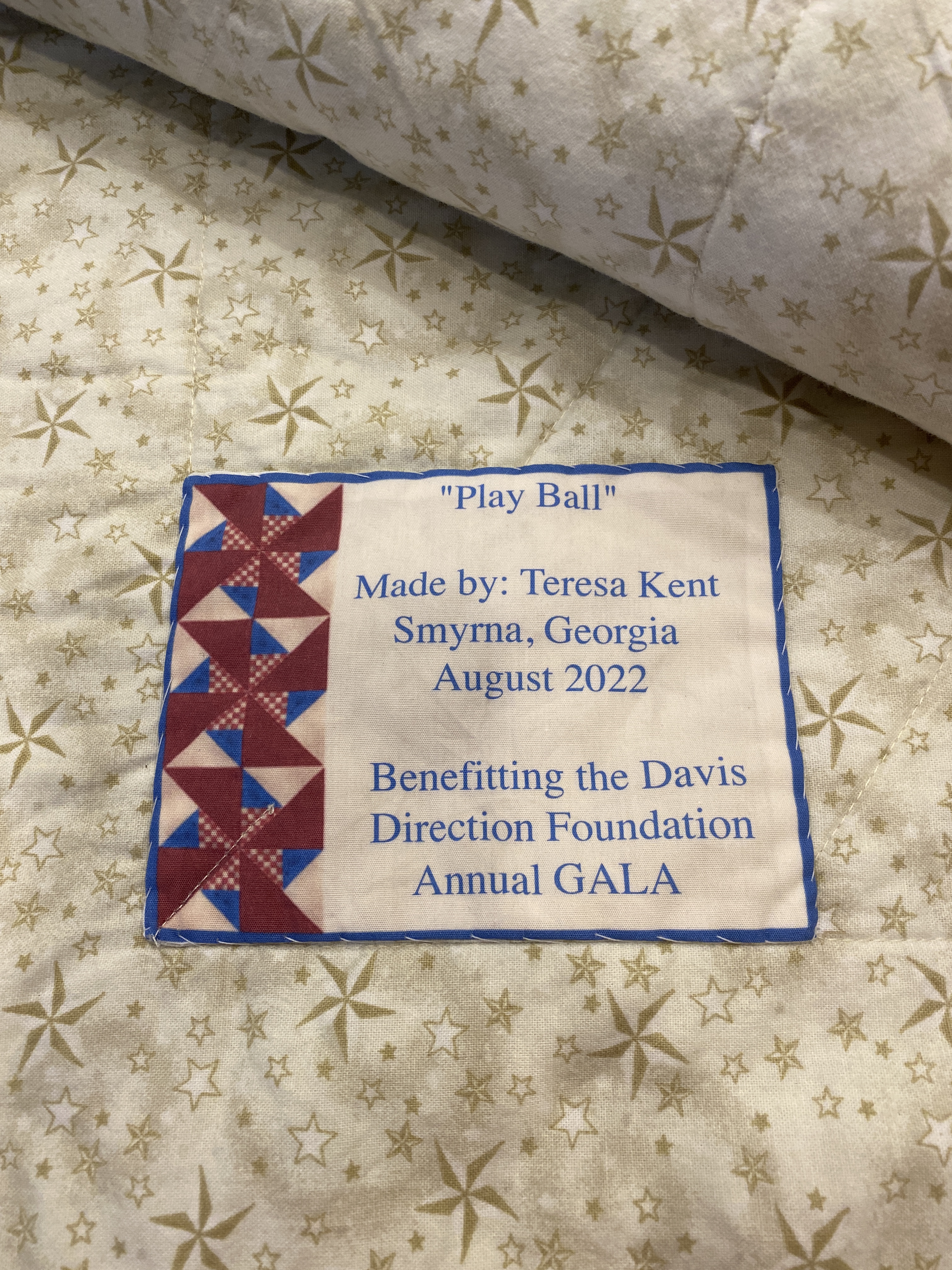
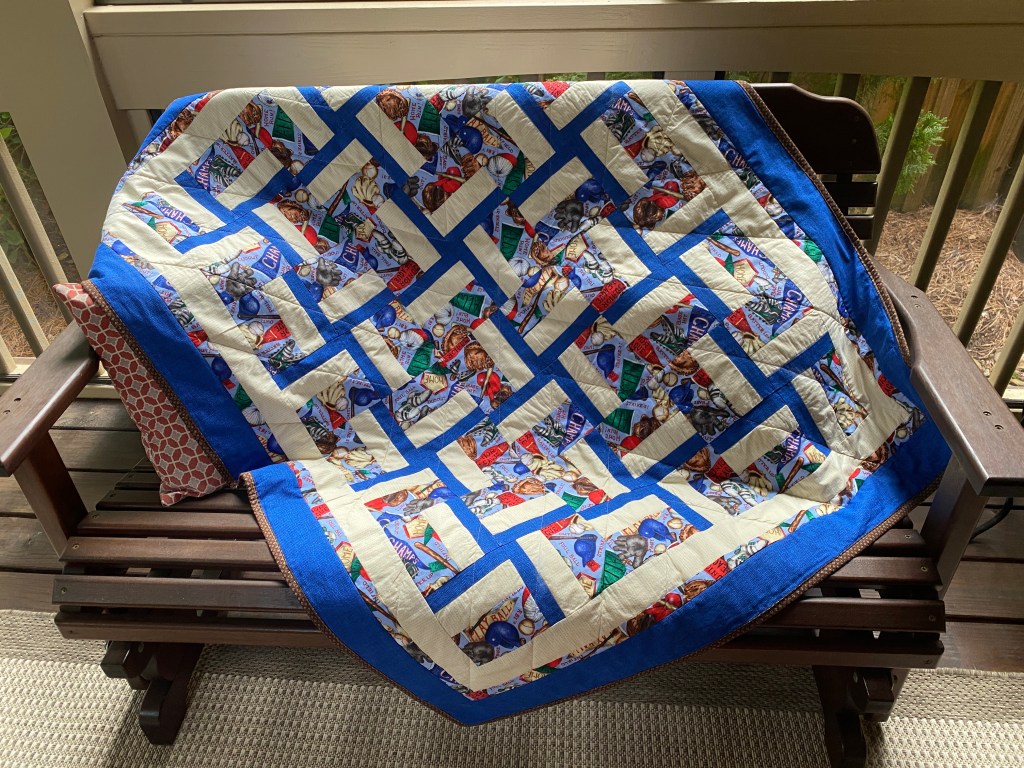
My friend, Missy, founder and CEO of the Davis Direction Foundation asked if I could complete a quilt top hanging on my rack and donate it to the organization’s annual fundraiser benefitting their substance abuse, addiction and recovery programs.

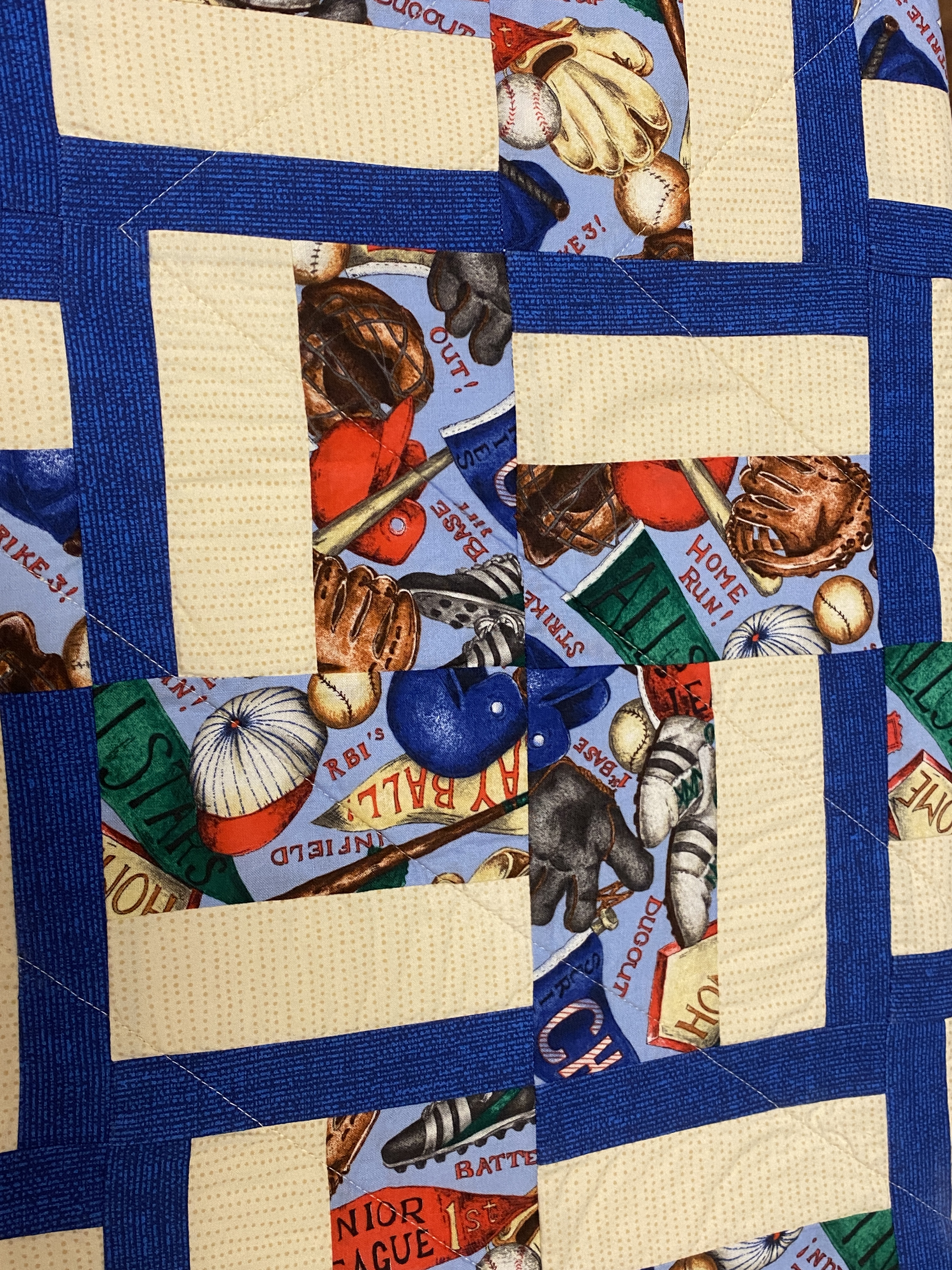
What you see pictured above is my completed quilt. The pattern is Windmills from one of the 3 yard quilt books by Fabric Cafe. This top was actually a former class sample that was on my list to be completed and donated to a children’s charity later this year.

Missy’s request turned out to be a win for both of us! I have one less quilt top hanging on my rack, one less package of batting in my stash and can mark my to-do of donation quilt for Q3 as now complete! I was also able to try out a quilting design I’m thinking of using for hubby’s quilt.

Hopefully, the auction is successful. There are so many items up for auction that I wonder if my quilt will even receive a bid. If it doesn’t, I know the quilt will be utilized by teens at The Zone. I did a donation quilt for a different group several years ago. While the baby quilt didn’t raise as much as other items, the winner was so appreciative of all the workmanship that went into the quilt. She was beyond thrilled at being able to afford such a “nice handmade quilt” for her new grand-daughter. I’d classify this lady as definitely quilt worthy!

Don’t know about you, but every quilt that leaves my studio takes a tiny piece of my heart with it. There’s a lot of thought and care that goes into making every quilt – from commissioned to charity quilts. The biggest compliment to me would be for the quilt to be so well used that it’s worn out to the point that it becomes the dog’s quilt.

Why make a sample block?

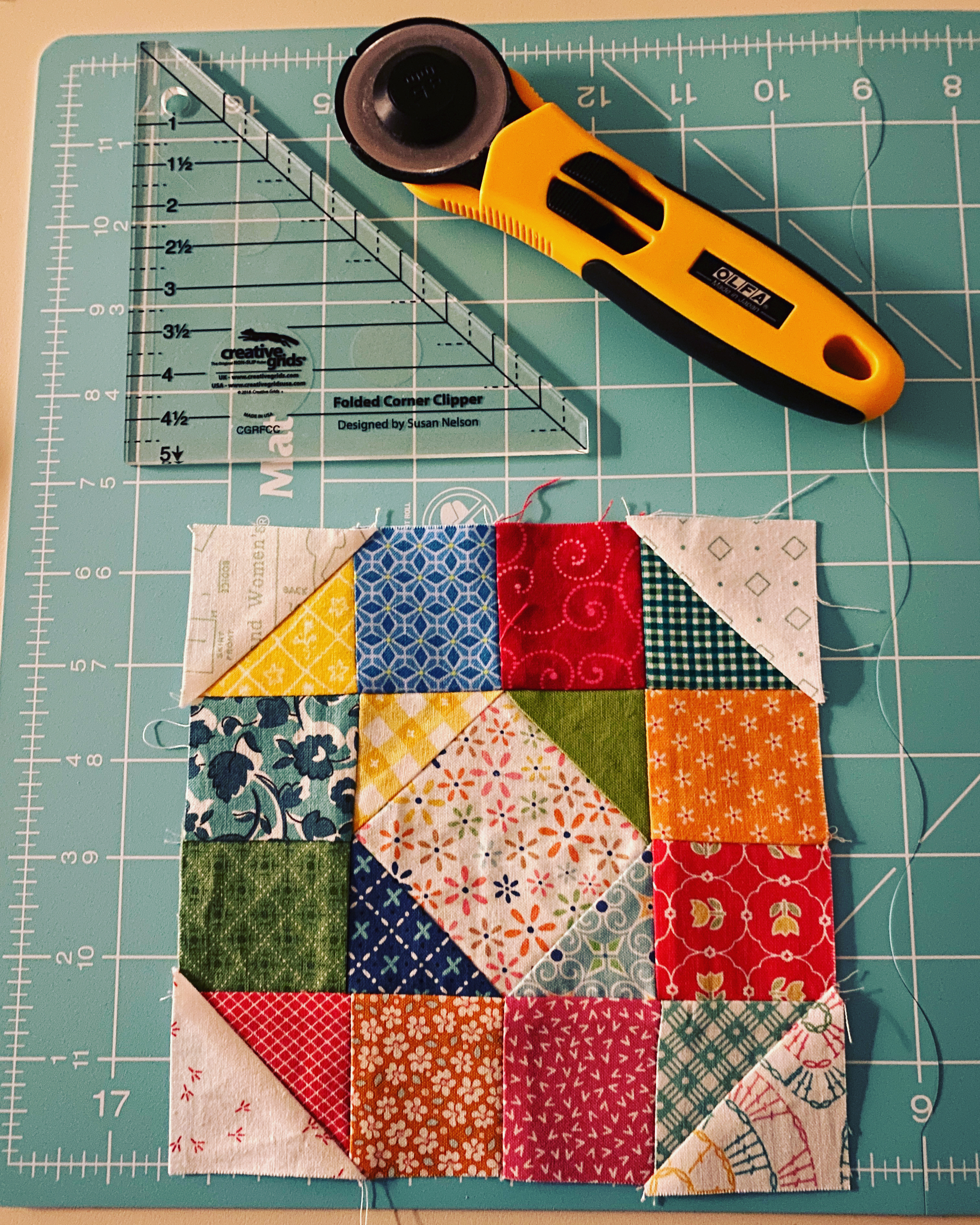
Sample block from Scrappiness is Happiness book by Lori Holt

Happy mail arrived this week from the Fat Quarter Shop – Lori Holt’s newest book! This one may surpass Vintage Christmas as my fave book from her. In case you’re interested, Fat Quarter Shop features a video preview of the book on its YouTube channel. Tutorials of several of the blocks can also be found on Lori Holt’s YouTube channel, as well.

I was itching to try out a 6-1/2″ block, so I chose the Grandma’s Donut Block and dug into my stash. While cute, this practice block is not one I would include in a quilt (see #4 & #5 below). I’ll turn my sample into a potholder as a thank-you gift for a friend.

Here are my notes to self moving forward:

  1. Remember to press seams OPEN on 6-1/2″ blocks.
  2. Set stitch length for 1.8 – 2.0 & backstitch so seams don’t come open when joining rows.
  3. Folded corner trimmer ruler speeds up the process!
  4. More contrast is needed in center economy block. Solid, mid-dark fabrics on outer triangles would be a better choice. White on white fabric for center and corners if making an entire quilt perhaps?
  5. Pay closer attention to match points on center economy block.
  6. Good candidate for die-cutting multiple blocks.
  7. Perfect project for FW or Elna STAR.

In summary, you take the time to make a sample block, so you can “practice” before cutting into your “good” fabric. This allows you to check seam allowances, cut measurements, fabric selections, sewing sequence and tools required before you get started on the “real” project.

  1. Die-cutting pieces will require slightly more fabric.
  2. No need to draw lines on back of squares for triangles if using folded corner trimmer.
  3. Due to amount of cross-seams in the block, use FW or small Janome machine. The 1/4″ foot on those machines has an easier time going over the thick seams.