Help! My kid was gifted a new sewing machine. Now what?

Here are 10 easy steps:

Step 1. Breathe. Do not be afraid of the machine. It doesn’t bite and rarely talks back.

Step 2: Unbox the machine. Take everything out. Remove all the styrofoam, bubble wrap, packing paper and tape. You should have a sewing machine, a power cord and a foot pedal. Any accessories may be in a pouch taped somewhere in the box or in the removable tray on the front of the machine. Your machine may have come with an extension table and a hard cover (lucky you!). You may/may not find a printed operator’s manual in the box as many sewing machine manufacturers have now gone to online only manuals, but you should still have a printed quick start guide in the box. Find it. Open it.

Step 3: Set up your machine as indicated in the Quick Start Guide. If you need a video tutorial, go to the manufacturer’s website and/or look for videos on YouTube. If you received a Baby Lock [manufacturer] Jubilant [model name], search for Baby Lock Jubilant + “set-up” to return more precise results.

Step 4: Turn on the machine. The switch is usually located on the right side of the machine near where you inserted the power supply and foot pedal connections.

Step 5: Now would be a good time to review the parts of your sewing machine. There should be a diagram in your manual.

Step 6: Find the presser foot lifter – it’s a small lever behind the needle assembly that raises/lowers the presser foot.

Step 7: Practice stitching without fabric and thread. Send your kid to fetch a piece of lined notebook paper.

Step 8: Place notebook paper under the presser foot so that one of the lines on the notebook paper is centered underneath the presser foot. Lower the presser foot.

Step 9: Let your kid sew on the notebook paper, following the blue line. The goal is to have the machine stitch as close as possible to or directly on the blue line. When you reach the end of that line, reposition on the next line and keep practicing your straight lines. If you want some fancier practice pages (still free), visit here and print out a set.

Step 10: If you purchased the machine from a sewing machine dealer, call the shop to schedule your machine orientation lesson. If you didn’t or can’t get to the dealer, reach out to a sewing friend or contact me to schedule a one-on-one lesson with your new stitcher. A parent/guardian is also welcome to attend this introductory lesson.


Need to learn a new app or software program?

Besides YouTube, there’s Linked-In Learning (formerly Lynda.com) that’s probably available for FREE courtesy of your local public library.

One of my goals is to convert some of my kid’s class tutorials/projects into sellable pdf patterns. I did have one printed pattern sell through in a local quilt shop, but wanted something a little more professional looking. A quilt pattern designer offered pre-made templates in Canva. I purchased a set several months ago and finally got around to looking at them. Good instruction with the templates, but I needed a little more help with Canva – it had been a while since I last used the application.

Located a Canva for quilters class offered online. Price was okay, but I thought I would check with Linked-In Learning before I spent money on another class. The course outline for both courses was very similar. I chose to start with the least expensive option. One hour and 7 minutes later, I’d completed a professional learning module on Canva- complete with an official certificate of completion. No charge to me. Thanks to my library card.

I learned exactly what I needed to. Think I’ll try this with InDesign sometime soon.

Happy New Year!

Triple huggies this morning from my crazy doodle girl. Must be a sign that 2023 is going to be a good year!

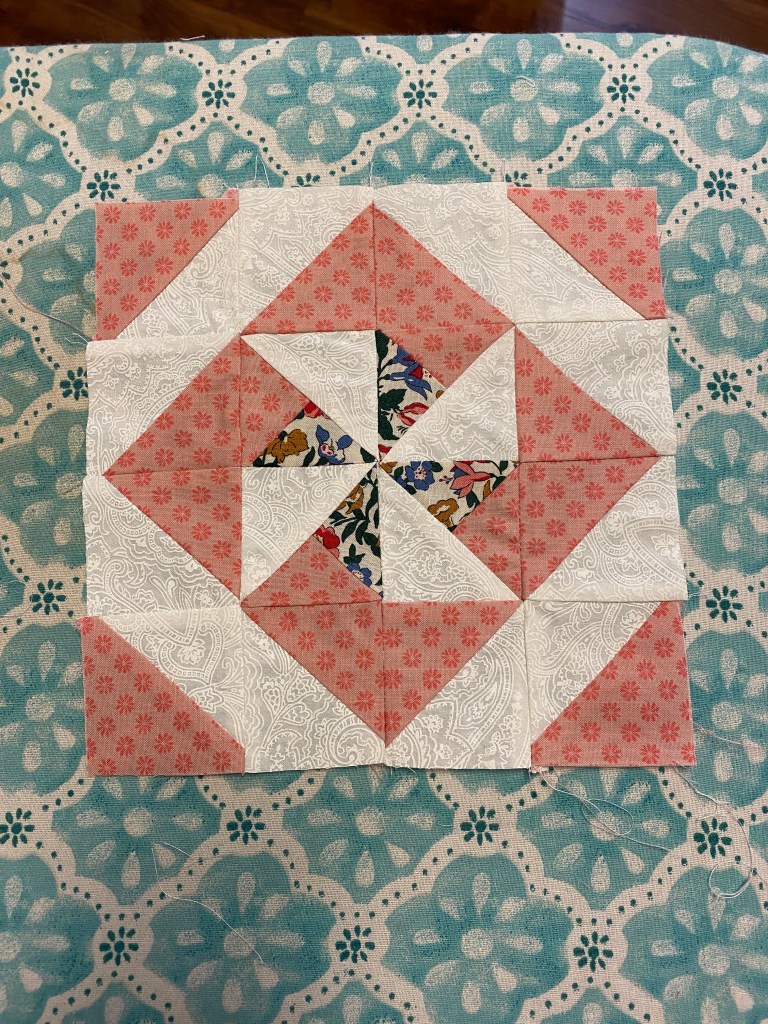
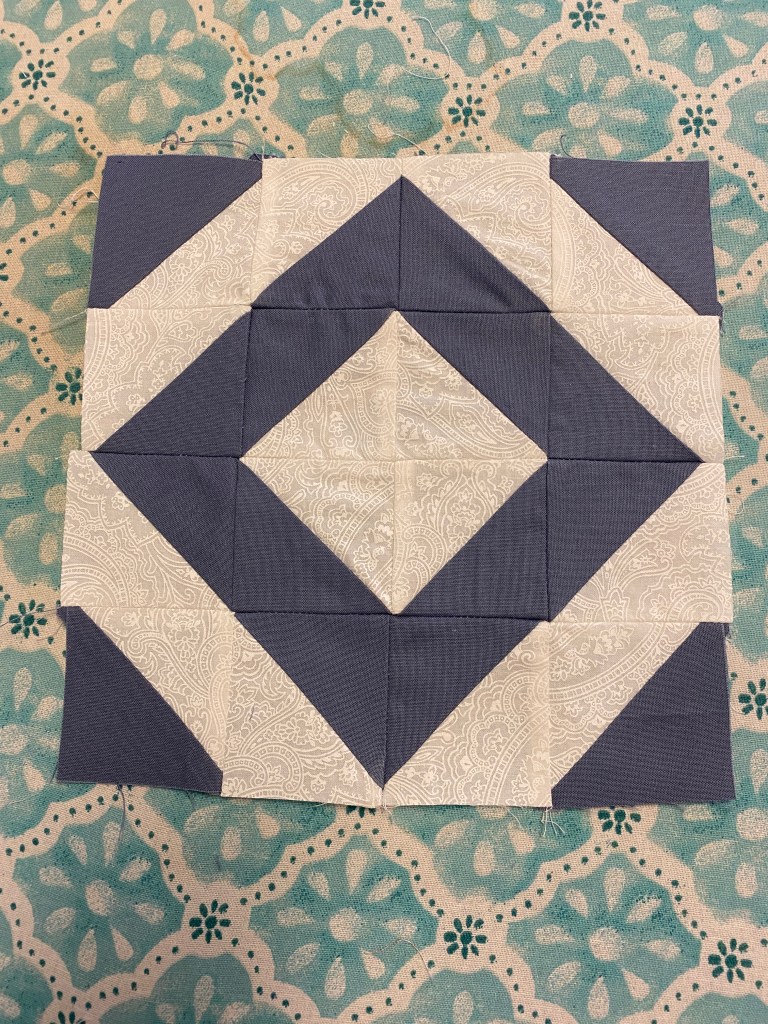
New Year’s Eve was spent participating in a 5 hour mystery quilt livestream sponsored by Stitchin’ Heaven and Craftsy. What fun! There were over 2,000 people on the YouTube channel watching along with me. Yes, there were some technical glitches, but that’s to be expected with live programming. The hosts shared tips and tricks during each step of the process. They explained various methods to do HSTs using different tools. They adhered to the published schedule. Prizes awarded were nice and plentiful. The finished quilts revealed at the end were quite lovely. I did all of the prep work ahead of time and I only managed to get 1 sample of each type of block made, I did make a lot of headway on the prepping the sub-units, though.

Several folks complained about the pattern being too hard. I think their real issue with the pattern is the amount of prep work and piecing required for each 8-1/2″ block (16 HSTs that have to be oriented specific ways). One of the co-hosts was the pattern’s designer. She rated it as a confident beginner pattern and explained her rationale for giving it that rating. Yes, HSTs are appropriate for a confident beginner, but the number of match points and small units in this 8-1/2″ block means those confident beginners better have lots of time and patience in their quilty toolboxes.

One takeaway for my own teaching practice is to state at the beginning of my session what I expect students to accomplish before leaving that day. One completed block of each type used in the project is a viable goal. I’ve heard that I should plan 30-60 minutes of student work time for each block being taught in a workshop. Large, intricate blocks will require even more time.

Hope you have a peaceful New Year’s Day. I’ll be trimming up 500+ HSTs so I can resume block assembly on my NYE mystery quilt project.