Have your shopping habits changed since Joann closed?

Quilty friends and I were chatting about this at a recent get-together. The general answer is yes. More are shopping online, spending more and getting less. A couple of folks noted that we were already heading in that direction with the rise of inflation, online shopping and Atlanta traffic.

Me?

(1) I have to plan ahead more.
Joann was convenient. It carried just about anything I needed for sewing, quilting and crafts. It was open 7 days a week and prices were less than my local quilt shops. It took a little while to find suitable replacement sources for the supplies I prefer to use. Now, I shop 2-3 places to get the same merchandise I could find in a single trip to Joann.

(2) I don’t buy something unless I absolutely need it.
Joann sales & coupons were a great way to stock up on consumable supplies that I regularly use. With Joann gone, Michael’s and Hobby Lobby no longer need to offer as generous of a discount to remain competitive.

(3) Shopping at brick & mortar locations for sewing & quilting stuff has become less frequent, more intentional.
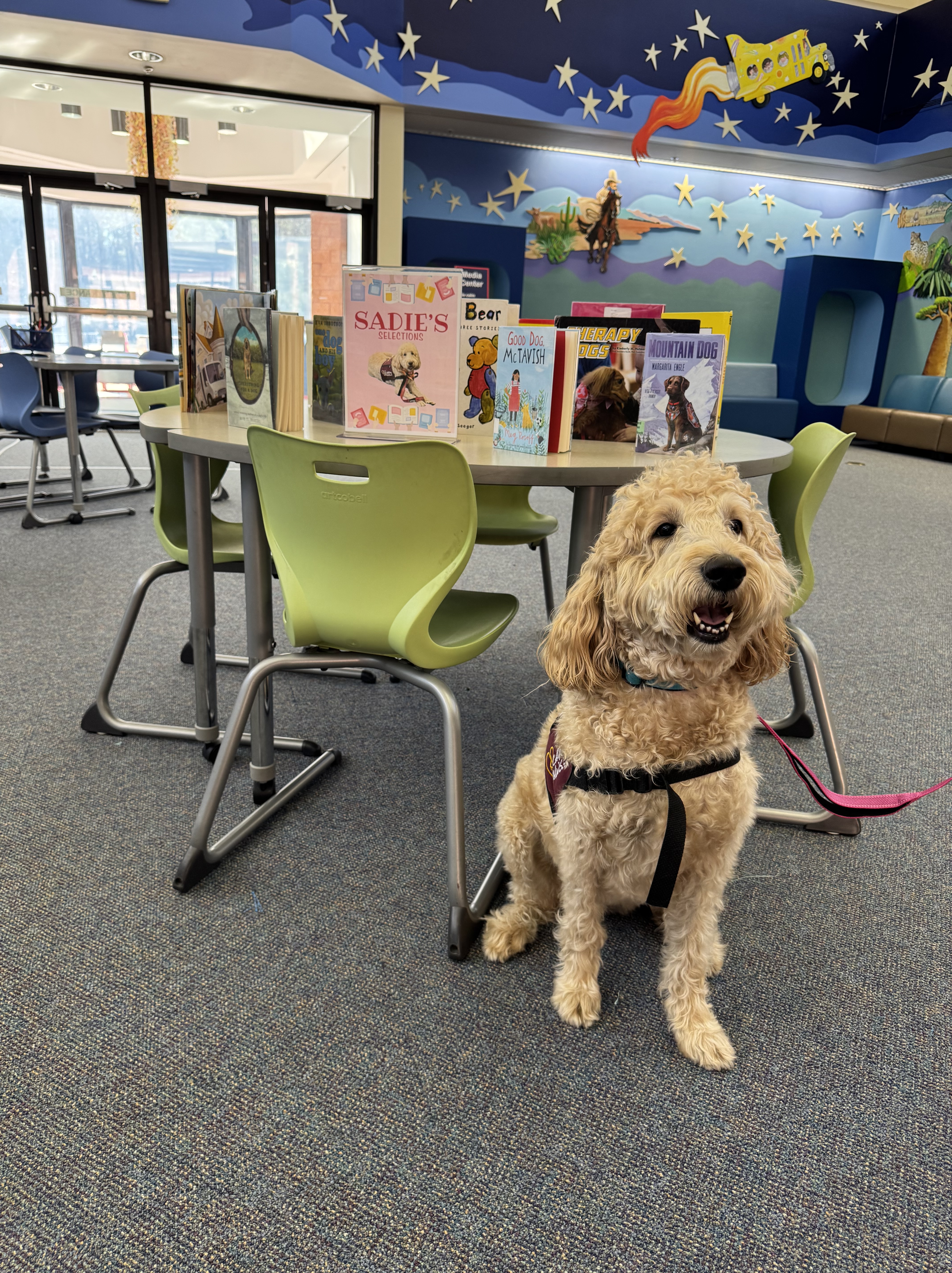
Joann in Kennesaw is where you would often find Sadie and me on Sunday afternoons. It was part of our routine. Sometimes to shop, sometimes for inspiration and sometimes for Sadie to visit different public spaces and practice walking on slick floors in between therapy dog visits. We thoroughly enjoyed our social interactions with customers and staff. Nowadays, the Hobby Lobby location on Akers Mill welcomes us on random Wednesday mornings when I need quilt backing fabric or interfacing that’s on sale.

The only pet-friendly quilt/gift shop in my area recently changed to a no dogs allowed policy after another customer’s dog hiked his leg on several bolts of fabric. Totally understand, but the new policy means this shop is no longer a regular destination on our “Sadie shopping” rotation. We bought special jerky treats carried in the gift side of the shop. (I recently found the same jerky treats at a new specialty pet store closer to home.) I’ll pop in on the way home from monthly guild meetings if I have time to stop, but that’s it. Specific online retailers with reasonable shipping rates are now my usual go-tos when I do need something only found in a quilt shop.

How about you?

2025 goal check-in

Back in January, I created the following list of sewing goals for 2025. It’s good practice to measure what matters, so let’s see where I am in the 4th quarter:

  • Continued detashing of fabric, supplies and books.
  • Rehome all kid craft materials leftover from teaching.
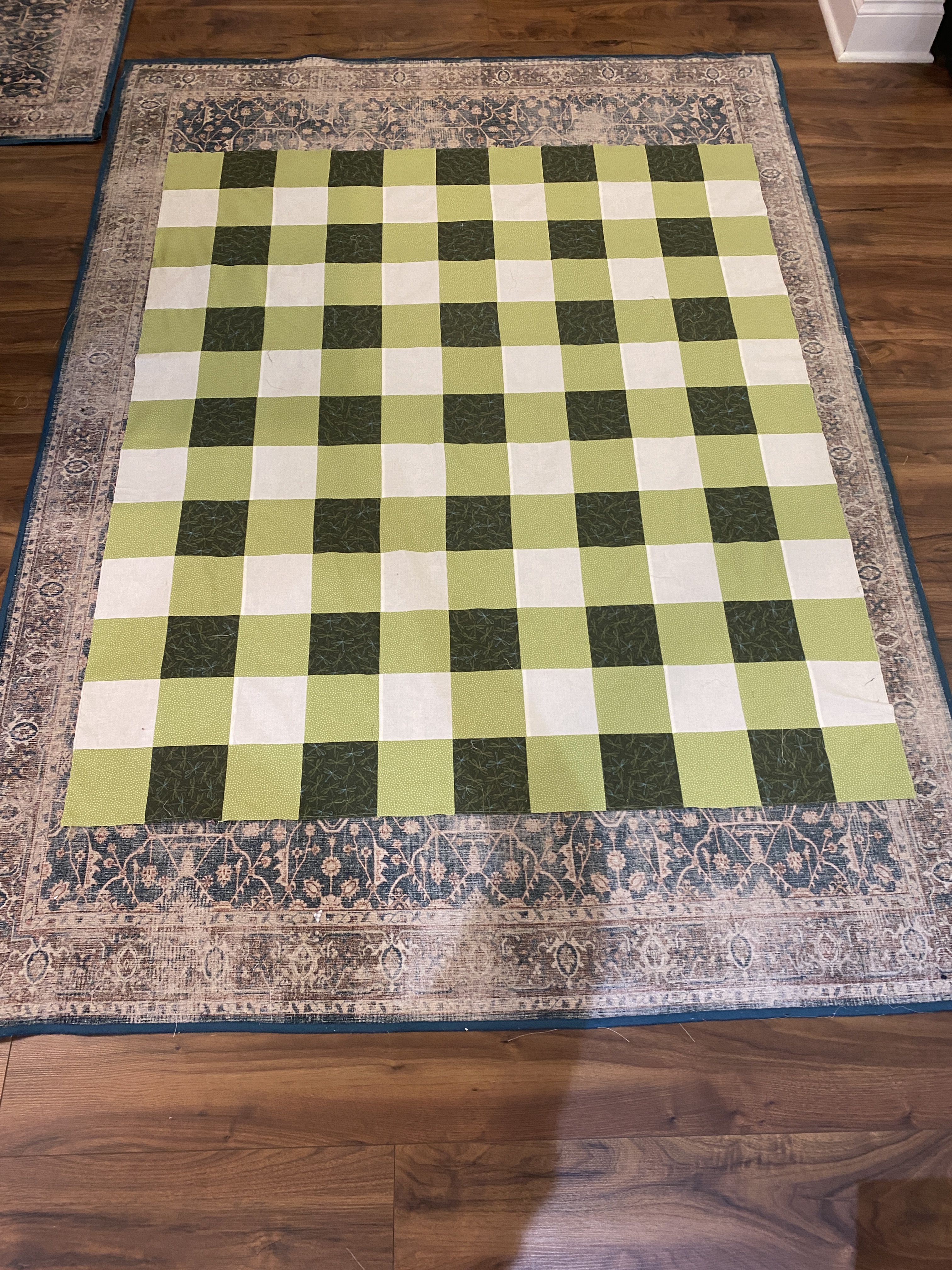
  • Finish assembling all partially done quilt tops.
  • Select 3 tops I want to submit for entry into an upcoming juried quilt show and get them completed, including the label, by year end. I will do the quilting myself.
  • Get current on BOM and QAL blocks.
  • Complete EQ online classes 2 & 3.

Successes (identified by strike-through text):
1. Rehomed ALL of the kid’s craft materials.
2. Sorted through every bin, drawer, closet, storage container and hidey-hole to assess things after two major purges and six months of dedicated sewing from the stash and intentional limited spending on new items.
3. Identified quilt tops to complete for show entry. Have secured backing and binding fabrics, plus batting for each one.

In-Progress (identified by yellow highlighted text):
1. Destashing is an ongoing process.
2. Some WIPs have been completed, but more were found.

Not happening this year:
1. Instead of EQ, I went down the Adobe Indesign and Illustrator rabbit hole learning how to convert my own patterns & tutorials into a more professional format.

My goal to divest my teaching & kid craft materials was the catalyst for major purging of our home office and my sewing space. Teacher friends and neighborhood kids were the beneficiaries of my no-longer-needed stuff. Bonus? I recovered things that had been randomly stuck places to accommodate interior painting and HVAC replacement.

Truth is, stash management is an ongoing process.

Step 1 – limit what comes in your sewing room. Evaluate any subscription box memberships. Use the Libby app to read magazines and borrow books from your library. Have a plan for how you’re going to use a piece of fabric – even if comes from the free table.

Step 2 – use what you already have. Make it a point to shop your stash first. Keep said stash organized so you can find things when you need them. I won’t need to purchase piecing thread, sewing machine needles or 60 mm rotary blades for at least five years.

Step 3 – be intentional with your purchases. You are no longer a card carrying member of the Stash Acquisition Team. By all means, allocate some fun money to spend during shop hops and at retreats! That said, everything else should be purchased for a specific reason or need (a class you’re taking, to finish a special project, to replace a consumable supply or something that broke & can’t be fixed). Your bank account will thank you!

Step 4 – use the item or let it go. As a scrappy quilter, it makes me happy to keep a well-curated collection of fabrics available to pull from as needed – usually FQ or 1/3 yard cuts. If a fabric has languished uncut for an extended period of time, it gets moved to the charity quilt or giveaway piles.

During this last round of decluttering, I also decided to offload the remaining extra sewing supplies I used when teaching kid’s classes. Nowadays, group class participants are generally expected to bring their own sewing machines and supplies to class. The SQTM provides machines and sewing supplies for any kid’s classes taught at the museum. i(Of course, I kept a couple sets of basics for my private students and CraftLAB participants.) The recipients were a group of inner-city teens who meet at the local public library with community volunteers.

Something’s going around on many fronts

An upper respiratory ick is currently making the rounds through our local school systems. I caught it. Not surprising, considering I’ve been in contact with many different kids between therapy dog visits and private sewing lessons over the past two weeks. I’ll hazard a guess that I’ve been suffering from a nasty cold virus (and I can trace it back to the source). I’ve been congested and tired, but have experienced none of the extreme exhaustion that typically accompanies the flu or COVID. Today was the first day I felt more like myself – I even put on makeup before leaving to early vote and grocery shop.

Being sick this week definitely wan’t in my plans. Finishing up 3 charity quilts to turn in at this week’s guild meeting were on my agenda, as this is the final opportunity to turn in charity projects for 2025. That didn’t happen. I’m just grateful that I had enough energy to reorganize parts of my sewing space that were really bothering me.

Next week, our bathroom construction project begins, so I’ll be spending 7-10 days at home while the contractor and his crew work their magic This will provide plenty of opportunity to quilt and cross-stitch!

Other sorts of things going around…is it just me, or does there seem to be a palpable sense of unease due to fallout from the federal government shut-down? Forget all the usual doomscrolling on social media. Local food pantries and charity groups have been posting all over the place about where to get food once EBT cards are deactivated. My local Publix and Aldi stores were packed for an early Thursday afternoon. Could part of this be explained by those wanting to use up any remaining EBT funds before the end of October? Or possibly by those doing their weekly grocery shopping a little early due to reports of potential mischief being planned for this weekend to protest the the loss of certain government benefits? Who knows?

Regardless of your political views, the first rule legislators should understand is you don’t mess with kids or paychecks. 1) Many recipients of SNAP benefits are kids and no child deserves to go hungry. Most of my 22 years as a school librarian were spent working spent in high poverty schools. I kept extra snacks and drinks in the library just for the kids who came in late to library class and missed breakfast. 2) People should not be expected to work and not get paid (military and essential employees). Perhaps our legislators should be required to forfeit their paychecks and benefits while the government is shut down?

How can you help? Donate to your local food pantry. Give grocery store gift cards anonymously to those who’ve been impacted by the loss of benefits or a paycheck. Reach out to elderly friends and relatives with modest SS benefits and no other sources of income. They may receive SNAP benefits and are usually too proud to ask for help.

Finally, contact your House and Senate representatives. Implore them to act like grown-ups and do the job they were sent to Washington to do.