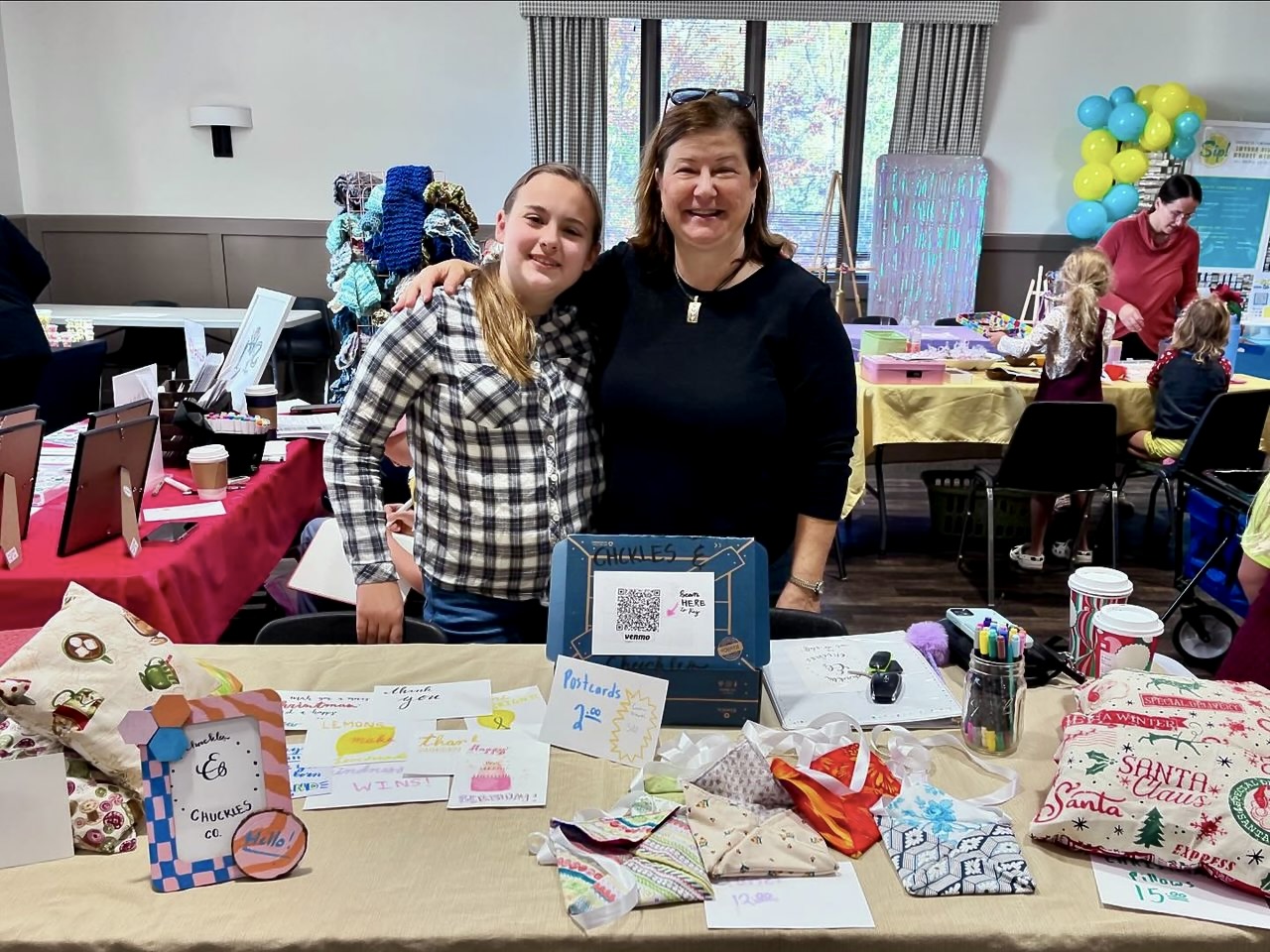
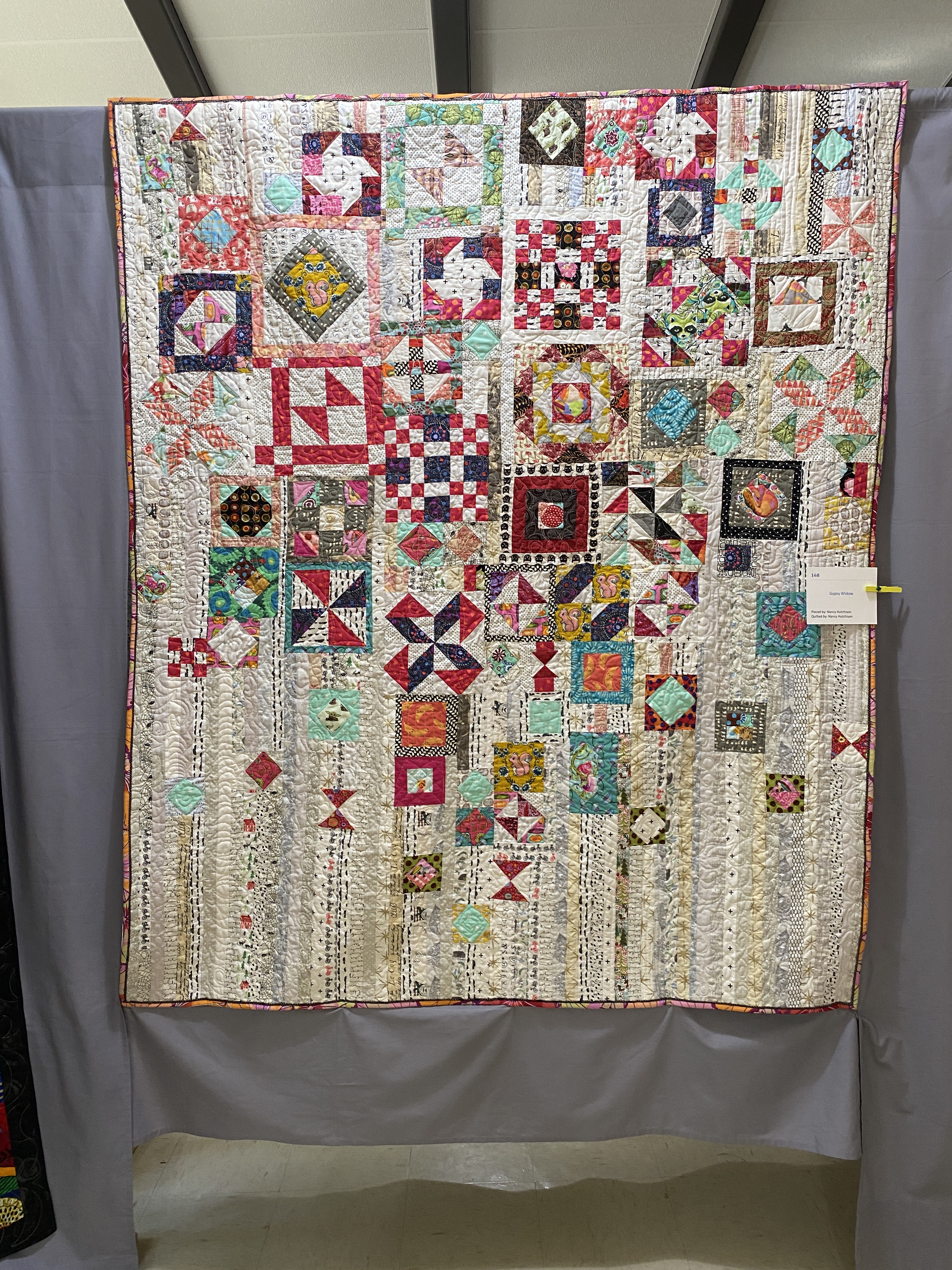
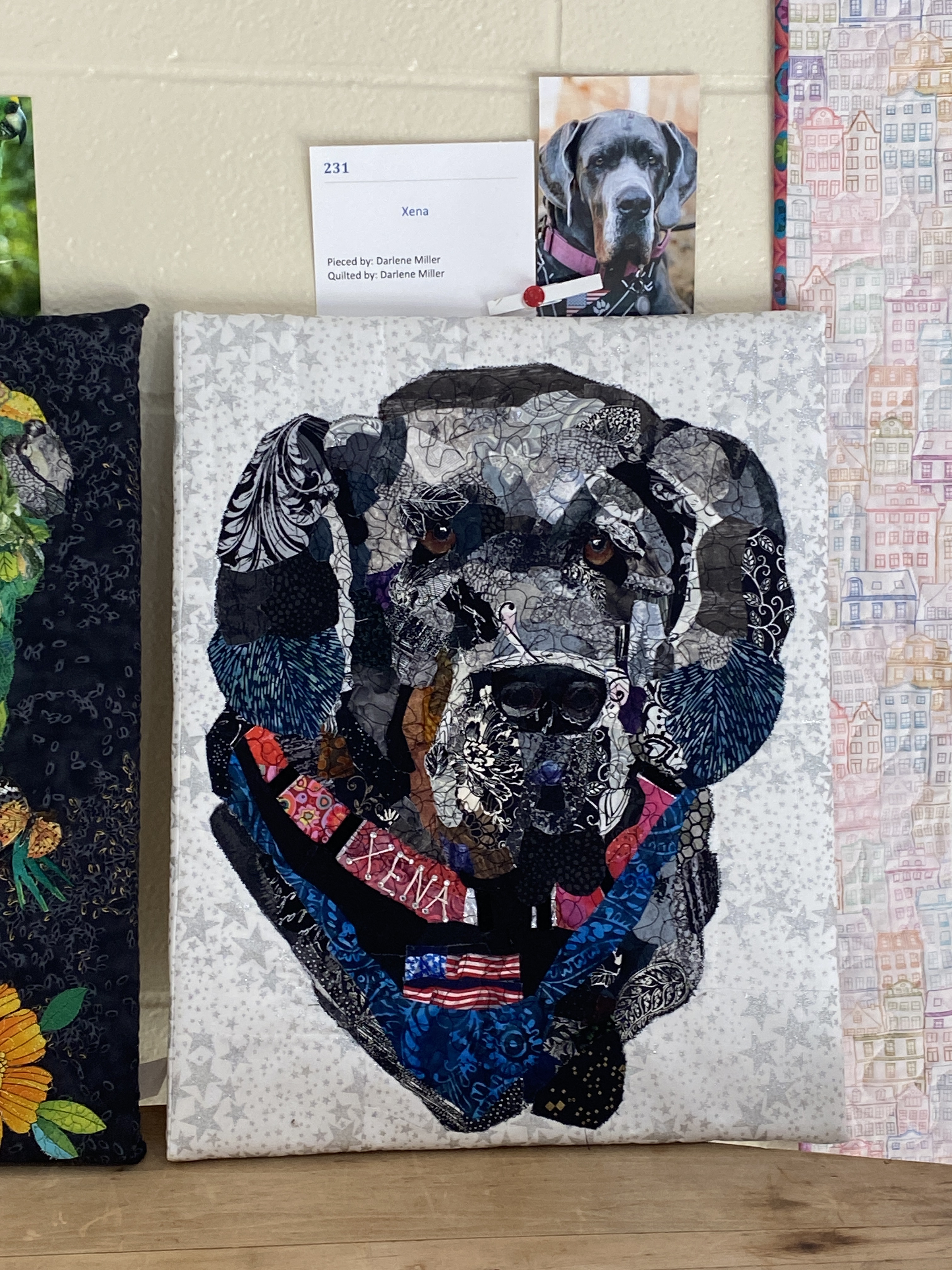
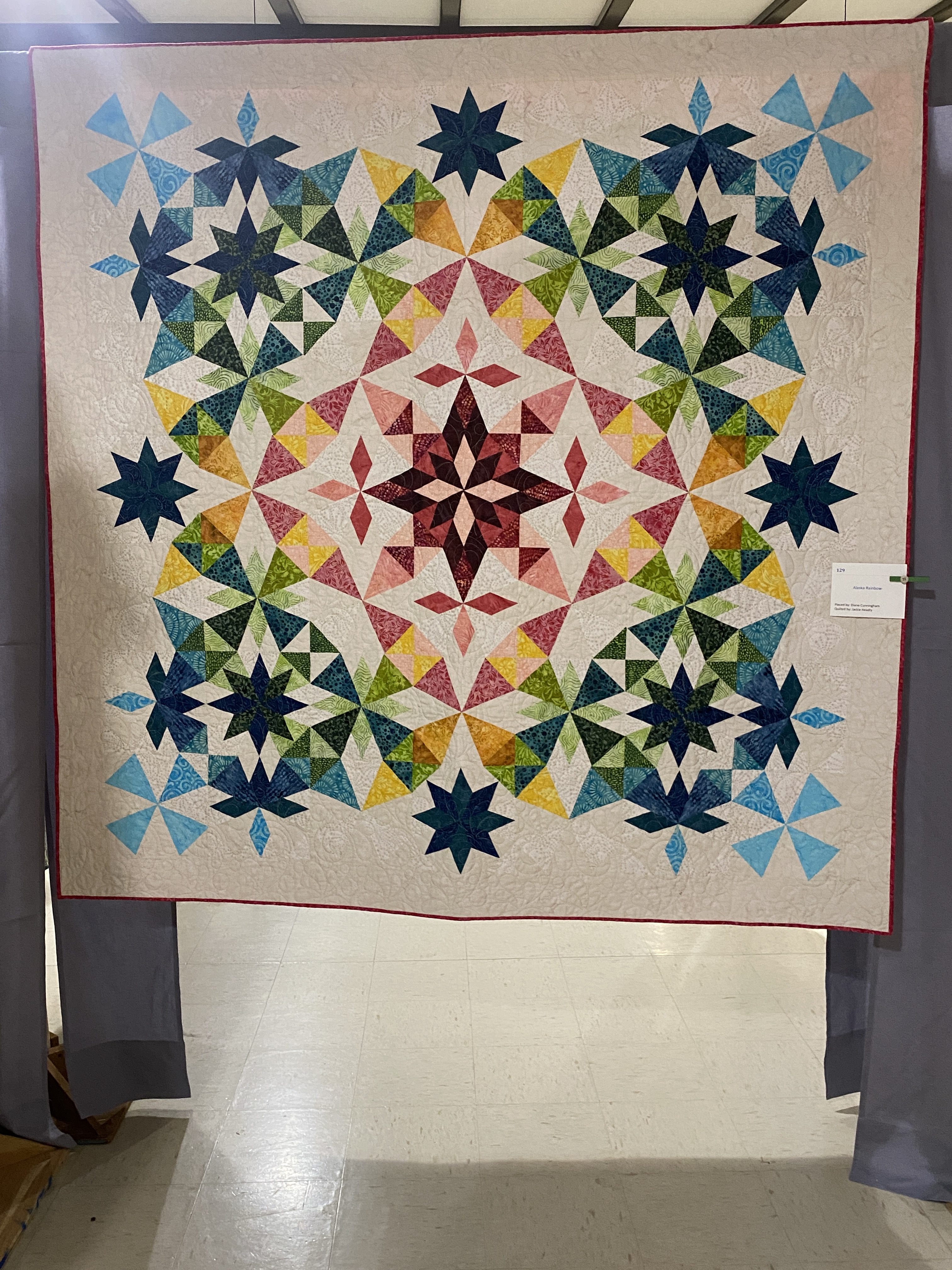
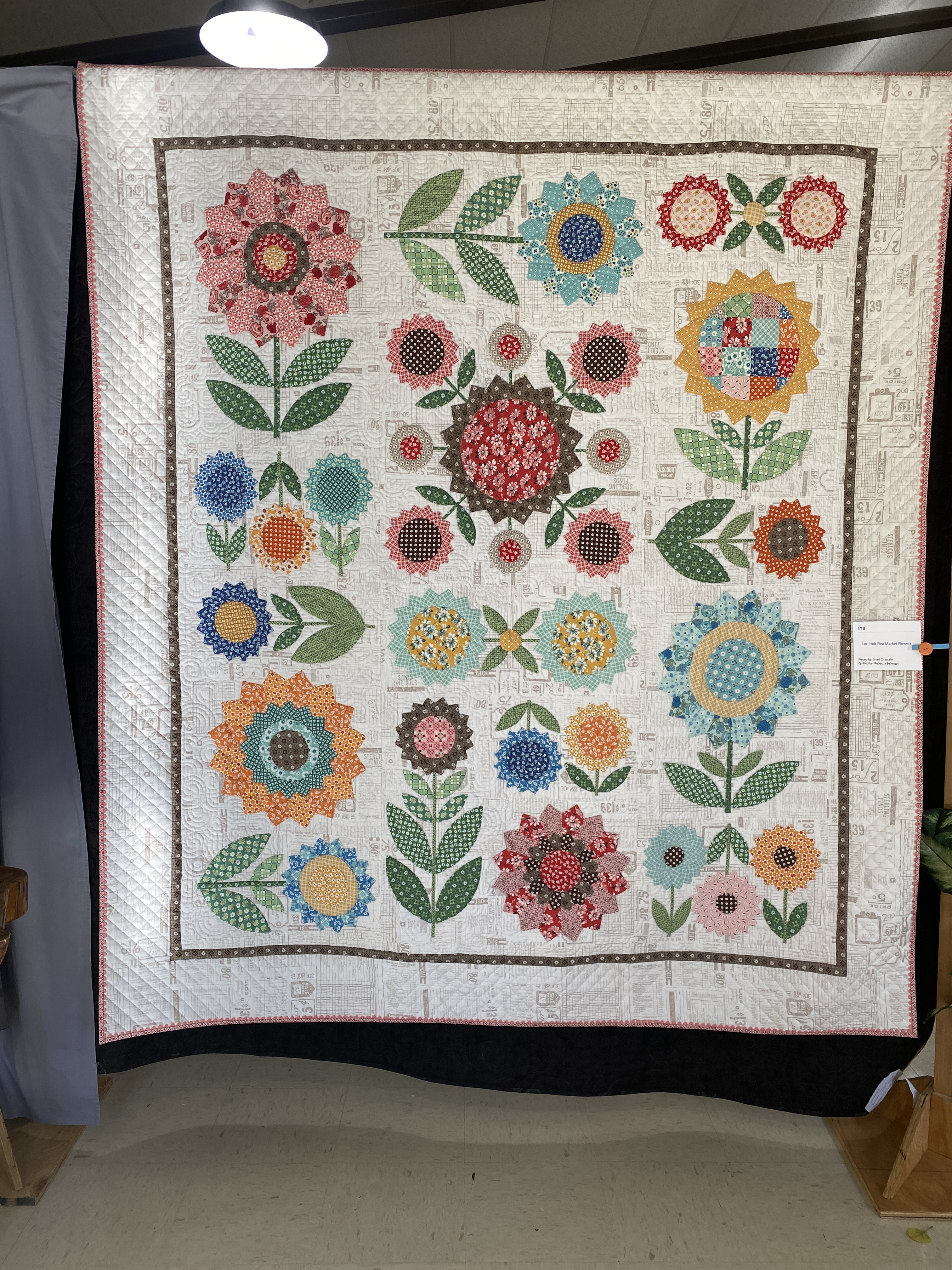
Today was fun. Sadie and I stopped in to see Charlotte’s booth at the Smyrna Mini Handmade Market and took a leisurely stroll around the nearby lake. After dropping Sadie off at home, I braved I-75 on a Saturday and drove an hour north to see the Etowah Valley Quilt Guild’s biennial quilt show. It was a small show, but decorated very well with sewing themed vignettes and fall decor throughout the exhibit hall. There was a vendor mall offering vintage machines, handmade sewing accessories, quilt kits, FQ bundles and some sewing books. I picked up a weighted 7′ square tailor’s clapper made by a local woodworker for $20.00. This will be so handy when pressing blocks!
I took the backroads home to avoid traffic and stop by Kohl’s to look at jeans. I found one pair that fit me perfectly! That made an already great Saturday even more awesome!
Now that Yellowstone’s new season has begun, several iterations inspired by Beth Dutton’s infamous quilt have shown up in my social media feeds. It’s essentially an alternating 9-patch block design set on point in a red, black and gray color scheme. I saw quilts in 6″, 8″ and 9″ finished block sizes with numerous layouts in all sorts of different sizes. Intrigued, I booted up EQ8 to see what I could come up with. Note: this is not a tutorial or pattern. I merely wanted to highlight what’s possible with EQ8 and share.
I wanted a throw size quilt that would use up my scraps (mostly leftover jelly rolls) for the 9-patch blocks. I prefer the floating look that a thin border provides, so that’s why I added a 1-1/2″ finished border before binding. Always remember: you are the boss of your own quilt. Make a quilt the way you like it!
Meet Rustic Retreat II (55″ x 64″ based on 6″ finished blocks)
Here are the essential components needed to make the quilt pictured above: (42) 6-1/2″ red & black 9-patch blocks (30) 6-1/2″ grey squares (22) grey side setting triangles (4) grey corner setting triangles (6) 2″ x WOF grey strips for border (7) 2-1/2″ x WOF grey strips for binding
The way you make the 9-patch blocks will depend on if you’re using up scraps or cutting yardage. Since this is based on 6″ finished blocks, your 9-patch components will be made from 2-1/2″ squares and/or strips.
Very loose fabric requirements (calculated by EQ8): Black – scraps or yardage – about 1 yard Red – scraps or yardage – about 1 yard Grey – 2-1/2 yards You will also need about 3.5 yards of backing fabric and a twin size package of quilt batting.
This quilt is essentially a simple alternating 9-patch design that is set on point. If you’ve made one or two quilts, you can make this one. There are numerous YouTube videos that describe the “set on point” process in great detail. Missouri Star, A Quilting Life and Fat Quarter Shop YouTube videos are good places to start. Here’s a blog post you might also find helpful from Diary of a Quilter.
Being able to take a basic design that inspires me and customize it to meet my needs and preferences is one of the reasons I love using EQ8. Yes, I still have to do some math to figure cut sizes and how to put it all together, but I’m willing to do that. It’s a real confidence booster when the project you’ve created turns out exactly how you envisioned.
First, I conducted an online search to see what other sewing lounges, quilt shops and sewing machine dealers are offering for newbie adult students. I studied the projects, found similar patterns and watched YouTube videos for more inspiration. I also thought about my own experiences teaching kids how to sew.
Next, I asked myself, “What skills do I need to cover to make sure students are ready for Quilting 101 and other classes offered by the SQTM that require knowing how to use a sewing machine?” I was also tasked with teaching students how to read a pattern, if possible. Three Saturday sessions are allotted for these classes.
Beginning Sewing Curriculum Outline
Sewing knowledge: (1) How to operate a machine, (2) basic sewing terminology, (3) how to follow/read a pattern and (4) how to prepare and cut pieces for a project.
Foundational sewing skills: Sew a straight, consistent seam with a specific seam allowance, topstitch 1/8″ or 1/4″ away from an edge, backstitching, pivoting at corners, trimming corners, turning an item inside out and poking out the corners, closing the opening and pressing.
Next level sewing skills: zipper insertion, curved seams, applying fusible interfacing, boxing corners, how to sew straps and double folded hems.
Nice to know: sewing on buttons by machine, making buttonholes and raw-edge applique.
What we’ll be making:
Class 1: Meet your sewing machine – winding a bobbin, threading, selecting stitches, changing needle, sharing good general sewing practices. First project will be a simple placemat. Students can make additional placemats at home independently.
Class 2: Oversize tote bag – Simple wide tote bag with deep boxed corners. Learn how to make straps, box corners, apply fusible interfacing, topstitching, working with linings, reinforcement stitching, proper pressing techniques. Slip pockets and contrasting layers on outer bag are optional.
Class 3: Zipper pouch – Project bag size, lined with softly curved corners. Learn how to insert a zipper (zipper tabs optional), basic pouch construction techniques and how to sew curved edges with small darts.
If students are interested, I’ll do mini-lessons on sewing buttons by machine and raw edge applique as we go along. They can decide whether or not they wish to incorporate these techniques into their projects. The Education Committee thought it best to leave buttonholes for a later time. I agree.
For beginner classes, I typically use instruction sheets/patterns that I’ve drafted over the years for common projects. Occasionally, I need to direct students where to obtain a digital copy of the pattern we’ll be using in class. If using a printed pattern, I often buy them on sale from the big box store or directly from the designer. I also share about resources available through the local public library and the Libby app. The goal here is to keep costs reasonable. Once students have a basic pattern, they can learn how to customize their creations from any number of YouTube videos, blog tutorials, IG, and Pinterest.



 Come Stitch With Me