Quilting on my Singer 301A

I LOVE piecing and sewing on my Singer 301A. Like most vintage metal machines, the more you use it, the more it purrs. My 301A is a straight-stitch only machine. Locked away in someone’s shed for several years, it came with the trapezoid case and several presser feet. I purchased the buttonhole, zigzag and blind stitch attachments separately.

Machine quilting is fairly straightforward with a walking foot. You merely need to make sure that said walking foot is made for slant shank machines and will fit the 301 (because not all of them do). My walking foot does not have a place to attach a quilting bar. Bless the folks online who share their hacks for quirky sewing machines. Painter’s tape to the rescue. The sliding plastic quilting guide I use for my Elnita EC30 should work fine. I’ll need to experiment to find the best place to tape it on the 301A’s walking foot.

This machine also has the ability to drop the feed dogs. Original darning & embroidery attachments for the 301 are hard to find and pricey when you do find them. So, I searched for a modern alternative. I tried a plastic darning foot I purchased at a quilt show. Nope. Next was the common spring loaded FMQ foot but in a slant shank version. It works, but the foot will need to be modified with a rubber band (idea from Leah Day) so that it just skims the surface of the quilt sandwich.

While researching for a better solution to FMQ on my 301a, I read in a quilting forum (from nearly a decade ago) about an original slant shank darning foot that could be utilized on a 301. It’s Simanco part #161596. I found one for sale on eBay and it was mine within a week. The foot was made for the 400/500 series slant needle machines. I did have to modify the 301 just a bit so the presser foot would work. Once I hit on the right combination of needle and thread, the machine did its magic.

Machine straight line and FMQ tips:

  1. Oil any vintage foot before using. Anywhere that metal touches metal, douse liberally. Let the foot sit overnight on a paper towel.
  2. If using the vintage 161596 darning foot, you’ll need to remove the thread guide wire attached to the needle bar clamp. Simply remove the bottom screw on the right side of the needle bar clamp and slip the wire down. Set wire and screw aside for safekeeping. If you encounter resistance, it might be because the needle clamp screw is hitting against the right corner of the metal presser foot body. Tighten the needle clamp screw just a bit to rotate the screw head out of the way. Place a drop or two of oil on the edge of the metal part where it was rubbing.
  3. Insert a 90/14 titanium topstitch or quilting needle. Tighten with a screwdriver. My 301A will let me know with random skipped stitches that I don’t have the correct needle installed.
  4. Use same thread top and bobbin. I use Glide thread for FMQ.
  5. Test FMQ as you normally would.

Random fact: The 301 and 301A are the same machine. The “A” designation means that the machine was made in Singer’s Anderson, South Carolina plant. Mine is known as an LBOW – light beige, oyster white color scheme.

Projects made from my fabric stash

Stitchin’ Heaven New Year’s Day QAL Blocks 1 & 2 made from fabrics in my patriotic bin
Curvy, lined zipper pouch for class sample. Pattern drafted by me using Boxed Bag template by Carolina Moore.
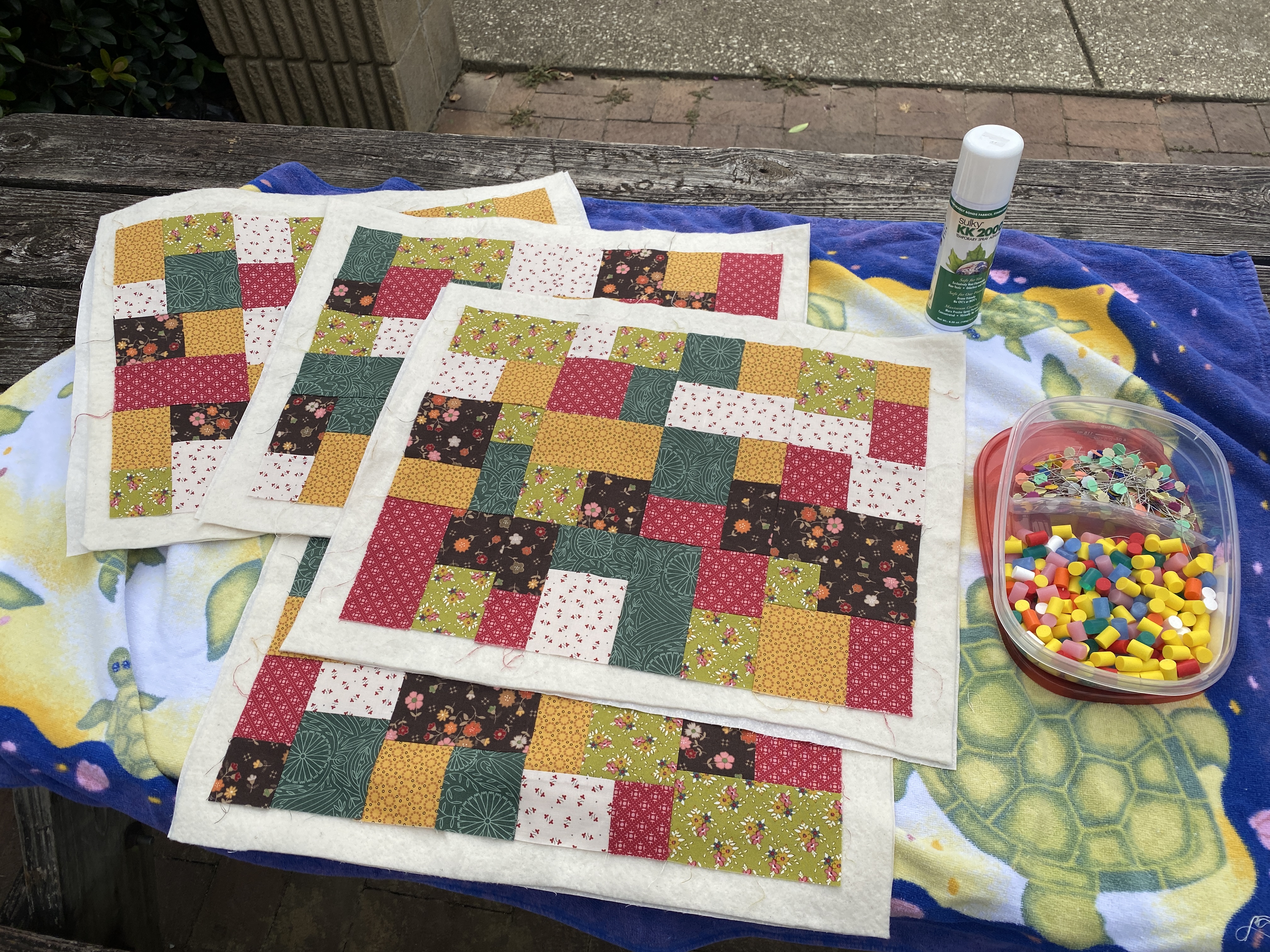
Placemats using Mini Yellow Brick Road pattern (basting outside at the library during Sew Day)

What do you do with leftovers from previous quilt projects?
How about using them in new projects? It doesn’t have to be an entire quilt.
1. Make mug rugs, pot holders, placemats, table runners, journal covers, pillow covers or zipper pouches.
2. Use the larger leftover bits make quilt sandwiches for FMQ practice.
3. Use some of the smaller leftover bits to make a practice blocks to try out new patterns before cutting into your project fabric.

How to store your scrap and leftover fabrics?
Your system can be as decorative and elaborate as you wish. Personally, I prefer simple. I keep small bits and partial strips in a pretty basket. Random 5″ and 10″ squares are kept with my charm packs and layer cakes. Cut strips that are WOF are stored with my jelly rolls. Larger chunks are stored by color with FQs and yardage. Novelty, dog and patriotic theme fabrics are kept separately.

Periodically, I will go through my scrap bin and cut the leftover jagged pieces into 2-1/2″, 3-1/2″ and 4-1/2″ squares. The smallest size kept is 1-1/2″ strips and I’ll cut 1-1/2″ squares from them as needed because they tend to get lost in the scrap bin.

With the current Bonnie Hunter Winter Mystery quilt, I’ve made good use of random charm squares, forgotten FQs, white/cream hunks leftover from previous quilt tops, and turning all the leftover triangles from trimming stitch & flip units into 1-3/4″ HSTs.

The key to managing your fabric scraps is to organize them, then actually use them.

Quilting through the holidays

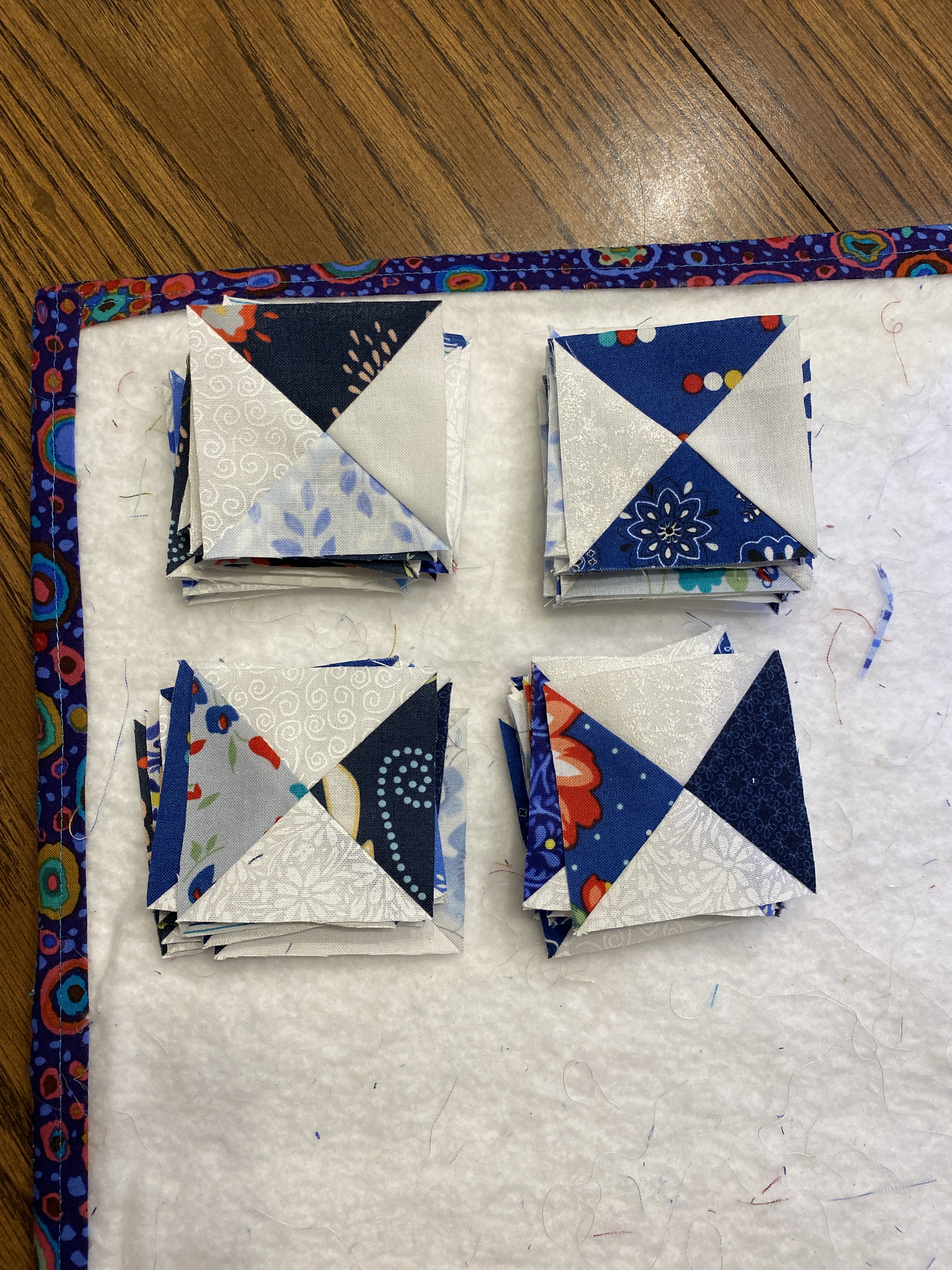
Stacks of Hourglass Quilt Blocks – Week 3 of the Bonnie Hunter Old Town Mystery Quilt

I’m tired. No wonder. I’ve made about 400 little bits in total for this quilt over the past two weeks. I’m all caught up and I’ve successfully figured out how to cut QSTs for the hourglass blocks using Bonnie’s Essential Triangle Ruler. Minimal unstitching and everything turned out the correct size, with only a tiny bit needing to be trimmed away. Last time, I used my Featherweight and the blocks turned out too small. This time, I used my Elnita EC30. Having the ability to adjust the needle position made all the difference for me.

I’m thankful that Bonnie Hunter offers a mystery quilt along during the Christmas season. This is my first time participating in one of her annual mystery quilts. The project has helped keep me engaged and in relatively good spirits during what can be a hard time of year. Family drama isn’t pleasant – especially when it causes a rift among family members on my side. Five years later, I will say the peace that comes with not having to deal with certain folks during the holidays is a gift in itself. This year, there are signs that some of the younger family members as they reach adulthood are interested in rekindling the familial relationship. This is welcome news.

The next two weeks will be a flurry of activity, but Christmas will be spent at home with hubs and Sadie. Christmas and New Year’s fall mid-week, so I’ll be able to stitch with some of my Friday Sew Squad at the library between Christmas and New Year’s. Are you joining the Stitchin’ Heaven crew on New Year’s Day? I’m with Team Rob and have already pulled my bin of red, white and blue fabrics. It’s a fun day and you don’t have to complete the quilt unless you want to. Last year, I made a handful of blocks, which became placemats to donate to Meals on Wheels. Placemats in patriotic colors are always welcomed by the staff.

Oh, and I’ll be working on the Bonnie Hunter Mystery Quilt until it ends in January.