Kid’s project: BBQ Aprons for Father’s Day
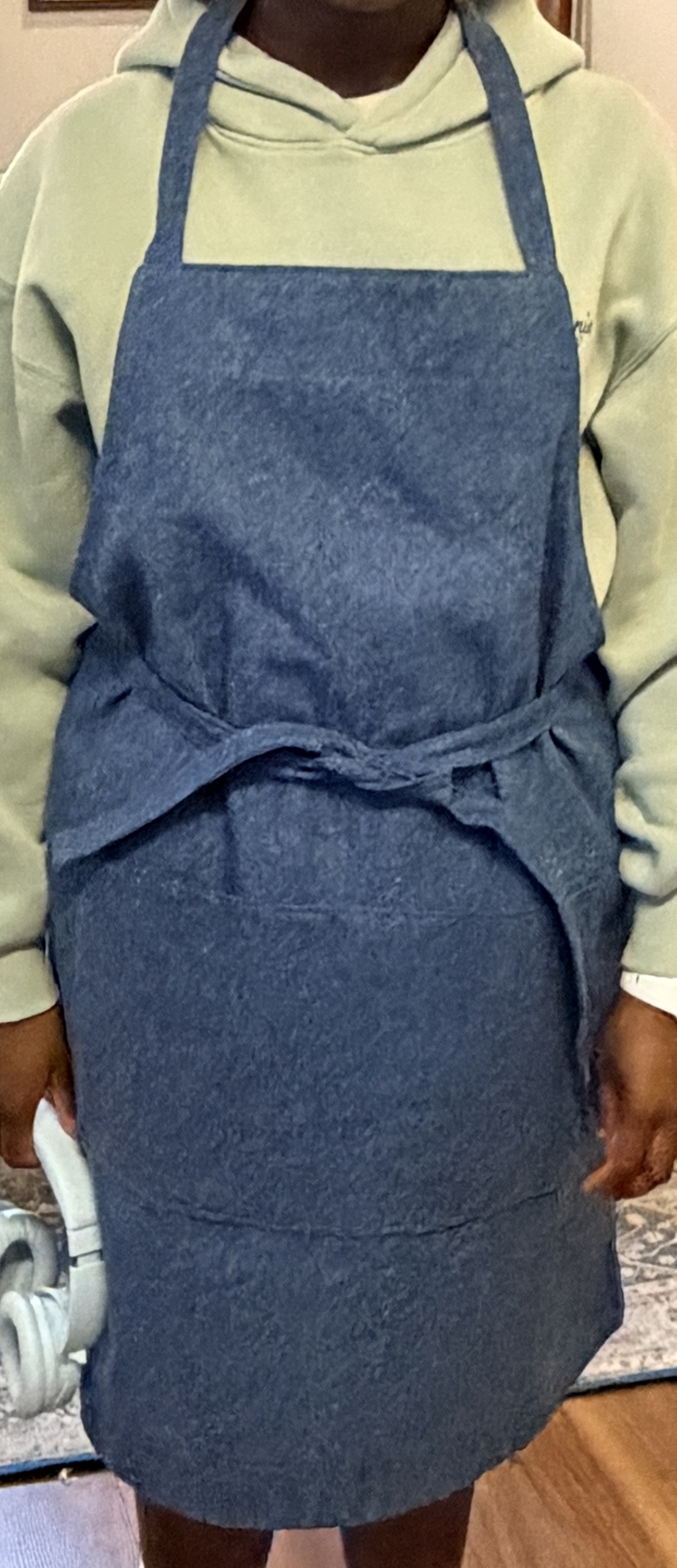
In CraftLAB, we made aprons using the free pattern and video instructions from Made Everyday. (Thank you for a well-fitting, easy to follow project.)

Note that it will probably take you longer than 30 minutes to make the apron on your first try. Allow a couple of hours if you are sewing with kids or are a beginning sewist.

The fabric shown is a heavier-weight denim with minimal stretch I found at Hobby Lobby. The girls chose to add a contrasting cotton fabric for the pocket lining. Thread used exactly matches the denim to help hide topstitching variations.

Three suggestions:

(1) Two ironing stations will make the process flow much more smoothly when sewing with friends.

(2) Use a tube turner to make the ties and neck band. Cut the fabrics as indicated on the pattern, but fold fabric in half RST lengthwise and stitch along one side and across the bottom of one end of the tube. Clip the corners before turning. Love how this video explains things.

(3) If sewing with kids, consider lining the apron. This will eliminate all of the folding and pressing required to finish the raw edges. Shorten the main pattern piece by 2″ before cutting out. Omit the facing piece. Add front pocket as directed. Create ties and neck band as desired. Attach ties and neck band in positions as indicated in video instructions. Place front and lining RST and sew around using a 3/8″ to 1/2″ (or edge of presser foot) seam allowance. Leave a 6″ opening along the bottom to facilitate turning the project right side out. Press and topstitch around the entire apron using 1/4″ seam allowance (or whatever you prefer).

I’ll be making one for me with some personalized touches: contrast pocket lining and matching flower applique on the bib. I’ll also shorten the neck strap by 2 inches because I want a little more coverage.
An unexpected return to garment sewing

Although I’ve been quilting for several years, I learned to sew by making garments. A serger, French curve ruler and stash of specialty garment sewing notions are evidence of my past. My friend, Ruby, has inspired me to tiptoe back into garment making. We’ve chosen a simple top pattern and plan a shopping excursion to Gail K Fabrics soon.

Meanwhile, I’ve taught sewing lessons for ‘tweens and teens over many years. Our foray into garment sewing is usually limited to items such as pajama pants, elastic waist skirts and adding bling to RTW items. Back in 2017, I mentored a high school student through her senior project portfolio and later with designing/making her own prom dress. Almost a decade later, I’m mentoring another senior with the three sewn garments required as part of her portfolio application to the Fashion Institute of Technology in New York.

With Joann now closed, sewists no longer have the ability to go flip through all the pattern books looking for inspiration. To select her portfolio projects, my mentee perused my limited selection of printed garment patterns and garment sewing books, print issues of Burda Style, websites of indie pattern designers and any newer garment sewing books we could find at the public libraries around us. She also spent time on social media gathering project ideas and portfolio prep advice.

Today, she took home her first completed garment for the portfolio – a ponte knit skirt. The skirt pattern – modified to add a front slit detail – came from the book Stretch by Tilly and the Buttons, which title is part of my personal sewing book collection. I have to say I’m impressed with the pattern, instructions and overall finished result. So much nicer than my experiences with the Big 4 pattern companies.

Our local library had a copy of Sustainable Style, sponsored by the Great British Sewing Bee. Published in 2020, the book is still available for sale in print and electronic formats, in case your library doesn’t offer it. In the book, my mentee found blouse and trouser patterns she wanted to make for her portfolio. The patterns that go along with the book can be found here. Technically, the patterns are free, but you have to print and tape the pages together or send the A0 pattern images out to a specialty printer who can print them at the correct size. My local printshop said it could print blueprint size pages; however, staff could not scale the image to print at the correct size, despite repeated attempts to do so.

Solution? I sent the master pattern image files to PDFPlotting in North Carolina. Keith returned the printed pattern sheets within two days. The patterns were printed correctly to scale, with crisp images and delivered wrinkle free. Two complete patterns for less than $25.00. Very reasonable in terms of cost and time saved not having to print and tape 60+ letter size sheets together!

Will I continue to quilt? Of course! Mentoring my student with her portfolio prep has merely whetted my appetite to try new things – a top and skirt, knit pjs, rope bowls, jelly roll rugs and sashiko stitching to name a few.

Here’s to learning new things and happy stitching!

Sewing machine tariffs – revisited

I finally caught up on all the email that arrived while I was in Oregon last week. Apparently, Bernina has announced significant price hikes on all Bernina and bernette machines effective August 1st. They’re joining Janome, Brother and Baby Lock in hiking prices due to tariffs. My local Janome/Brother dealer raised prices 10-25% across the board a couple of months ago. Stopped in today after guild meeting (7/25) and was told the price on the Janome 9480 with ASR (very competitive), but was also informed prices would be going up again on 8/1. I questioned this as I know there’s inventory in the back that’s been there since last fall. The clerk responded it was a “business decision” that applied to all inventory, regardless of when received.

If you’re seriously in the market for a new TOL machine from a dealer, you may want to consider finalizing your purchase in the next week. The good news? Prices on more modest machines available through mass merchandisers such as Wal-Mart appear to be holding steady for now.

What’s a fair price to pay for a sewing machine? Only you can decide. Check eBay, Check FB Marketplace. Check patternreview.com. My personal rule of thumb? The sweet spot for a new machine is about 65% of the suggested retail price (less if you can get it). For a machine that’s used – no more than 50% of the MSRP for a current model. Classroom machines from consumer shows should have every option available and carry the full manufacturer’s warranty that a new machine would have.

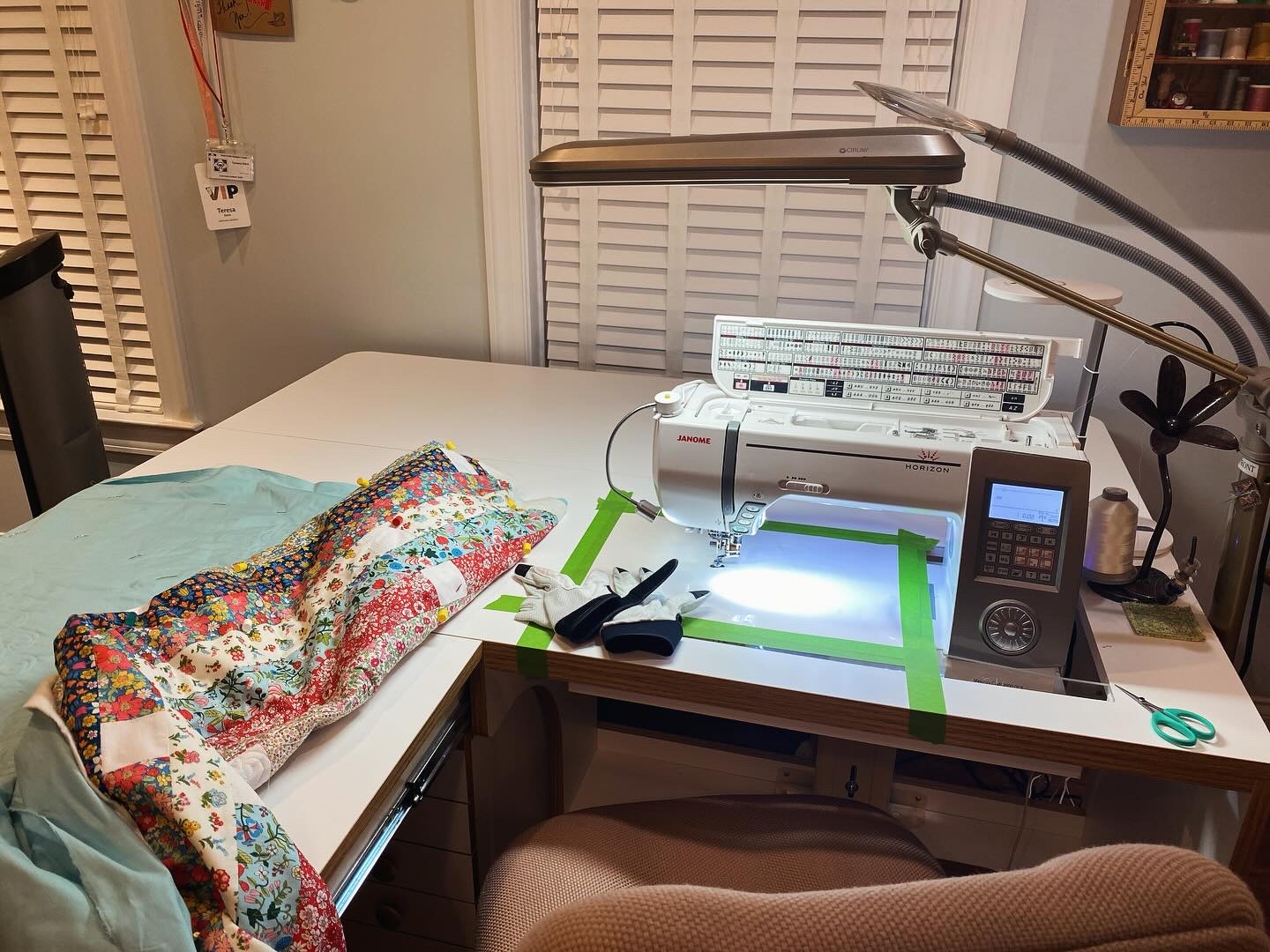
Am I ready to move on the purchase of a Janome 9480? Absolutely, but not at $1000 more than what the same damn machine (still sitting in the backroom at my local dealer) was selling for last fall.

No thanks, I’ll pass. I can wait. Maybe I’ll get to the point where I don’t need a stitch regulator for FMQ on a domestic machine.