A new school year begins…

The 2025-26 school year kicked off in a number of metro Atlanta school districts today. I enjoyed scrolling through the first day of school pictures on FB while drinking my morning tea. For the first time in two decades, I no longer have a niece in school. The youngest graduated in May and she’s moving into the dorms at Georgia Tech next Sunday.

Personally, the month of August will be spent learning more about Adobe Illustrator and EQ8, experimenting with some sewing techniques and renting time on the longarm machine at Tiny Stitches. Yes, you can say I’m big supporter of lifetime learning!

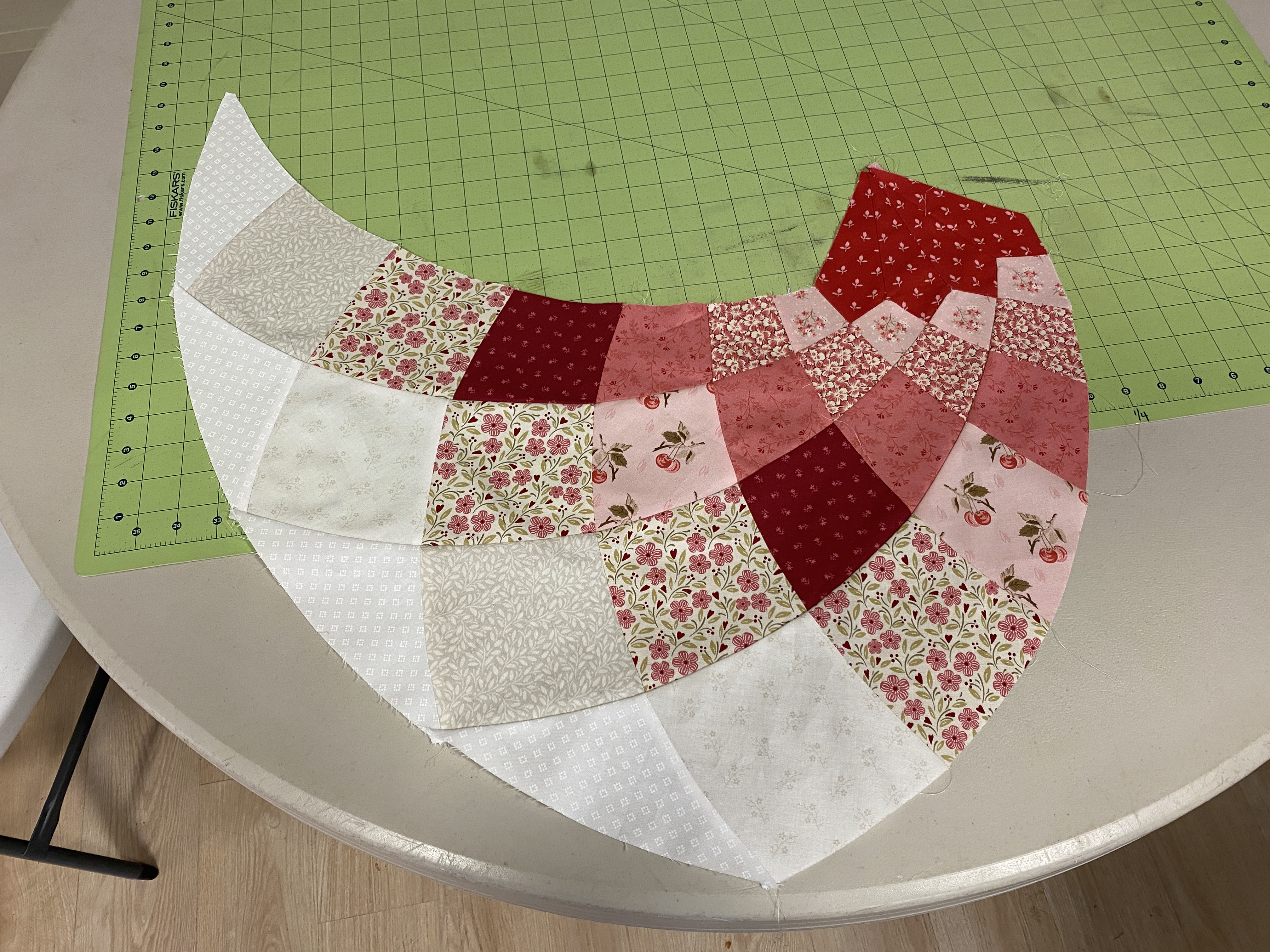
Using bits from my scrap bin to try a braid block pattern and binding with my new left bi-level foot.
One quarter of my Giant Dahlia quilt is complete – 7/26 ECQG class with Michelle Yeo from Australia

September brings a return to teaching classes and private lessons. Two fall classes are scheduled with the SQTM and I may teach a Saturday morning members-only machine maintenance workshop with my guild. I’ll also be partnering with a couple of local shops to host free Block Party workshops during school breaks so kids can come work on blocks to enter into next year’s quilt show. Preparations for the June 2026 show begin to ramp up with required monthly meetings of the entire Show Committee.

A return to school also means an uptick in therapy dog visit invites. Sadie is definitely ready to get back to work. We took six weeks off this summer from therapy dog activities. It was much needed. The public library READ visits are already scheduled, as are the usual visits with Georgia Tech. I’m waiting on the local elementary school where we did a weekly READ last year. It’s still in limbo. I’ll be bummed if it doesn’t continue; however, that’s outside my control. My friends to the north have plenty of visit opportunities available within my 30 minute drive window. That’s a good things.

Fair warning to those not familiar with ATL and back-to-school traffic. School is in session and traffic definitely heavier, but the real scary show comes after Labor Day. If you commute long distances to work, use the restroom before you leave. Bring a snack, a drink and some patience. You’ll need all three if you get stuck in bad traffic. Oh, you might also look into a Peach Pass, if applicable to your commute.

Good communication is key

Right now, I’m a little miffed, but I’m seeking first to understand instead of automatically blasting the company on social media like so many seem to do nowadays.

We hired a local handyman service to complete some odd jobs around the house. The service has mostly good reviews and is backed by a local consumer watchdog group, so I felt comfortable having them do the job. Work was completed on Monday and I received the bill this afternoon.

I have zero issues with the handyman or quality of his work. The handyman was punctual, personable and did good work. The office manager initially estimated 5 hours of work time. She communicated that this estimate included time to secure materials needed to complete the job and that we would be billed cost + 20% for said materials needed to complete the work. Okay, fine. We have 3 hardware stores within 10 minutes of our house. I already had the garbage disposal, power cord and any screws needed to relocate some door guards in the garage.

The loose tile project became more involved once the handyman discovered the cause of the loose tiles on the curb of the shower. We had a similar experience in our first house, so I knew it could result in 2-3 extra hours of work to fix. The handyman had completed the garbage disposal installation in less than an hour, so I mentally adjusted our estimate for about 6-7 hours of billed labor plus about $125 for supplies.

The final bill was for 8 hours of handyman labor (which included 2.5 hours of shopping time because I tracked the time away from the job) plus materials – which leftover materials the handyman took with him.

Any other contractor has left surplus materials that we’ve paid for when the job was completed. Painters leave paint. Tile folks leave extra tiles, grout, sealer and caulk. Porch repair folks leave extra lumber and screws. Is it different with handyman services?

I’ve asked about being charged for so much shopping time (especially the 2nd trip) and to see itemized receipts for the materials purchased as my recollection of what was purchased doesn’t even come close to what we were billed (even with the 20% markup). We’ll see how the office manager responds.

Don’t worry, the bill will get paid as the work was done.

The question is: will we hire them again in the future? Adjust the bill to what I think is fair? Yes. Explain why the bill stands as is so that I don’t feel like I’ve been taken advantage of? Maybe.

UPDATE: The office manager explained their policies and reviewed the materials purchased to complete our job. An adjustment was made for both time billed and materials charged, which I consider a satisfactory resolution to the matter. I paid the revised bill upon receipt. So yes, I would hire them again.

Upcoming class I’m teaching at the SQTM

Sewing Machine Maintenance – Saturday, April 20th 1:30-3:00 p.m. Cost: $35 + $5 supply fee
Let’s do a little spring cleaning on our sewing machines! Just like your car, your sewing machine requires regular maintenance to keep it performing in top shape. Do you know what type of maintenance to do and how often to perform it? We’ll start with our machine manuals and work from there. We’ll also share resources for learning more about your vintage and modern machines, plus provide a list of area sewing machine repair shops.

I’m really excited about the sewing machine maintenance class. A basic machine service runs $125.00 – $140.00 in my area – more if you have a machine with an automatic thread cutter or an embroidery module. Most sewing machine companies recommend an annual service. If you have the super high end TOL computerized machine that costs as much as a new car, then yes, you should absolutely plan to take it in to the shop for service on an annual basis, in addition to the routine maintenance you perform yourself.

For other machines – if you keep it cleaned and oiled, use quality needles & thread, protect it with a dust cover and your machine is running fine, there’s really no need to take it into the shop for an “annual” service. (BTW, I service and maintain my vintage machines myself.) Save your money! Furthermore, you CAN learn how to replace the bits that tend to break – spool pins, needle threaders and thread cutters. Parts are available to DIY. This is how I keep my classroom machines running. I know I can always take it to the repair shop if it’s something I can’t fix. Today, I picked up the Baby Lock Jubilant from the repair shop because I couldn’t figure out how to replace the blasted needle threader. This is the first time it’s ever been in for service and I’ve had it four years. Cost: $160.00. Believe me, I’ll be learning how to work on Brother/Baby Lock machines as well as I do my Janome machines! Don’t want to DIY simple repairs? That’s fine. Even with basic maintenance, you can probably stretch the service interval to once every 2-3 years assuming your machine is running fine. You’ll still save $$.

When does it make sense to replace rather than repair? (1) Your sewing machine is the $99 special from the big box store and you can’t fix it yourself. To me, it makes more sense to replace it rather than repair it (unless the machine holds some sort of sentimental value for you). (2) You have a computerized machine that’s out of warranty and the cost of a new motherboard is half the cost of a used, similar machine. Put it this way, should my 8900 need a new motherboard, I’ll be getting a new machine.

Janome machine disassembled to replace broken plastic spool pins with metal ones.