DIY Design Boards

Design boards are essentially a hand-held version of a design wall. I first learned about design boards at a retreat with Lori Holt back in 2019. We actually made our own design boards as one of the retreat projects. For quilters, they are great for holding bits and pieces of blocks or smaller projects. Ready-made design boards in a variety of sizes are available through Riley Blake Designs. Retail prices range from around $15 to $30 per design board.

DIY Design Boards holding M50 Aloha Mystery Project Components

You can DIY multiple designs boards for the cost of a single ready-made one. Basic supplies needed: a piece of foam core board, scrap batting and a couple of jelly roll strips. You will need either a glue gun or Heat & Bond Ultra (in the red package) with a mini iron to affix the border trim.

I prefer to make my design boards using self-adhesive foam core board (I find it at Hobby Lobby), felt and the Heat & Bond Ultra (on the roll) method. Note: a glue gun will still come in handy to hold the mitered corners in place. If I can’t find self-adhesive foam core board, I’ll use spray baste to hold the batting/felt in place.

Foam core board can be found in the school supply section at Dollar Tree, Wal-Mart, Office Depot, Hobby Lobby and Michael’s. It usually comes in a 20″ x 30″ sheet and quality can vary, so compare before you buy. I cut mine to the desired size using a 60mm rotary cutter. Personally, I like an 18″ to 20″ square board for larger quilt blocks and a 10″ to 12″ square board for smaller quilt blocks. And yes, I have been known to Frankenbatt leftover pieces of foam core board to make one more design board.
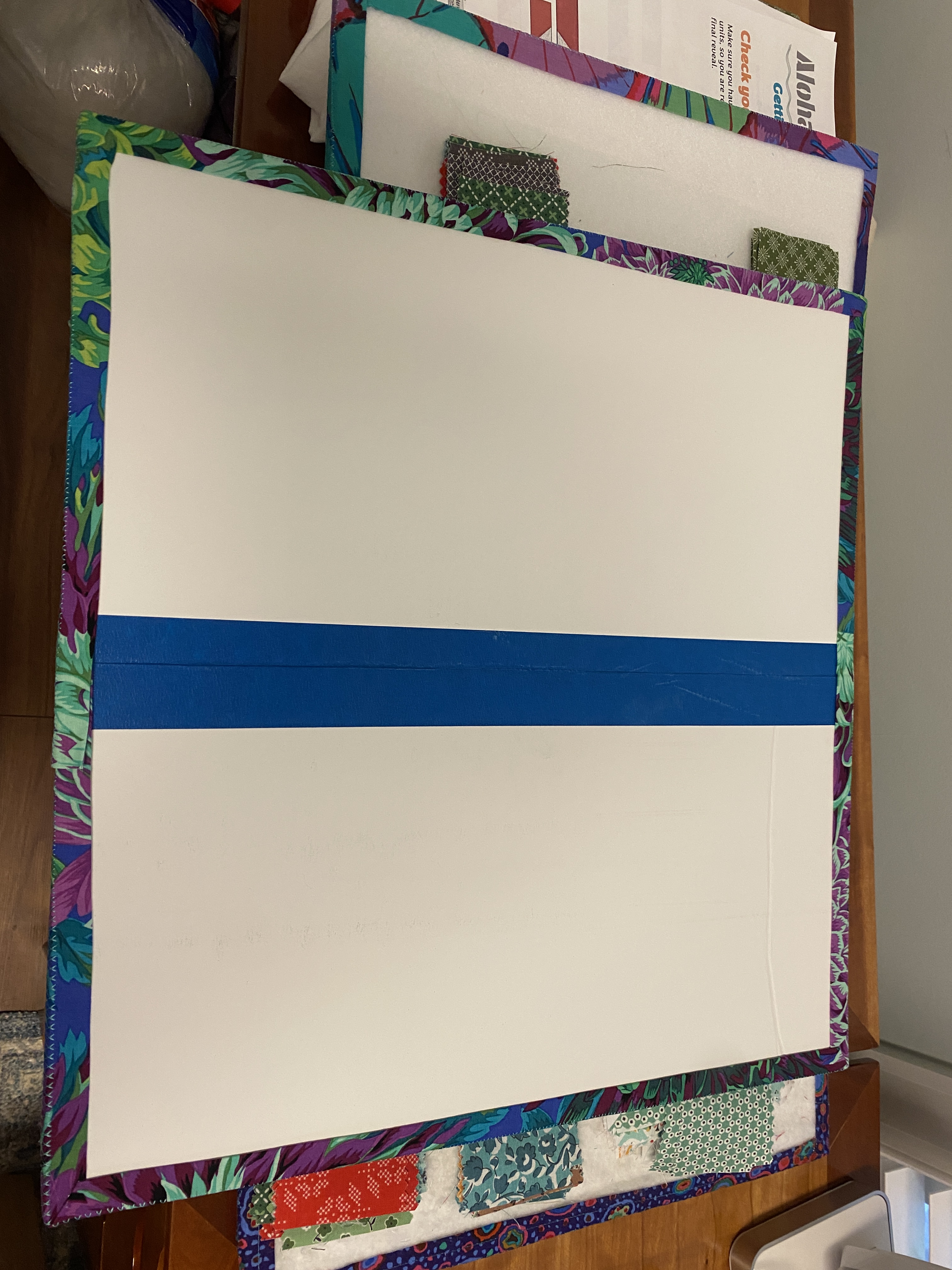
Design board made from leftover foam core board pieces (taped together with painter’s tape).

Design Board Tutorial using glue gun
Design Board Tutorial using Heat & Bond Ultra
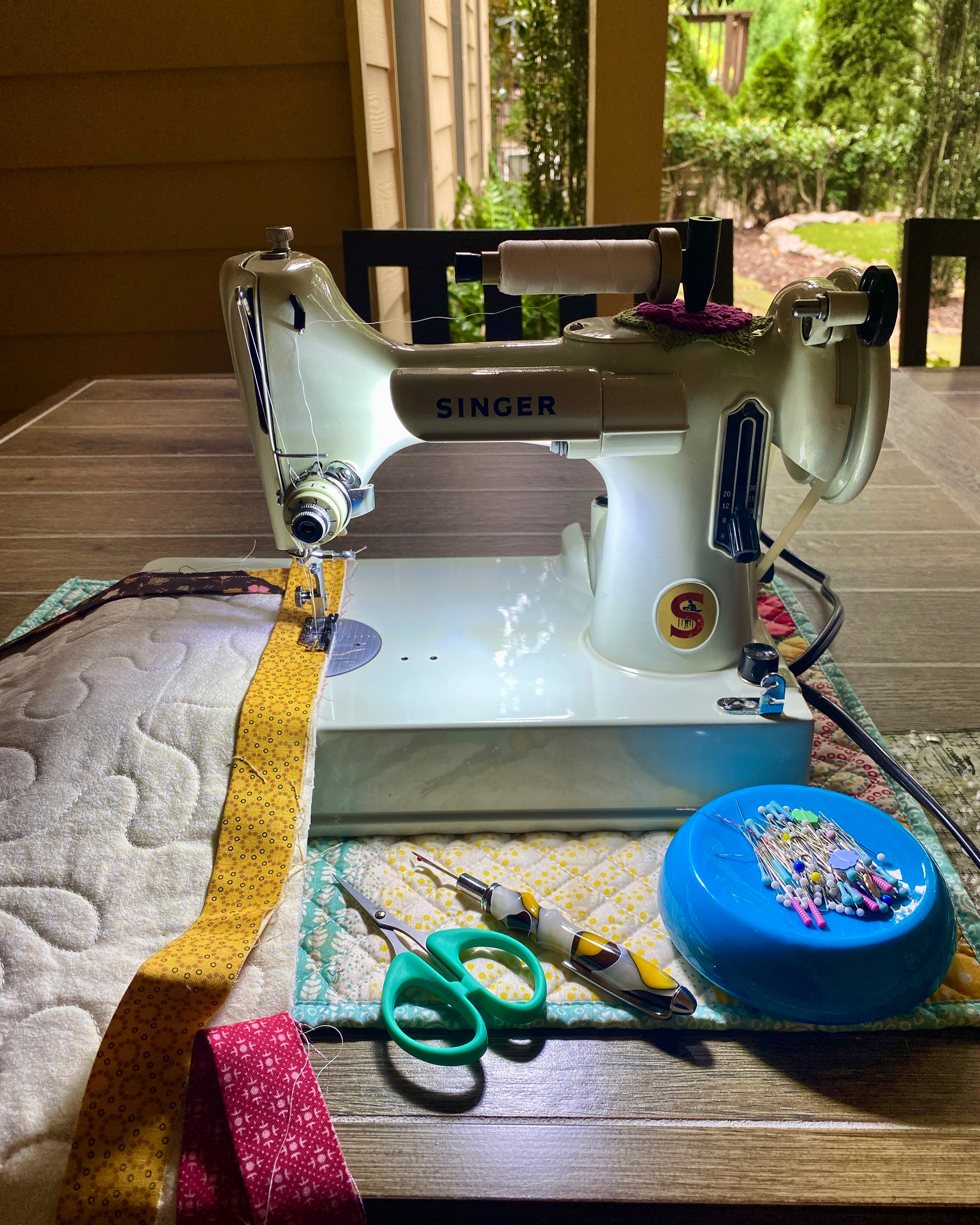
My date with Jack

Quilters (and probably other sewists, as well) have an inside joke regarding “a date with Jack.” It merely means we’ve had to spend WAY too much time with our seam rippers (aka “Jack the Ripper”)! I’ve been working on a set of fall placemats using the Mini-Yellow Brick Road pattern from Atkinson Designs. Last night, I quilted three of the placemats with no problem. Placemat #4, however, decided to be difficult.

I quilt using a large cone of thread on a thread stand that sits next to my sewing machine. Somehow, the velcro closure on my quilting glove caught the upper thread and pulled it out of the upper thread guides. I didn’t notice it until I was 2/3 of the way through quilting the placemat. The top side stitching looked fine, but the back was nothing but eyelashes. It took a while, but I managed to remove the stitching and quilt the placemat again.

This evening, I started binding said placemats. Another date with Jack – WITH THE SAME PLACEMAT! I was listening to a podcast and hadn’t paid attention to which way I’d lined up the binding when attaching it to the placemat. I sewed 3/4 of the way around before I realized I’d sewn it with the folded edge against sides of the placemat instead of matching raw edges together.

After yet another date with Jack, I decided to call it quits for tonight. I’ll finish binding my placemats tomorrow.

Day 3 with Jack. Binding attached, but Jack’s assistance was needed relocating a join spot so it would not be at the corner of the placemat.

Shhh! A sneak peek at classes coming this spring…

Well, one is already being advertised – Sewing Machine Maintenance class on Saturday, April 20th from 1:30-3:00 p.m. You can find sign up information here.

The other class is Orphan Blocks to Bench Pillow – date TBD, but probably in May. Wondering what to do with single or a small group of blocks left from a previous project? How about a bench pillow?

Here’s the completed pillow front with my 1 – 10″ finished and 4 – 5″ finished blocks. I’ll quilt it using a loopy meander and then do a modified envelope closure for the back.

These truly are from 2 different projects. The center block is week #3 from the 2024 Riley Blake Designs designer challenge. It has too much of a Mardi Gras vibe compared to the other blocks I’d made in that series, so I remade it. The four flower blocks are from Lori Holt’s Flea Market Flowers book and were part of a table runner project that was pushed aside.

Bench pillows come in assorted sizes. This one will finish at 14″ x 28″, which is perfect for the small glider bench on my back porch. Kimberbell and other designers use a 16″ x 38″ size for their bench pillow projects. Remember, you are the boss of your bench pillow! Make it whatever size you like.

Don’t need a bench pillow? How about a table runner or door hanger instead?