Never apologize for your sewing machine

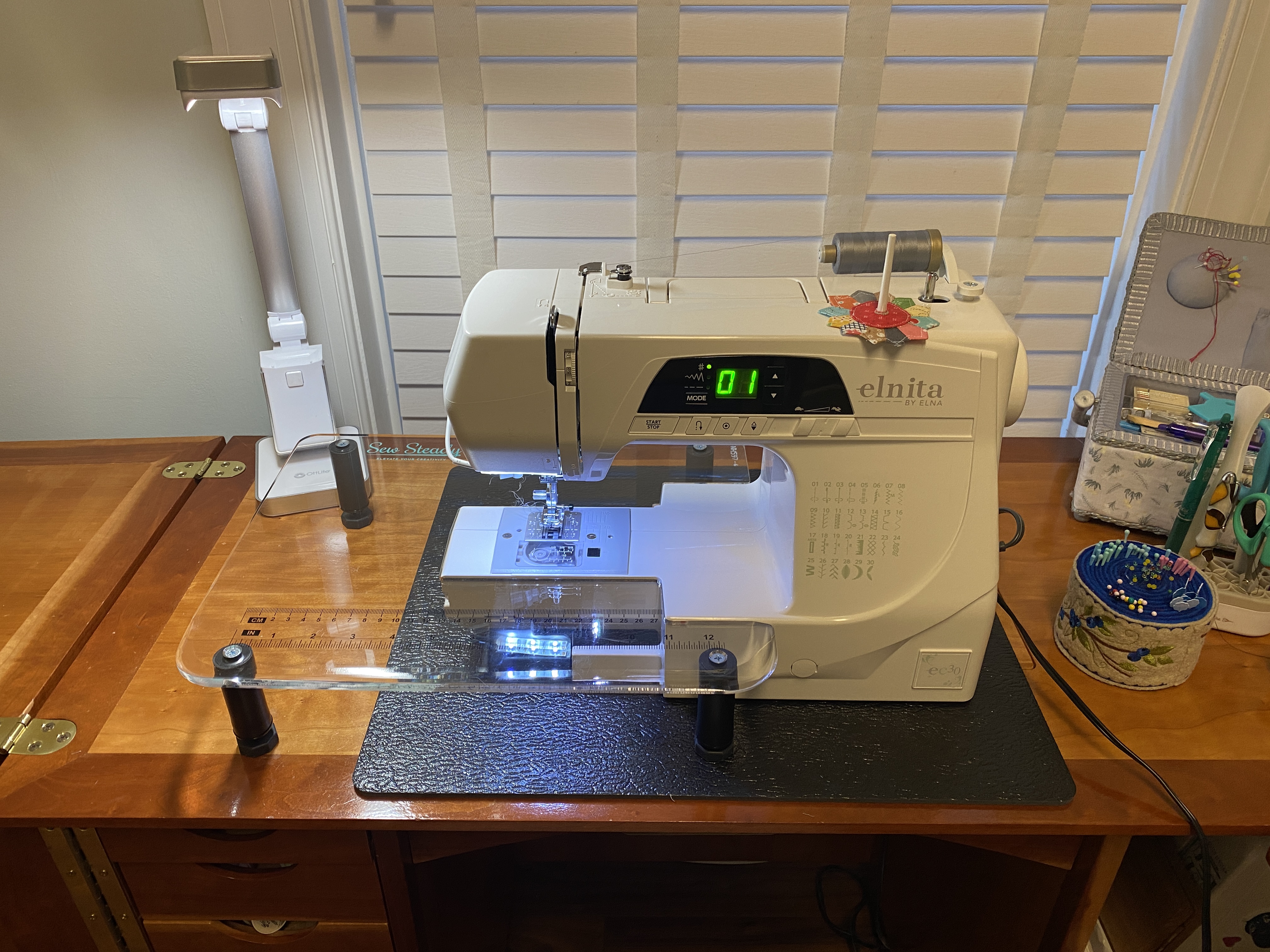
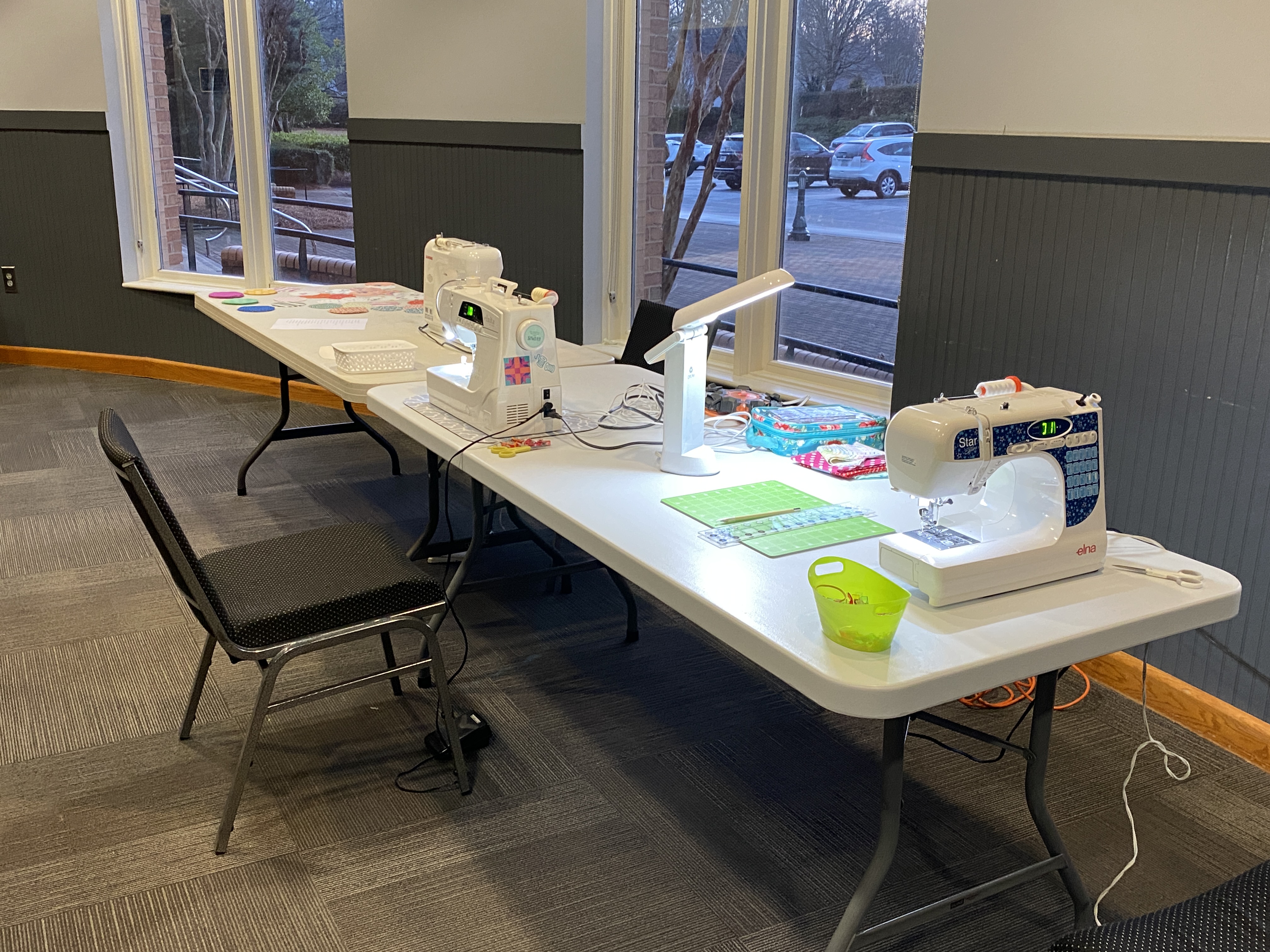
Yesterday, my guild hosted a charity sew day. There were several new faces at this event. One person set up her machine next to my friend and me. While we were chatting, the newcomer apologized for her sewing machine. She said it wasn’t fancy like others she’d seen in the room, but she liked it. Her particular model of machine (a computerized Brother machine that retails for $250.00 at Wal-Mart) is one I often see at retreats and in classes I teach – not much different from my Elnita EC30 or my friend’s Janome 740. I assured her that her opinion of her sewing machine was the only one that mattered.

Our conversation brought back memories of when I first joined a sewing group. I had a mechanical Kenmore 30 stitch machine that I loved. I walked into a room of ladies with expensive Pfaff, Viking and Bernina machines. I knew exactly how she felt. A kind lady noticed my discomfort and told me that it’s what I can do with the sewing machine that counts, not the brand of sewing machine. That’s always stuck with me.

I scanned the sewing machines in our room. Yes, there were a couple of Berninas and high-end machines at the event – including an aqua Kaffe edition Bernina 475 (retail $2,999). Most attendees had brought either a vintage machine or a small modern machine that probably cost less than $450.00. This is typical of what you’ll find at classes, retreats and sew days. The travel machine might be grandma’s Singer Featherweight, their very first sewing machine or the $100.00 big box store special they had to buy to finish a project because their main machine had a hissy fit. A straight stitch only machine is usually fine unless you are taking an appliqué or decorative stitching class. This is why so many quilters have a Singer Featherweight or a 301 as their travel machine.

Remember, it’s what you do with the sewing machine that counts – not the label on your sewing machine. Chances are, the serious stitchers with the vintage and budget friendly machines at the retreat have an upper tier sewing machine or longarm at home. (As did our newcomer with her Brother machine – she had recently purchased a long-arm.)

A budget-friendly Elnita EC30 sewing machine that is my go-to machine for classes.

Back to school time – will your kids be sewing this fall?

Hard to believe, but our local public schools start back later this week. Classes for my hybrid homeschool group resume 8/19 and I’ll be teaching “Travel Stories” – exploring maps & geography through picture books. I’ve had a lot of fun researching read-alouds and activities for this class. The number of students in each class will decide how many “craft” activities I can do with them. I’m hoping for a sewing unit with my 4th & 5th graders!

CraftLAB and private lessons resume in late August. Most of my students are now middle school age – which is great. They’re more independent and our projects are definitely driven by their interests. I do require a community service project – which is to make a pillowcase for Ryan’s Case for Smiles or a placemat for Meals on Wheels. My guild makes up the pillowcase kits and I provide materials for the placemats. If you are in Smyrna, Vinings, or NW Atlanta, you are invited to reach out about lessons. I have limited openings for students in third grade & up. After school sessions are available.

I’m on email lists for just about every fabric shop, quilt shop, sewing machine dealer and maker studio in the area. Not much has been advertised in the way of fall kid/teen classes just yet. Here’s what I have found:

  • If you’re in Loganville, Monroe or Watkinsville and homeschool, Sew Sew Studio in Bogart has a reasonably priced 6 session course available for homeschool students. Everything is included in the class fee.
  • If you live in the Suwanee and Duluth areas, several stitch schools have recently launched. Google “sewing classes Gwinnett” to find them.
  • For those closer in to the city, Fabricate Studios (Howell Mill Rd/Chattahoochee Industrial area) and Topstitch Sewing Studio (newly reopened in Decatur) also offer kid and teen classes at times to suit working families (after school and weekend classes).
  • If you live in Cobb County, the local library system offers free sewing classes at the Switzer and Northwest Regional library branches several times per year. These classes, designed for teens and adults, are led by volunteers from the American Sewing Guild and other experienced sewists. Feedback on classes offered through the library has been very positive.
  • Cottontail Quilts and Tiny Stitches offered youth sewing classes over the summer. The Stitcher School sponsored summer sewing camps at Covenant Church (located near Campbell Middle School). So far, I’ve not seen or heard about any plans for fall sewing classes.

There is one more option: if you have a sewing machine, rudimentary sewing knowledge and patience, you CAN teach your child (plus a friend or two) how to sew. Classes can be expensive. Classes can be offered at times that don’t work with your schedule. Classes may be too far to justify the drive in Atlanta’s notorious traffic.

Show your child how to use the machine. Start them stitching on notebook paper without thread in the machine (or search for free printable cute sewing practice pages online). Beginner projects like a pillowcase, pocket tissue holder, bookmark, drawstring bag or simple tote bag are confidence builders for newbie stitchers. A small investment of time spent researching tutorials/projects for kids on Pinterest and YouTube will be well worth it. The money you’ll save by teaching the basics can go toward your child taking more advanced classes to learn skills you’re not comfortable teaching or for attending sewing camps.

Hack: Making Baby Lock snap on presser feet work with a Janome top loading machine

Janome, Singer and Brother manufacture sewing machines for other companies. It’s a common practice in the sewing machine industry. I can always spot a machine made by Janome due to the slightly offset presser feet and the distinctive gray plastic needle plate in less expensive top loading machines. Singer and Brother tend to make machines designed for true center-needle presser feet (not offset like Janome).

My Elnita EC30 and Baby Lock’s Joy and Zeal share the same needle plate and presser feet (all made by Janome). Baby Lock markets an accessory set with a “specialty ankle” that allows these Janome made (Anna, Molly, Joy and Zeal) machines to use more of the Baby Lock snap-on feet. Baby Lock makes an awesome Quilt Binding Foot that I’ve been able to make work using a 5mm width Janome shank on my Elnita EC30 and Elna STAR, but this really sparked my curiosity. I just had to see this “specialty ankle”.

It meant I had to buy a 7 piece foot kit, but I’m glad I did. The “specialty ankle” is a standard Baby Lock snap-on shank that’s hollowed out to allow for the offset in the Janome presser bar. If you have a Brother-made Baby Lock machine, you’ll be able to use most of your snap-on feet with your Janome 5 mm width machines with this specialty ankle. I cannot vouch for the 7mm width top loading Janome machines as I do not have one of those models to test.

Pick up one of these 7 piece foot kits for the Baby Lock Anna, Molly, Joy and Zeal:

They are $15-$20 online and $30 at a dealer. This is the only way I’ve found as a sewing machine enthusiast to get the special shank needed to use the Baby Lock Quilt Binding Foot (and others) with my 5mm width Janome machines. Having this shank also opens the doors to potentially more center needle snap-on presser feet (Amazon, MadamSew), which are usually available at a much more reasonable price.

We need someone to come up with a 3D printer file for this screw on presser foot shank. Just sayin’.

Have you discovered hacks to make your sewing machine feet more interchangeable?