Optimizing Quilting Productivity: Project Completion and Summer Plans

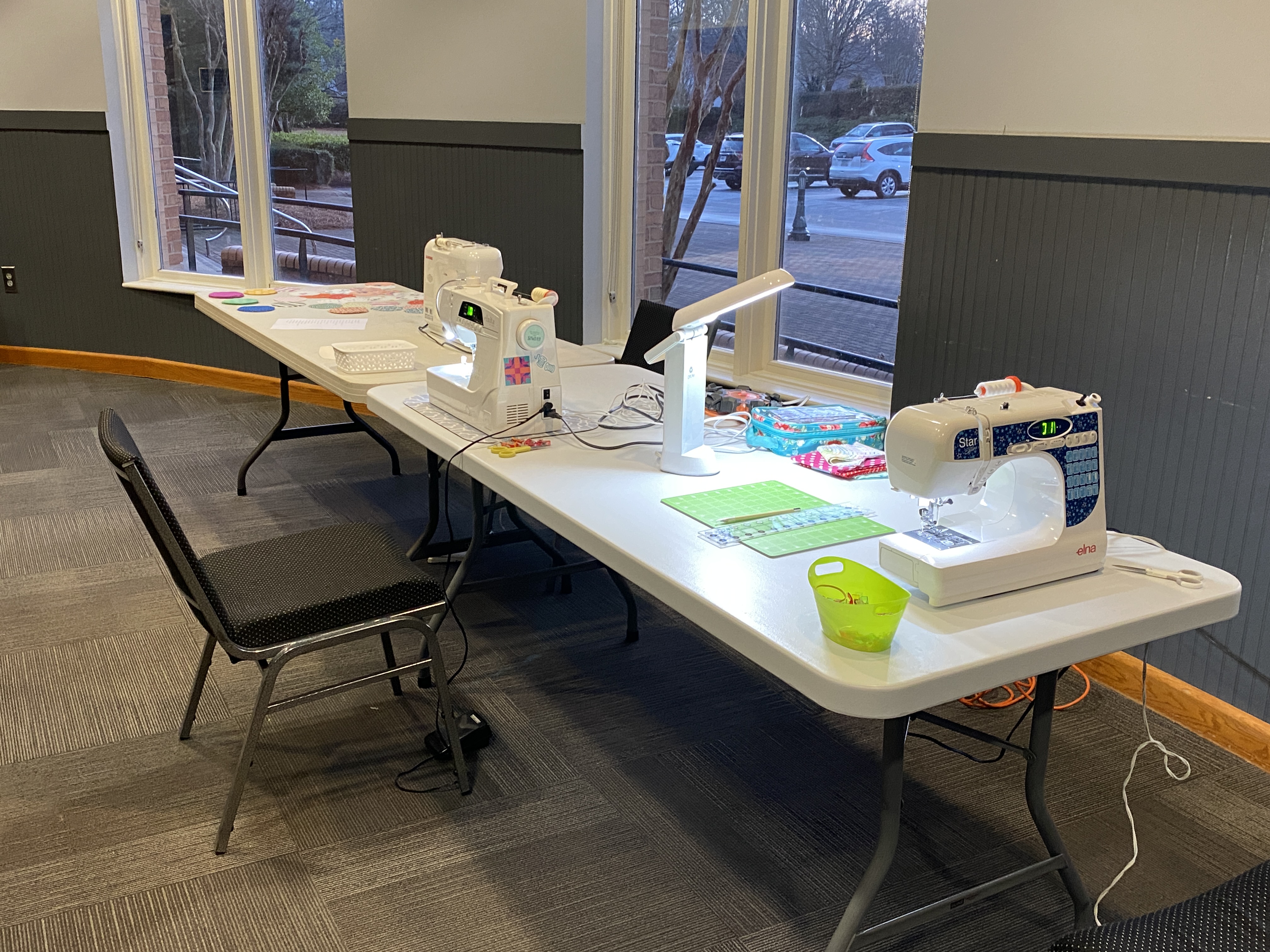
I have so many PhDs (projects half done) at the moment. The vast majority fall into “finish assembling quilt top” or “to be quilted” categories. Instead of making blocks at this week’s library sew day, I focused on “completion tasks” I could accomplish with a smaller sewing machine. This meant adding and stitching down the binding (by machine) to a throw size donation quilt, plus making binding for two other quilts. I had hoped to complete the two “Layer Cake Shake” quilt tops currently under construction, but that was not to be. The collective eyes of my sew squad noticed I had one HST of a Friendship Star block turned the wrong way in my Christmas version of the Layer Cake Shake pattern. I completely missed it. You can actually see it in the previous photo collage of my retreat in Boise. It took a while to unpick all the blocks and correct my mistake. However, I’m glad they noticed it before I added the borders!

Most of my sewing time this week was spent finishing the foundation paper pieced Roses/Marigolds for Mother mini-quilt that was one of our retreat projects. It turned out so pretty! Backing and binding came from my stash. I machine quilted it using a loopy meander. While at the retreat, I made a single flower and leaf unit using a borrowed add-a-quarter plus ruler. The quilt shop had sold out of them, but my trusty friends at Amazon were able to supply me with one once I returned home. The finished project will be gifted to my mom on Mother’s Day.

It felt really good to complete two projects this week. Tracking project progress in a small flexible notebook (currently a Leuchtturm1917 B6+ softcover purchased in 2021) has been helpful. I used to do this when I was working full-time to make the best use of my limited sewing time. I pack it to take to classes and retreats, as well. A 5″ x 8″ (or A5 size) notebook would also work; however, coils on a spiral binding tend to get caught on stuff in my tote bag. All my sewing related notes, tasks, ideas, etc. go into one of these notebooks. When it gets full, I go through and transfer the information/items I want to keep to a separate 3-ring binder. This only takes about 15 minutes. I keep original design sketches, teaching notes, inspirational quotes, and any tips/tricks/product info I may need later. It usually amounts to less than 10 pages per notebook that I keep.

I plan to spend the hot summer months in the quilt cave practicing my FMQ skills on several charity quilt tops in my PhD pile. I should feel confident enough after 10 charity quilts to tackle FMQ on a two important personal projects. I won’t be spending my entire summer in the basement, however. Summer quilty plans also include helping out at the quilt show, mentoring at the SQTM quilt camp, a trip to Missouri Star and the International Quilt Study Center in late June, plus hosting a summer CraftLAB camp in mid-July.

August and September will bring the return of quilty travel in the form of a quilt retreat at the Koosa Mountain Lodge in August with my Friday sew squad and visiting the Asheville Quilt Show at the end of September.

How did I learn so much about sewing machines?

Answer: Natural curiosity and necessity.

When I ran the Stitching Stallions maker club at my former elementary school, I had an eclectic collection of mechanical and electronic sewing machines for the kids to use. Some came from the district’s own warehouse surplus, others were purchased with grant funds, some were donated and a couple were purchased by me. There was no money for sewing supplies, let alone annual service for the 5-8 machines we used. I had to learn how to troubleshoot, maintain and repair our machines. I did routine maintenance on 1-2 machines every week and a more in depth service during the summer. I learned how to replace spool pin holders, exterior thread cutters and needle threaders. I learned how to make bobbin winder adjustments. I learned how to remove covers to undo tangled threads, broken needles and big wads of fluff that managed to collect in the machines. Believe me, if there is a way to mess up a machine, a kid will find it!

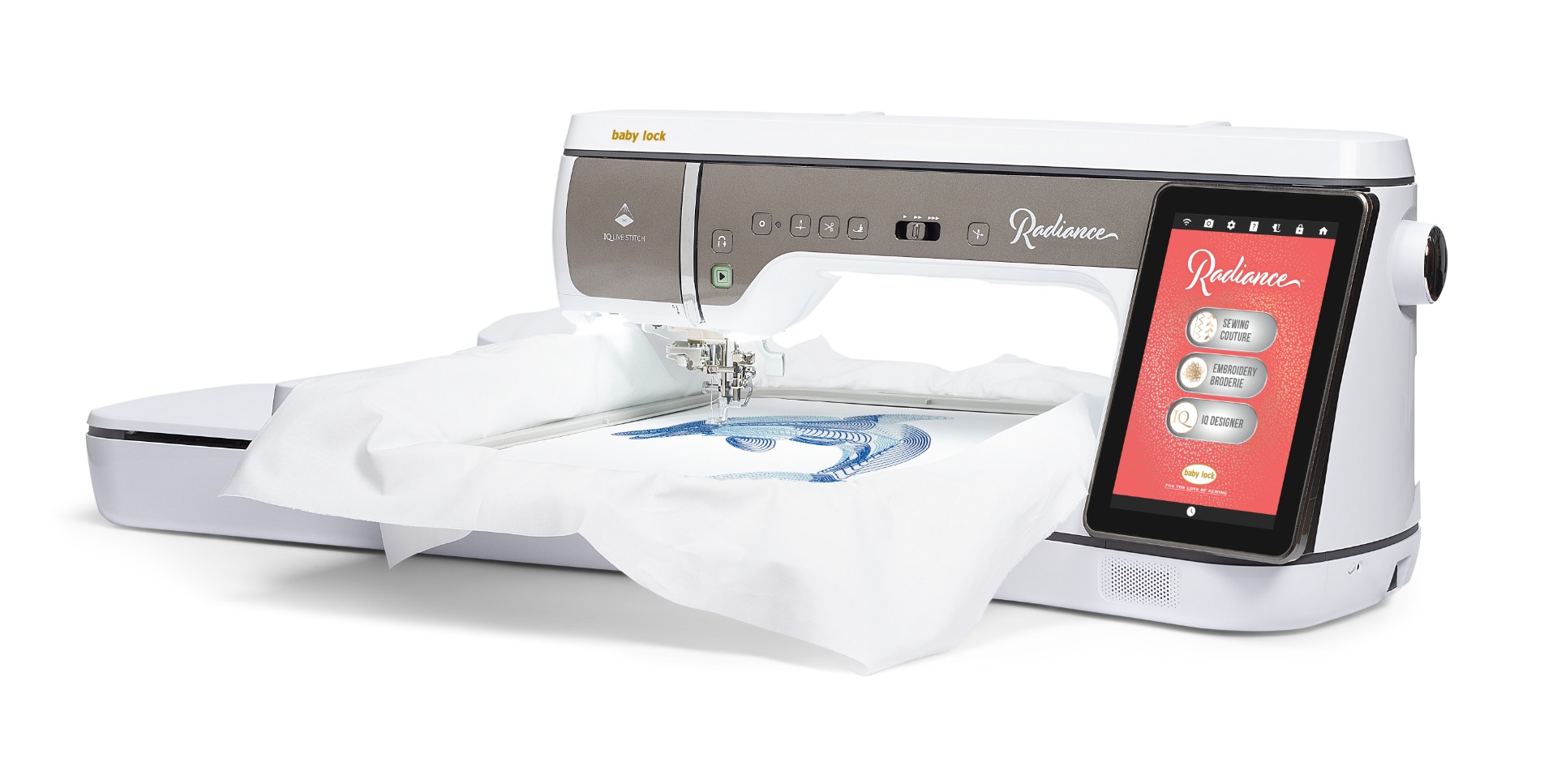
Today was our first Sewing Machine Maintenance class at the Southeastern Quilt & Textile Museum taught by yours truly. In class, we had an Elna SU from the late 60’s, a Pfaff 1013 originally purchased in West Germany in the mid-80’s, a Singer 9960, a Viking Opal 670 and a Singer Merritt 4530. Can you believe no machine used the same bobbin? Students left with clean machines and a lot of smiles.

Feedback was positive and I was encouraged to offer this class again – which I think the museum director plans to do in the fall. Others asked for Featherweight specific classes so they can learn to use and care for their machines. Look for those to come in July and August. My local FW club is looking for someone to lead them in a machine spa day for their Featherweights. After today’s successful class, I think I’m going to put my big girl panties on and offer up my services to lead that class, too! I certainly know a lot more about FW than I do each of the machines we worked on today.

I definitely stepped outside my comfort zone and the sense of accomplishment I felt after the class concluded is something I’ll never forget.

A fun quilt pattern to make with your ‘tween or suitable for a quick charity quilt

Take a look at the Layer Cake Shake, a free quilt pattern offered by Fat Quarter Shop.
The FQS video tutorial for this pattern may be found here.

Why I like it:
1) Great way to use up leftover layer cake (10″) squares
2) Simple piecing with fewer match points
3) At 56-1/2″ square, it makes a perfect size quilt for a ‘tween

This variation of the Friendship Star block lends itself to all sorts of creative interpretation. Be as scrappy or as matchy-matchy as your heart desires. If you need to make it a little longer, consider adding a row of 8-1/2″ Friendship Star blocks or colored strips across the top and bottom of the quilt before adding the borders.

Hint: The quilt center consists of 4 large blocks. Before sewing all the rows into the four 9 patch blocks, lay them out first and decide which block is 1, 2, 3 and 4. Seams on blocks 1 & 4 will be pressed alike and seams on blocks 2 & 3 will be pressed alike. This makes a difference when you sew the blocks together.

This quilt is also very easy to work on in chunks. When I was still working full-time, this was the exact type of project that kept me sane. By working on it for an hour or so each night, I would have a completed top by the following weekend.

And more more advantage to this pattern – it’s a good size to practice my FMQ skills. Can’t wait to see how my free motion quilting plan for this quilt turns out!