Projects made from my fabric stash

Stitchin’ Heaven New Year’s Day QAL Blocks 1 & 2 made from fabrics in my patriotic bin
Curvy, lined zipper pouch for class sample. Pattern drafted by me using Boxed Bag template by Carolina Moore.
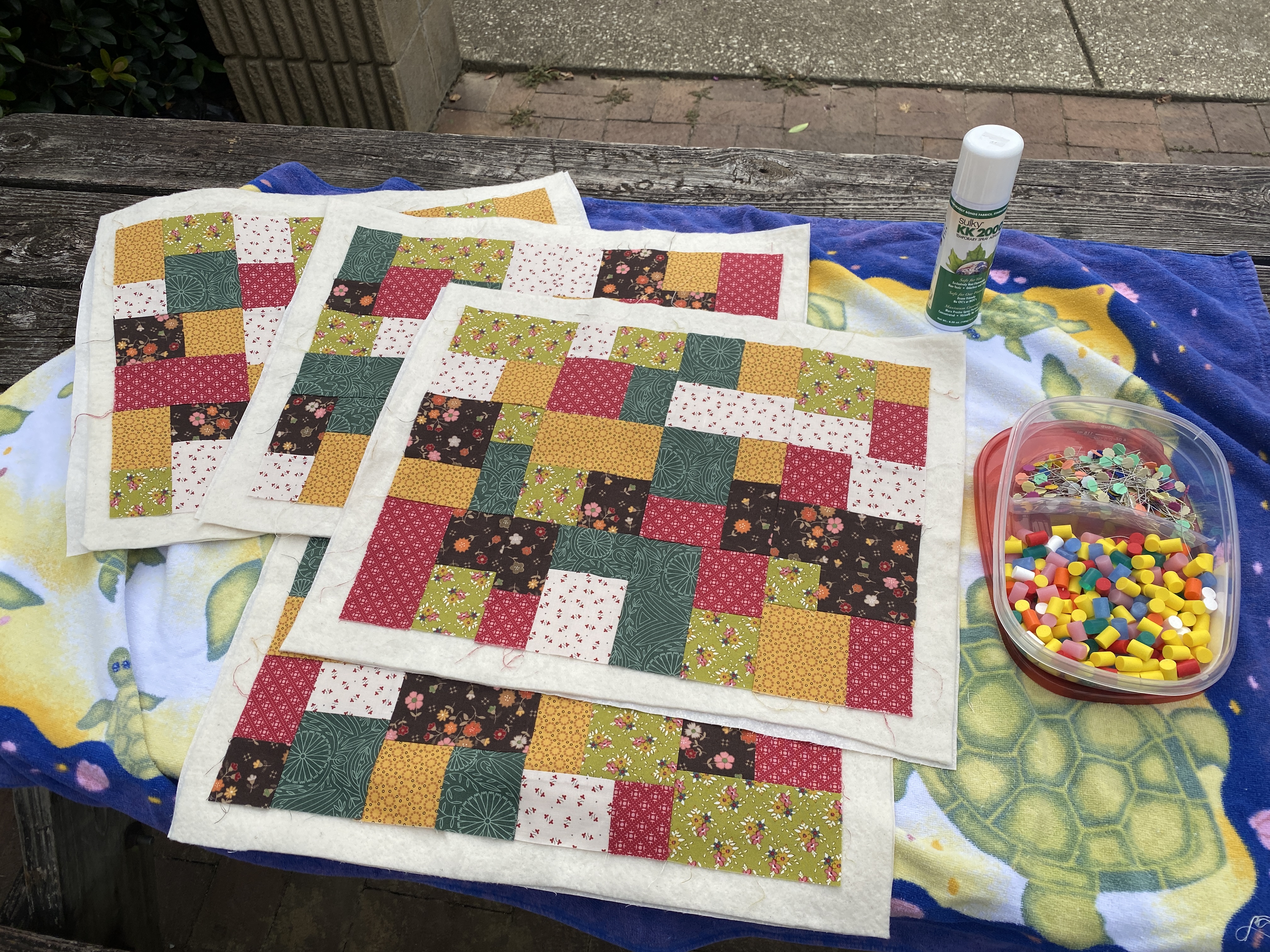
Placemats using Mini Yellow Brick Road pattern (basting outside at the library during Sew Day)

What do you do with leftovers from previous quilt projects?
How about using them in new projects? It doesn’t have to be an entire quilt.
1. Make mug rugs, pot holders, placemats, table runners, journal covers, pillow covers or zipper pouches.
2. Use the larger leftover bits make quilt sandwiches for FMQ practice.
3. Use some of the smaller leftover bits to make a practice blocks to try out new patterns before cutting into your project fabric.

How to store your scrap and leftover fabrics?
Your system can be as decorative and elaborate as you wish. Personally, I prefer simple. I keep small bits and partial strips in a pretty basket. Random 5″ and 10″ squares are kept with my charm packs and layer cakes. Cut strips that are WOF are stored with my jelly rolls. Larger chunks are stored by color with FQs and yardage. Novelty, dog and patriotic theme fabrics are kept separately.

Periodically, I will go through my scrap bin and cut the leftover jagged pieces into 2-1/2″, 3-1/2″ and 4-1/2″ squares. The smallest size kept is 1-1/2″ strips and I’ll cut 1-1/2″ squares from them as needed because they tend to get lost in the scrap bin.

With the current Bonnie Hunter Winter Mystery quilt, I’ve made good use of random charm squares, forgotten FQs, white/cream hunks leftover from previous quilt tops, and turning all the leftover triangles from trimming stitch & flip units into 1-3/4″ HSTs.

The key to managing your fabric scraps is to organize them, then actually use them.

Quilting through the holidays

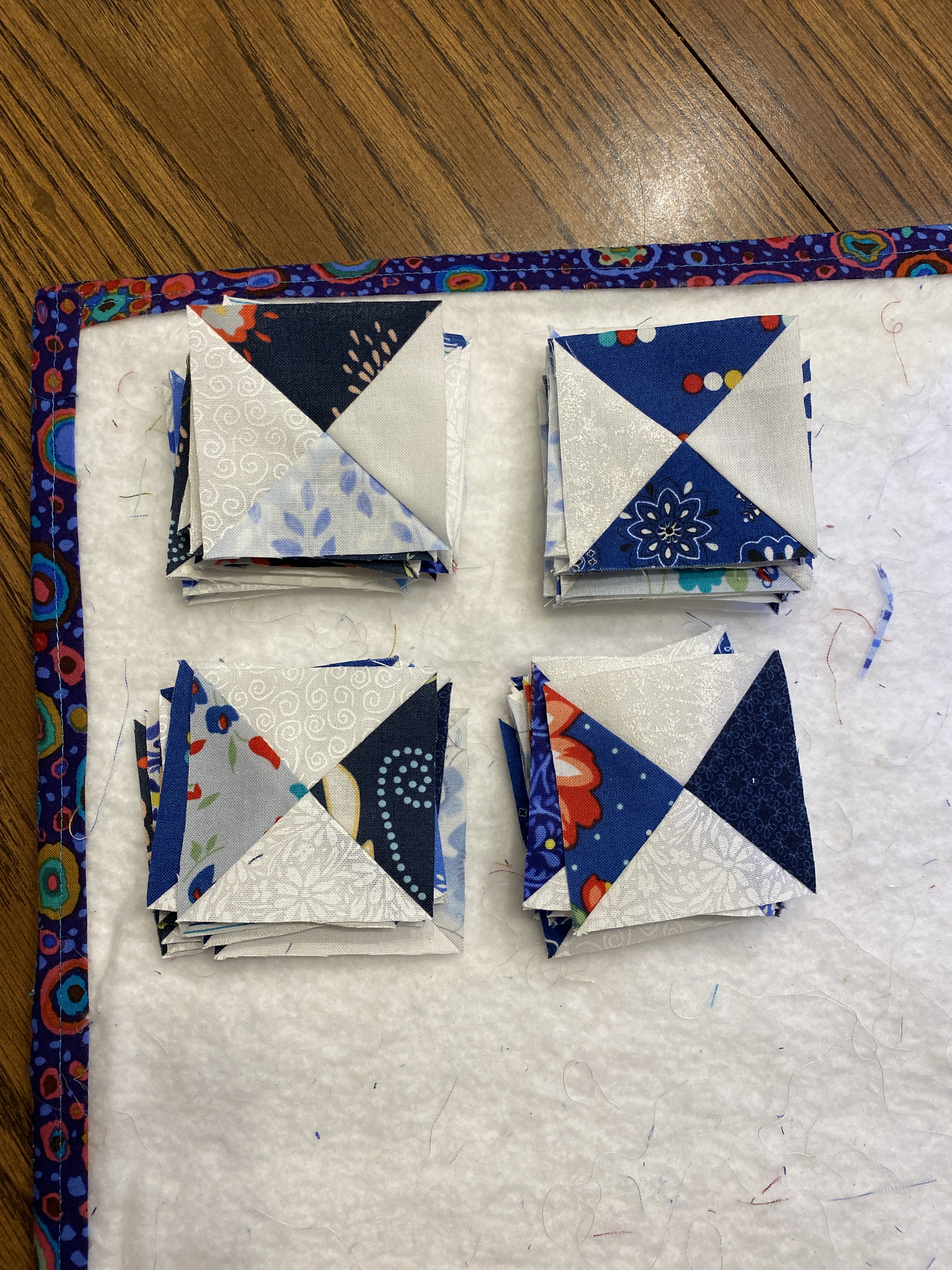
Stacks of Hourglass Quilt Blocks – Week 3 of the Bonnie Hunter Old Town Mystery Quilt

I’m tired. No wonder. I’ve made about 400 little bits in total for this quilt over the past two weeks. I’m all caught up and I’ve successfully figured out how to cut QSTs for the hourglass blocks using Bonnie’s Essential Triangle Ruler. Minimal unstitching and everything turned out the correct size, with only a tiny bit needing to be trimmed away. Last time, I used my Featherweight and the blocks turned out too small. This time, I used my Elnita EC30. Having the ability to adjust the needle position made all the difference for me.

I’m thankful that Bonnie Hunter offers a mystery quilt along during the Christmas season. This is my first time participating in one of her annual mystery quilts. The project has helped keep me engaged and in relatively good spirits during what can be a hard time of year. Family drama isn’t pleasant – especially when it causes a rift among family members on my side. Five years later, I will say the peace that comes with not having to deal with certain folks during the holidays is a gift in itself. This year, there are signs that some of the younger family members as they reach adulthood are interested in rekindling the familial relationship. This is welcome news.

The next two weeks will be a flurry of activity, but Christmas will be spent at home with hubs and Sadie. Christmas and New Year’s fall mid-week, so I’ll be able to stitch with some of my Friday Sew Squad at the library between Christmas and New Year’s. Are you joining the Stitchin’ Heaven crew on New Year’s Day? I’m with Team Rob and have already pulled my bin of red, white and blue fabrics. It’s a fun day and you don’t have to complete the quilt unless you want to. Last year, I made a handful of blocks, which became placemats to donate to Meals on Wheels. Placemats in patriotic colors are always welcomed by the staff.

Oh, and I’ll be working on the Bonnie Hunter Mystery Quilt until it ends in January.

Frugal Quilting?

This seems like an oxymoron doesn’t it? Quilting is one of those hobbies reported to have a higher cost of entry than most. A sewing machine is usually listed as the biggest expense. That’s true, however…

The funny thing is many new quilters I’ve met already have a sewing machine because they made garments, bags or home decor items before getting into quilting. Assuming they already have a sewing machine, they can buy the basic tools to start quilting for less than $100.00 (rotary cutter, mat and a couple of rulers).

However, once they really get into quilting, they often want to purchase a smaller take along machine (weighs 12-16 pounds) for classes and sew with friends days. A good take along machine can be had for $200-$350. For example, the classroom machines at the SQTM are the Brother CP100X, which comes with the quilting feet and a wide table for about $225.00 at the big box store (enabler alert: there is an online Black Friday doorbuster at Joann offered @ $175). This type of Brother machine, plus the Janome/Elna machines in the $350-$400 price range are very popular as take along machines. If you need/want a sewing machine, visit a dealer and try-out the various machines.

Here’s the thing: spending a little more on good quality tools in the beginning will actually save you money in the long run. Not succumbing to every shiny, bright new quilty gizmo you see on your social media feed will also help keep your quilting endeavors on the frugal side.

Quilting is something that brings me joy. It’s also an activity in which I can participate regardless of season of life or personal circumstances. Quilty spending just seems to automatically adjust to our budget at the time. I add to the stash/travel more when times are good and sew more from the stash/stick to local events when we need to be a little more frugal. The first two years of early retirement meant I had to really flex my frugality muscles (and shop my stash) until I became “officially” retired this fall. Things have eased up since official retirement, yet I’m still shopping my stash first. Today, I realized I need to replenish blue fabrics because I’m almost out.

Quilting provides a lot of quality, inexpensive entertainment for me. Quilting with friends at the library is free. Participating in an open sew day at a local quilt shop runs $5-$10 per session. My monthly bee group meetings are free (unless I’m hosting). Our guild meetings are included in the modest annual dues. The cost to participate in these events is minimal – some gas, my time and a Diet Coke on the way. Occasionally, we go out for lunch. I have plenty of opportunities to socialize and learn new things. Sometimes we trade fabrics and notions we no longer want.

At home, I can sew with Sewlebrities on YouTube. I can read current quilting magazines with the Libby app. I can access free patterns online. I make pillowcases, placemats and quilts for charity. Right now, I’m working on the Bonnie Hunter 2024 Mystery Quilt (for me). I’m up to my ears in this week’s Flying Geese blocks. Her quilts are great stash buster projects and a little more challenging. I decided to tackle one of my retirement goals of doing a Bonnie Hunter mystery quilt. This week I was able to use up some of my random 5″ squares and big hunks of white/cream/beige leftovers from previous projects. Given the color way I chose of blue, green, aqua/teal, I should find enough fabric in the stash.

My point is – quilting can be as expensive as you want it to be – or not. After you’ve made the initial investment in whatever tools you decide you need for quilting, your costs are for consumables are nominal. So yes, quilting can be frugal.