Sewing binding completely by machine

Quilt police types just keep on scrolling...

I am a huge fan of attaching binding to the back of a quilt and sewing it down on the front using a straight or decorative stitch. This works well for quilts, pillows and kitchen textiles that will be frequently laundered and heavily used. It’s also much easier on my wrists and hands. Not to worry, heirloom and show quilts always get the traditional method of attaching binding to the front and sewing it down by hand on the back.

Lately, several quilters on IG have demonstrated using an edgestitch or ditch quilting foot as a guide to help keep your stitching line straight and uniform when sewing the binding on the front. Janome has a snap-on “S” foot that’s available in both 5-7mm and 9mm sizes. It works well; however, a walking foot makes things even easier. No need for a hump jumper when turning corners. I typically attach and sew down binding on my Janome 8900 using the Accufeed foot with the 1/4″ and ditch quilting soles.

My Janome 8900 is currently set up for FMQ, so I decided to see how well an open toe walking foot with the Ditch Quilting Guide and Adjustable Quilting Guide Set worked on my Elnita EC30 (made by Janome).

Wonderful!

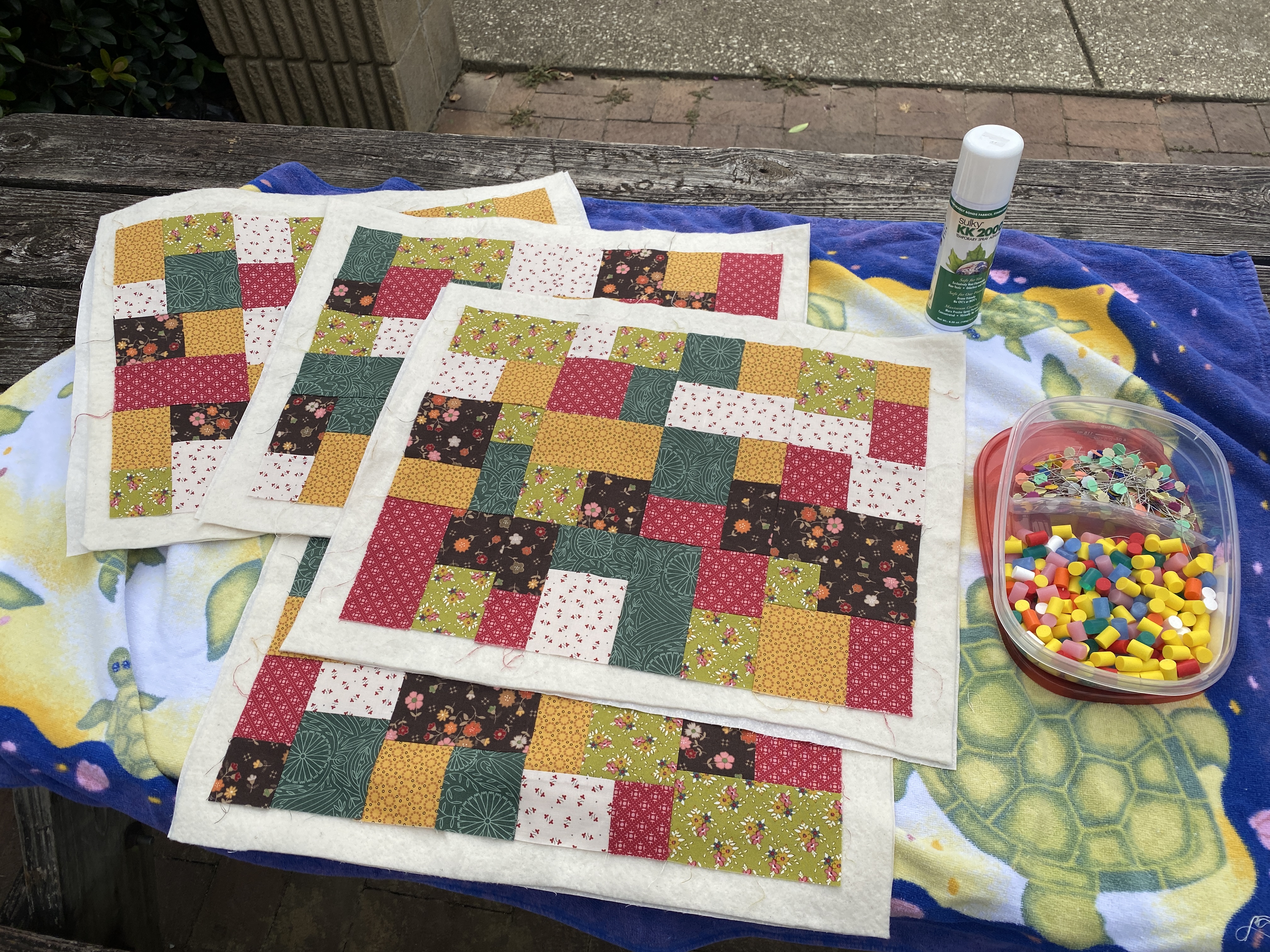
My binding strips were cut 2-1/2″ wide, so I used a 3/8″ seam allowance when attaching them to the back. I lined up the edge of the quilt with the edge of the walking foot and adjusted the needle position to achieve a 3/8″ seam allowance. My machine has a 5mm max stitch width. I found that a setting of SW = 4.0 works best. When sewing the binding to the front, I attached the ditch quilting arm and snugged it up all the way on the right side of the walking foot. I kept SW = 4.0 and lengthened the stitch to SL = 3.0. Normally, I glue baste binding, but did not for the small table runner I was working on.

Tip: you will have a line of stitching showing on the back of the quilt. Match your bobbin color to blend with the backing or use an all over busy print as your backing fabric to hide the line of stitching.

Here’s a video clip I found on YouTube that does an excellent job of demonstrating how to use the walking foot with the ditch accessory:

P.S. You can also use this foot to sew down binding attached to the front and folded to the back. I would strongly recommend glue basting on the backside because you won’t be able to see where the stitches lands on the backside until you’re through stitching. Your stitches will likely land only on the binding, so be sure to use a thread that blends with the binding.

Respect a volunteer’s time

If your organization uses any kind of volunteer help – from stuffing envelopes to providing medical care at no cost – treat your volunteers like gold. We may not cost you money in terms of salary and benefits, but our time is still very valuable. Treat it as such.

For therapy dog visits, with prep time, commute time and visit time factored in, it’s at least a half day of a volunteer’s time that is suddenly impacted if a visit is canceled last minute. I understand that things happen, but if it happens more than once, I’m not likely to volunteer or visit your organization again.

If your organization has any special volunteer requirements such as background checks, training or medical tests (usually for volunteers in a hospital setting), communicate those from the beginning. If any costs are required of the volunteer to meet those requirements, volunteers do appreciate being reimbursed, if possible. This way the volunteer can make an informed decision if he/she is wiling to meet those requirements. I respect that an organization needs to have certain volunteer requirements in place. Likewise, I have declined to volunteer for certain organizations due to all of the hoop jumping that must be done.

Lately, I’ve noticed a number of organizations instituting a mask or negative COVID test requirement. Unless I’m volunteering at a hospital, no thank you. We’re now post-pandemic. If you spring a mask requirement on me last minute to visit at a hotel (true story), pardon me while I cancel.

If the visit involves a therapy dog, be aware that the therapy dog organization has certain requirements I’m expected observe during a visit. I’m my dog’s only advocate. Her well-being is my primary concern. If I sense she is truly uneasy during a visit, we will need to leave if the situation cannot be rectified.

Offer volunteers water, snacks and pay for their parking, if applicable.

Oh, and be sure to say, “Thank you.”

Photo by cottonbro studio on Pexels.com

We’ve been waiting 24 months for this…

Today’s mail brought official retiree health insurance ID cards. We’ve kept the same health plan since I left teaching, but this makes our fourth set of cards. It reflects our progression from active employee to COBRA to state extended coverage to retiree. The best part? As of 8/13, my rate was adjusted from COBRA to active member/retiree rates. According to the rep, the September premium is scheduled to be deducted from my September check. If not, call them and I can pay through the direct bill portal at the retiree rate. Woo-hoo! * Edited to add, my pension account portal shows the premium *will* be deducted from my September check.

We’ve made exactly 24 payments at COBRA insurance rates (currently $2,150.18 per month)- the equivalent of a well equipped mid-size SUV. So relieved to have the rate adjustment (78% less) behind us. Keeping the insurance moving through the convoluted process was my biggest concern all along.

Now, I am OFFICIALLY retired.