Rebooting
 I like to listen to sewing, business and self-improvement podcasts while I work in my studio. Some people like to have the TV on in the background, I’ve always preferred to listen to the radio (or a CD, audiobook or Pandora). One of the podcasts in my feed from is The Minimalists, a couple of guys who share their transition from successful corporate types to small business owners pursuing their passions in a much different environment. While I’ve yet to meet a minimalist quilter (we ALL have a fabric stash!), some of what the guys discuss in their podcasts is spot on.
Is what you’re currently doing in your job and life feeding both your passions & needs, plus adding value to those around you?
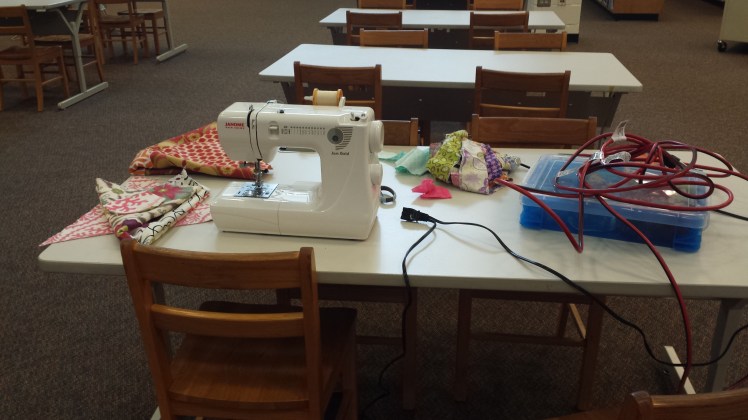
Surprisingly, yes. I take cherished mementos that people give me and turn them into something useful (quilts and memory pillows). I share my love of sewing with kids to teach them how to be a little more self-reliant (and help get rid of some of my mega-stash). In my day job, I get to to run a sewing club, make things for the school and bring my dog to help encourage students to read.
Do the things you currently own and the relationships you are currently in bring pleasure and joy to your life?
This is an area in which I need to do some SERIOUS work – especially with my stuff. Decluttering is my focus for the first half of 2017.
Are you willing to walk away from it all if it gets to be too much?
YES! I think this was the hardest lesson for me to learn. Financial security to me always came in the form of a steady job with benefits. This need for security caused me to stay in one position FAR too long. Eighteen months ago, I left a job (with no immediate job in sight), because the work environment I found myself in made me miserable. Preserving my health and sanity were my priority. Everything else took a back seat. Yes, I did find another job that was a better fit for me. Becoming debt free and having a substantial “go to hell” fund are goals that will hopefully mitigate any future need to remain in a bad job environment any longer than absolutely necessary.
After four years in business, I thought about shutting down the sewing biz and returning to “hobbyist” status. Nope. I enjoy the entrepreneurial side of things too much. Time for a REBOOT. I made some changes in how I run my biz, scheduled some “sew for me” time and decided it was A-OK to keep running the biz on a part-time basis. After all, very, very few people in the industry are full-time crafters.
On a lesser scale, I’ve become a firm believer in taking down time to reboot as necessary. It is vital to refill my bucket on a regular basis because the day job tends to take so much out of me. Not complaining, but it’s simply the truth when you work at an urban, high-poverty school. Students come to us already 1-2 years behind academically and lack the home training to know how to behave in school. Actively managing all that behavior, plus trying to bring our babies up to grade level can leave one drained at the end of the day. And that drained feeling affects other areas of my life – my home, relationships and sewing biz. So yes, I’ve learned to step back, say no (politely) and take some downtime to REBOOT. The truly critical things will get done and the rest is really not that important after all.
 Come Stitch With Me