How much fabric stash is too much?

I figured out the answer at an estate sale today – when your 2300 square foot house, including a 2.5 car garage, is stuffed to the gills with sewing and crafting stuff!!

Photo by SHVETS production on Pexels.com

I went to look at a Singer 28k hand crank sewing machine that was posted in an ad on estatesales.net. The estate sale was located in one of those 55 & up active adult communities about 30 minutes away from me. I was floored when I walked up to the sale. There was sewing stuff EVERYWHERE. It was overwhelming.

As I walked through the house, I realized that items from other sewing folks must have been brought in for the sale. There were boxes upon boxes of unrelated stuff everywhere and the drapery workroom set-up in the garage didn’t mesh with the vintage vibe (heirloom sewing, tatting, lace and linens) found everywhere inside of the house.

I really wasn’t quite sure what to expect when I got to the sale, but what I saw made me realize the importance of ongoing stash management. I am truly grateful my mother is selling off her “treasures” on eBay now. She has additional income for her golden years and I have less to deal with later on.

Sewing and crafting friends – unless crafting is your side hustle/business, do your best to limit your sewing/craft stuff to one room or closet in your home. If you are a vintage sewing machine and collectibles enthusiast who has amassed a collection over the years, make a detailed inventory of what you have and keep it with your estate planning documents. Also include contact information for anyone who could be relied upon to help divest your sewing items when you are no longer around or able to do it yourself. Your executor and heirs will appreciate it.

BTW, I left the estate sale empty-handed. Think I’ll spend this rainy Sunday afternoon clearing out some of my fabric bins.

Learn to troubleshoot your sewing machine

You’re in class and your sewing machine is misbehaving. What do you do? Panic or fix the issue and get back to sewing? Your instructor might be able to help, but the expectation is that you come to class knowing how to operate your sewing machine and that said machine is in good working order.

Most issues are simple to fix. Take a deep breath.

A student in a class I recently took experienced machine issues. She’d purchased a new 1/4″ foot from a dealer and her needle kept hitting the foot instead of going through the hole. She also had stitch quality issues. The instructor tried to help and another student assisted, but the machine was still misbehaving. I offered assistance when I heard the instructor tell the student to remember to bring her manual next time.

I had the machine stitching fine within 5 minutes. What did I do? Perform basic troubleshooting steps found at the back of any sewing machine manual. I’ve done this so many times I generally don’t need a manual for most machines I come across in a beginning sewing/quilting class.

She had two issues: needle hitting the foot and obviously poor stitches

Issue #1 – Foot

  1. Check foot and ankle – correct foot for machine? – yes – but not correctly attached and loose ankle – reattach snap on 1/4″ foot and tighten ankle screw.
  2. Check needle – okay – inserted correctly and not obviously bent/broken

Issue #2 – Tension

  1. Re-thread upper thread with presser foot up
  2. Move stitch width dial back to 3.5 (center needle position)
  3. Set stitch length to 2.0
  4. Set upper tension dial to 4 (it was on 7) and test sew – moved to 3.5 and it sewed a perfect stitch.
  5. Had the tension issue not be solved at this point, I would have changed the needle before proceeding.

Other helpful troubleshooting steps: Remove the needle plate and clean out the bobbin area before reinstalling the bobbin. Check to see if the bobbin winder was accidentally engaged and/or check the presser foot pressure setting.

If a machine throws an error code because the needle broke from hitting something (like you selected a zz stitch and have the straight stitch foot on), turn the machine off, install a new needle and wait 5-10 minutes. Your machine should work fine once it’s turned back on. This is a safety feature in many newer machines. It’s not always published in the manual. Here’s a handy checklist of common sewing machine issues from New Mexico State University. If none of these troubleshooting efforts work, it’s time to take your machine in for service.

My classmate was SEW happy that I got her machine working and showed her what to check in the future if she has machine issues again. She thanked me profusely and texted me the next day to say that her machine was still stitching fine. The instructor also thanked me for my help.

This is why I always advise students to take any lessons offered by their sewing machine dealer or review the videos found on the machine manufacturer’s website or uploaded by other sewists to YouTube. Obtain a pdf copy of the machine manual and download it to your phone for future reference. Assemble a basic machine maintenance kit for travel: lint brush, travel-size oil bottle, stubby screwdrivers that fit your machine, extra needles in sizes/types that you commonly use and extra bobbins.

Take along sewing machines

Travel machines, class machines, back-up machines, RV/second home machines. What do you call them?

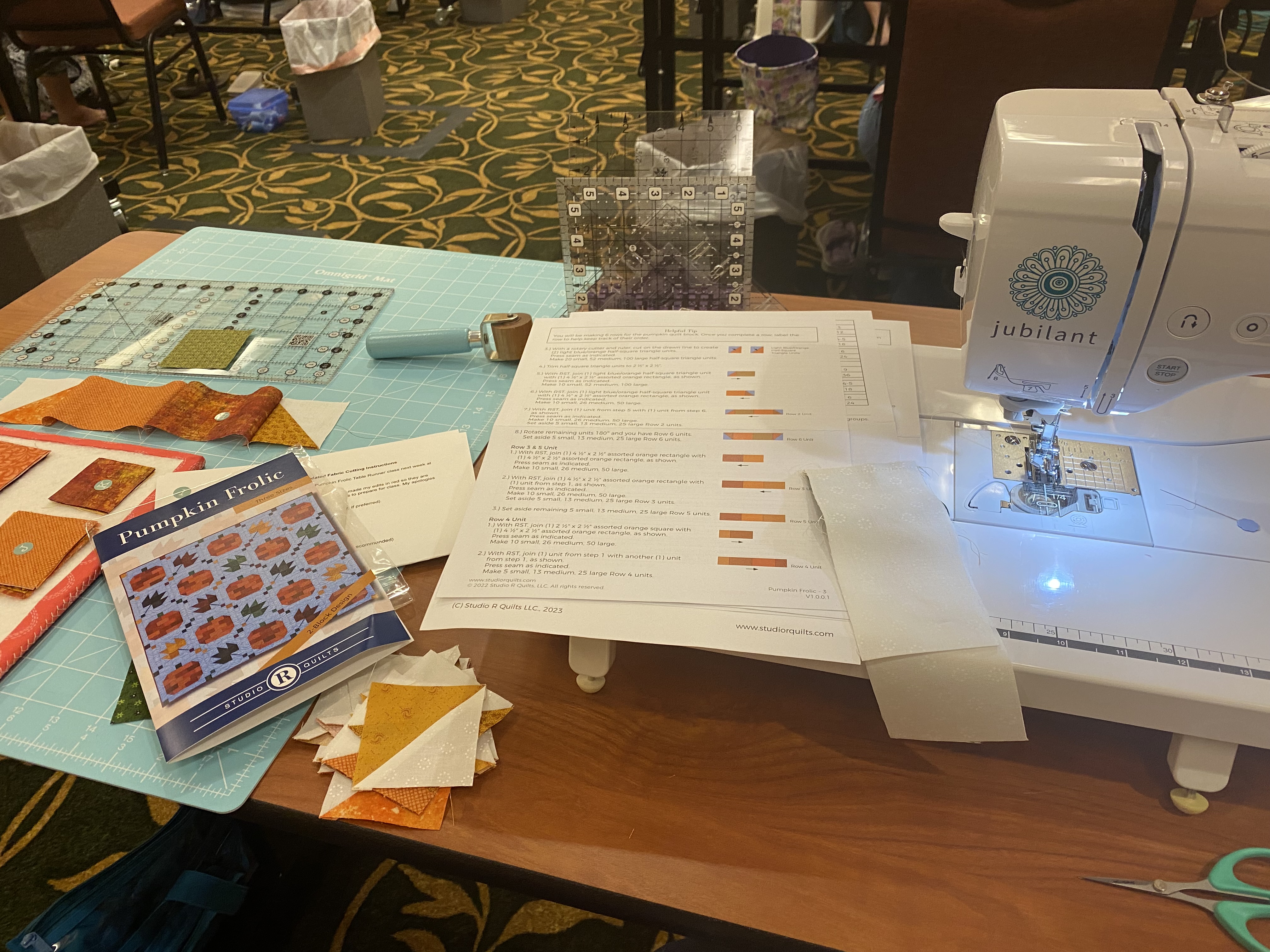
It’s always interesting to see the different machines brought to classes that I attend. Featherweights to Berninas and everything in between. Some attendees bring bigger machines (8.5 – 11″ throat space), but most tend to bring a smaller machine to class. FYI – most take along machines measure less than 16.5″ inches wide and weight less than 16 pounds. The space under the harp is usually 6.5 inches or less. Me? I generally take a Baby Lock Jubilant.

The Janome 3160/4120 models and Brother computerized models under $300 were certainly well represented this past week at Mountain QuiltFest in Pigeon Forge. I’m not surprised. I see something similar at home, but with Baby Lock and Juki added to the mix as those dealers also serve my immediate area. Definitely not the expensive TOL machines we see featured in sewing machine advertising.

What about a Singer Featherweight? They are an absolute joy to sew on! Keep in mind that you are only able to sew straight stitches with this machine. Any other type of stitching requires a clunky adapter. Buttonholes are beautiful, but zigzag stitches not so much. Realistically, your appliqué options will be limited to straight stitch by machine and invisible/decorative stitches done by hand.

If you travel frequently/RV full-time and need a budget friendly machine that will handle just about any class you could ever take, I’d look at a Brother ST150HDH or a Janome TM30(Elnita EC30). Both machines cover all the essential quilting stitches and include a 1/4″ foot, but the Brother offers a few more buttonhole and decorative stitch options, plus includes a walking foot. Need extra sewing space? Order an acrylic table in your preferred size from Sew Steady or Tailor Made Tables. Need to protect your machine while on the road? Consider a $20 padded cooler bag from Buc-cees. Flying with your machine? Always take it on board as a carry on. NEVER, EVER check your sewing machine as luggage.

Note: The Janome Jem 3/4 size machines are also an option. The Janome 760 would be my first choice for a travel machine, especially if I flew often with a sewing machine. The caveat? While wonderful little machines, the computerized Jem models are more expensive and sew much slower than the Brother ST150HDH and Janome TM30 machines.

Do your research and test sew on the machines that interest you. At the end of the day, only you can decide which travel machine will best fit your needs and budget.