Deciding border width for a quilt

Psst:  It’s really all about what looks good to you and how big you have to make the quilt.

Like other areas of quilting, there are some mathematical formulas to assist in determining border size:

1)  Golden Ratio:  Finished size of most commonly used block x 1.618 or .618 = finished border width

2)  Rule of thumb:  1/2 to 2/3 the largest block in your quilt

3) Fibonacci numbers:  0, 1, 1, 2, 3, 5, 8, 13, etc. (helpful for determining proportions for multiple borders)

For example, in the memory quilt I’m currently making, my blocks are 15″ finished with 2″ finished sashing and contrasting cornerstones between the blocks.  I was going to add my standard 5″ finished outer border, but it didn’t look right – it didn’t look big enough.  Nor did it even come close enough to the 72″ length the customer preferred.

So, out comes my trusty calculator:

Using the Golden Ration, my finished border should be:  9.25″  [This actually put the quilt at 71″x71″]

Using Rule of Thumb, my finished border should be 7.5″ to 10″

Using a different Rule of Thumb, my border should be 1/3 of the finished block or 5″

Scratch #3 – even with the 2″ sashed inner border, it’s still too small.

So, I booted up EQ7 and plugged in the numbers to see what was the most visually appealing

Golden ratio was most visually pleasing, but I didn’t have enough fabric to do that, so I cut 8.5″ wide strips instead.

If short of fabric, I could’ve used the Fibonacci numbers to determine the sizes of the pieced borders – 3″ and 5″ to make that 8″ border I wanted.  The quilt will finish about 70″ square with binding, so I think we’re good.
Shameless plug

Help support the Crafty STEM club at my school by making a donation to our project page on Donors Choose.

We’re about 1/3 of the way there.

Challenge:  If you pledge before 9/27, use the code INSPIRE at checkout and your gift will be matched up to $100 by an anonymous donor.

Thank you for supporting the creative crafters of tomorrow.

New skill of the month – making pom-poms

20140919_125616
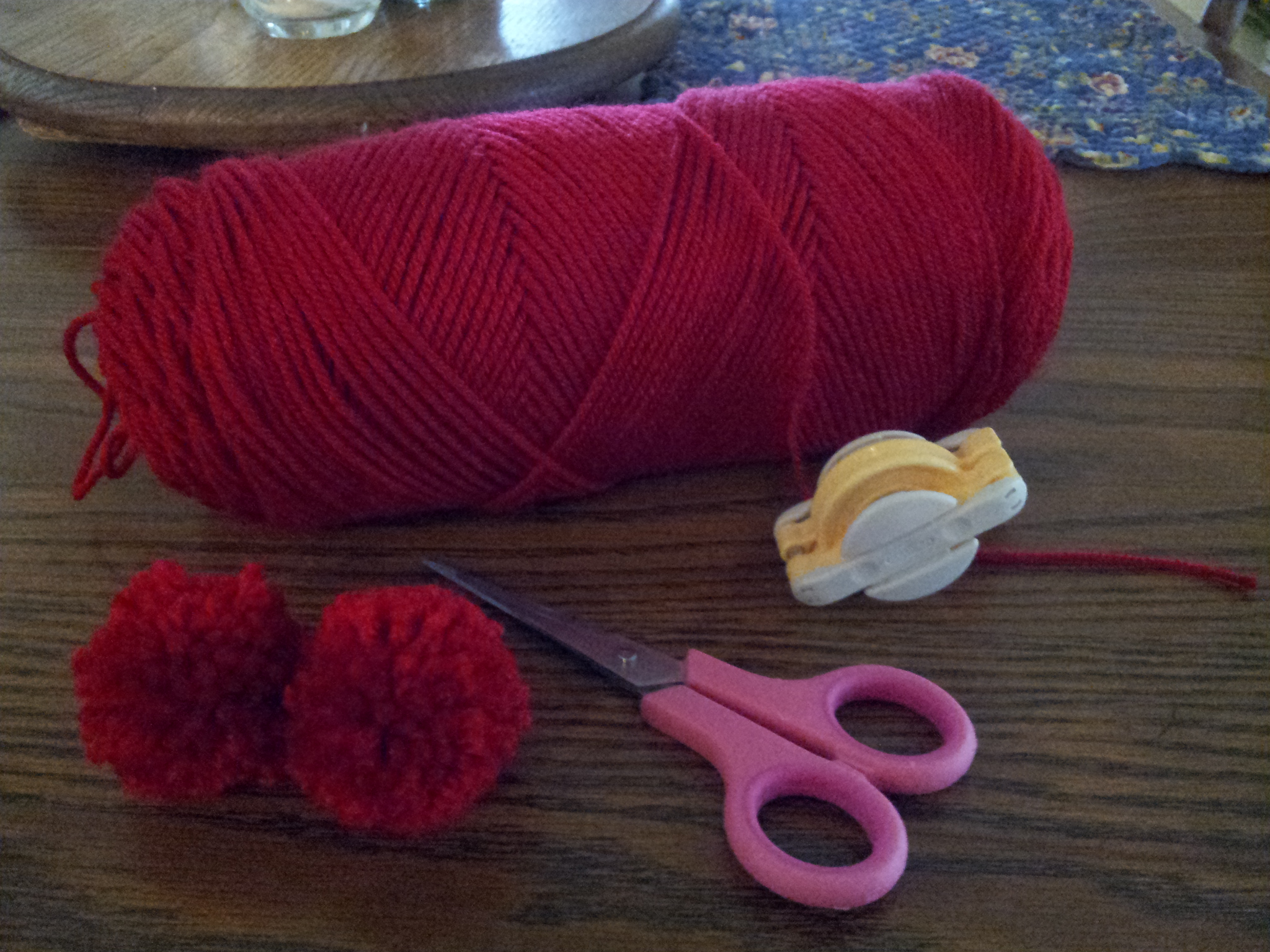
Supplies needed to make pom-poms

At work, we were required to set a personal and professional goal for the school year that will be tracked.  I meet with my accountability partner once a month to review my progress.  Of course, my personal goal is craft related.  (Big surprise huh?)  My goal is to learn one new skill or complete a small project each month between now and May.

September is Pom-Pom Month.

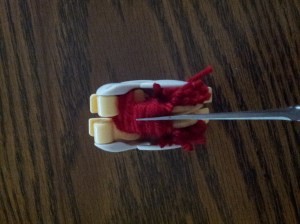
There are various ways to make pom-poms.  I happen to score this small Clover pom pom maker on a recent trip to Tuesday Morning.  The packaged instructions aren’t that great.  Here’s a video that I found helpful to explain the methodology.

20140919_125946

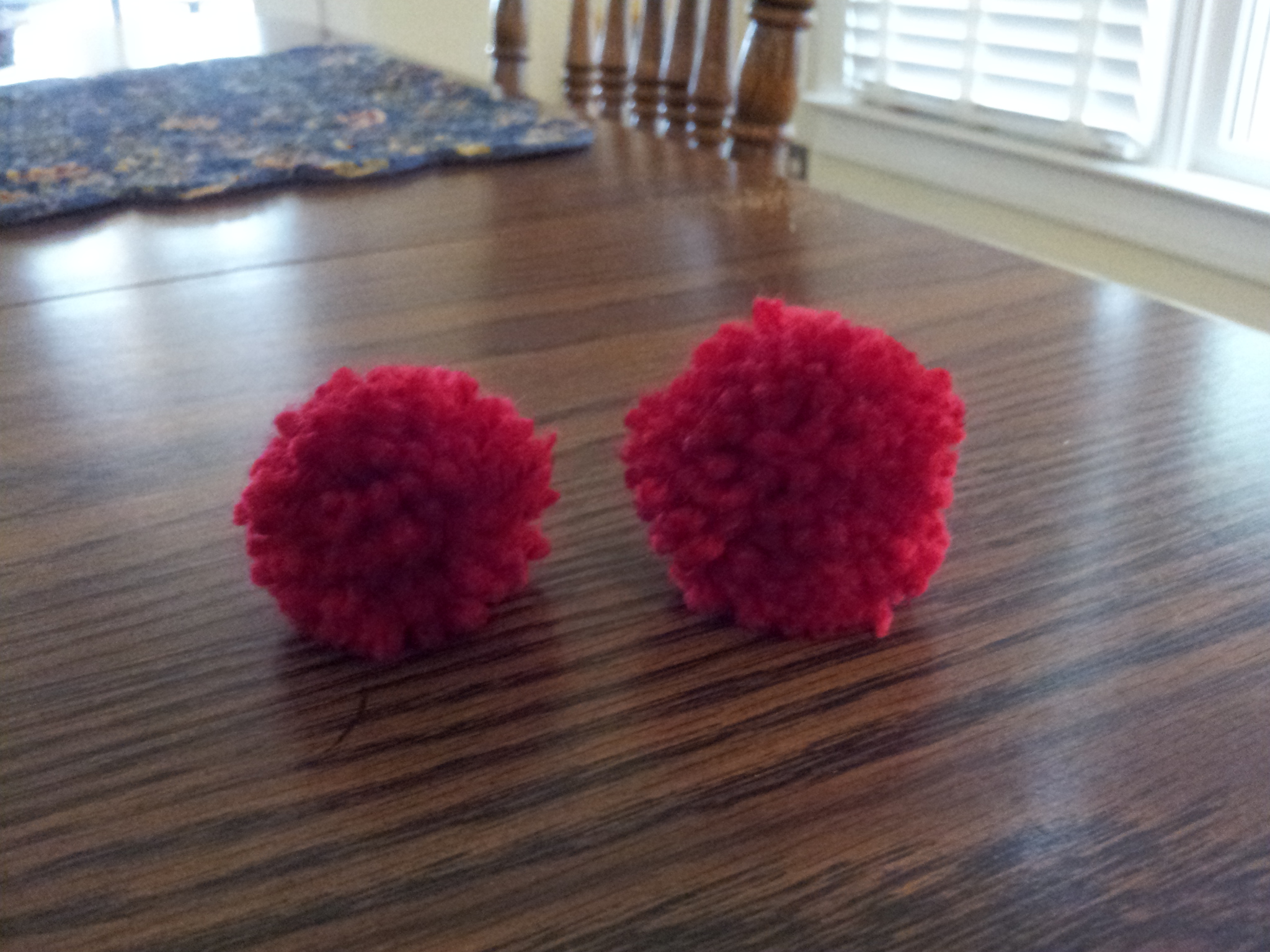
A pair of small super sharp scissors is essential when cutting the yarn.  I used the “brand on sale” acrylic yarn in this example.  I made pom-poms wrapping one time, two times and three times over each arm.   One wrap fell apart, but you can see the different in pom-poms made with two wraps and three wraps in this picture:

20140919_130335
More wraps = fluffier pom-poms 2 wraps on left and 3 wraps on right

Personally, I like the fullness of the three wrap pom-pom the best with the thin acrylic yarn I used.  Chunky or eyelash yarns might only require 2 wraps to get the desired amount of fullness.  I can already see this as an activity for my Crafty STEM club members.  We will experiment with different methods for making pom poms including using your hand, a dinner fork and a DIY cardboard template/cardboard donuts and of course, a commercially available unit.  Does technology really make it easier?  Short answer:  yes, but you don’t have to buy the commercial gizmos to make fabulous pom-poms! Stay tuned!